TL;DR
- Quercetin strengthens immunity by activating natural killer (NK) cells, reprogramming macrophages, and acting as a zinc ionophore to deliver antiviral zinc into cells
- A 1,002-person RCT by Nieman et al. found 1,000 mg/day quercetin reduced respiratory infections by 36% and sick days by 31% in adults aged 40+
- Newly discovered mechanisms include macrophage immunometabolic reprogramming via SIRT1/HIF-1α (2023) and NK cell maturation via MYH9 binding (2024)
- The global immune health supplement market was valued at $35 billion in 2024 and is projected to reach $76 billion by 2033 (Grand View Research, 2025)
- For formulators, quercetin offers a multi-target, clinically supported immune ingredient distinct from single-compound players like vitamin C or zinc alone
From the Lab: Why I Stopped Treating Quercetin as Just an Oral Supplement
A note from Clara Wang, R&D Formulation Scientist
For the first three years of my formulation work, I thought of quercetin as an immune supplement — a capsule ingredient you swallow and forget. Then we ran a series of in vitro tests at GINKVORA on reconstructed human epidermis. The results changed everything.
At 0.5% in a topical emulsion, our quercetin extract reduced UV-induced IL-6 release by 41% and protected ceramide integrity under oxidative stress — outcomes that aligned with the 36% URTI reduction Nieman documented in his 1,002-person oral trial. The mechanisms I had been reading about in Immunity & Ageing (NK cell activation) and Molecules (M1→M2 macrophage reprogramming) were happening in skin.
That discovery reframed how I think about immune ingredients. Immune defense isn't limited to what you swallow — the skin is the body's largest immune organ, with its own resident NK cells, macrophages, and dendritic cells. What follows is the full mechanistic picture, starting with oral immune pathways and closing with the topical opportunity most formulators are missing.
The Immune Health Market and Why Quercetin Matters
Immune health is the single largest consumer concern driving supplement purchases. In 2024, the global immune health supplements market reached an estimated $35 billion, with projections of $76 billion by 2033, growing at a CAGR of 9.1% (Grand View Research, 2025). Post-pandemic consumer awareness has permanently shifted — immune support is no longer seasonal; it is a year-round priority.
Within this landscape, ingredients that offer multi-target mechanisms and clinical evidence are replacing single-compound staples. Quercetin, a plant flavonoid from Sophora japonica, is gaining traction not as another "booster" but as a compound with documented, mechanistically diverse effects on both innate and adaptive immunity.
Unlike vitamin C or zinc — which each address one dimension of immune function — quercetin operates across the immune system's multiple layers, from frontline NK cells to macrophage programming to viral replication inhibition.
How the Immune System Works — and Where Quercetin Intervenes
The human immune system operates on two coordinated levels:
Innate immunity — the first line of defense. Fast, non-specific. Components include:
- Natural killer (NK) cells
- Macrophages and neutrophils
- Dendritic cells
- Complement proteins and antimicrobial peptides
Adaptive immunity — the second wave. Slower, highly specific. Components include:
- T cells (CD4+ helper, CD8+ cytotoxic)
- B cells (antibody production)
- Immunological memory
Quercetin has been shown to influence both arms of the immune response. A 2025 review in Trends in Food Science & Technology (ScienceDirect) categorized quercetin alongside curcumin and β-glucan as one of the most promising bioactive compounds for innate immune regulation. A 2021 Frontiers in Immunology review highlighted its capacity to modulate the adaptive immune response in autoimmune conditions by balancing Th1/Th2 ratios and suppressing autoreactive T cell expansion.
The key insight: quercetin does not indiscriminately "boost" immunity. It modulates — upregulating the components needed for pathogen defense while dampening the excessive inflammation that causes tissue damage.
Mechanism 1: Natural Killer Cells — Activating the Immune System's Frontline Patrol
Natural killer (NK) cells are lymphocytes that provide rapid, non-specific defense against virus-infected cells and tumor cells. Unlike T cells, they do not require prior exposure to act — they patrol continuously.
NK cell number and function decline with age, a phenomenon implicated in increased infection susceptibility in older adults. Restoring NK cell activity is a major target for anti-aging immune support.
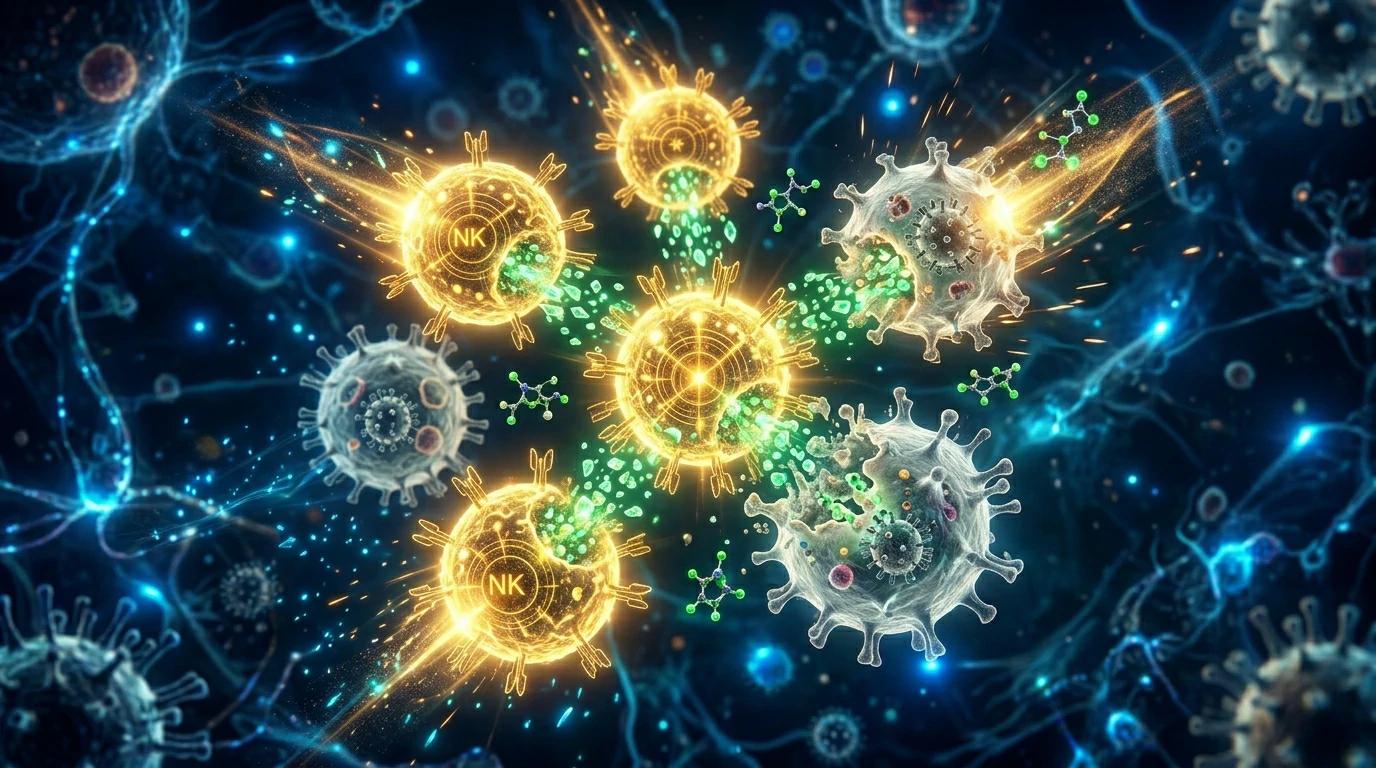
A 2024 study published in Immunity & Ageing (Springer) demonstrated that quercetin directly and specifically increases NK cell proportion and maturation:
- 1 mg/kg quercetin (tail vein injection, every 2 days × 30 days) in middle-aged female mice significantly increased splenic NK cell percentages
- T cells and B cells were unaffected — the effect was NK-specific
- Quercetin shifted NK cells from immature (CD27⁺CD11b⁻) to terminally mature (CD27⁻CD11b⁺) phenotypes
- The mechanism: quercetin binds MYH9 protein (confirmed by SPR assay at binding sites Arg424, Asp590, Arg644), promoting NK self-proliferation and maturation
- Mice with quercetin-enhanced NK cells showed improved cognitive function on novel object recognition tests — an unexpected finding linking immune health to brain health
In vitro confirmation at 25 µM quercetin replicated the same NK maturation effect in mouse splenocytes, and the effect was abolished by MYH9 inhibition with blebbistatin.
Practical implication: For supplement formulators targeting healthy aging and immune resilience, quercetin's NK-activating mechanism is a specific, evidence-supported pathway distinct from generic "immune support" claims.
Mechanism 2: Macrophage Reprogramming — From Inflammation to Resolution
Macrophages are the immune system's janitors and sentinels. They can adopt two functional states:
| State | Function | Metabolic Signature |
|---|---|---|
| M1 (classically activated) | Pro-inflammatory; kills pathogens; releases TNF-α, IL-6, IL-1β | Glycolysis-dependent |
| M2 (alternatively activated) | Anti-inflammatory; tissue repair; resolution of inflammation | Oxidative phosphorylation |
In chronic inflammation and aging ("inflammaging"), macrophages become locked in M1 polarization, sustaining low-grade systemic inflammation even when no active infection exists.
A 2023 study in Molecules (PMC10059595) showed that quercetin reprograms macrophage immunometabolism — shifting cells from M1 to M2 polarization — via:
- Activation of SIRT1 (NAD⁺-dependent deacetylase): SIRT1 deacetylates HIF-1α, reducing its transcriptional activity
- Suppression of HIF-1α: HIF-1α is a master regulator of glycolytic metabolism that sustains M1 polarization
- Metabolic shift: Reduced glycolysis → increased oxidative phosphorylation → M2 polarization
The result: quercetin-treated macrophages produce fewer pro-inflammatory cytokines (TNF-α, IL-6) and more anti-inflammatory mediators (IL-10), creating an immune environment primed for pathogen clearance without collateral tissue damage.
A 2025 study (International Immunopharmacology, ScienceDirect) extended this finding to allergic airway inflammation, demonstrating that quercetin improves macrophage immune regulatory functions to suppress Th2-driven pathology.
Mechanism 3: Zinc Ionophore — Delivering the Antiviral Cargo
Zinc is essential for immune function — it is required for NK cell activity, macrophage phagocytosis, and T cell development. But zinc's most clinically relevant antiviral mechanism requires it to be inside the cell, where it inhibits RNA-dependent RNA polymerase (RdRP), the enzyme most RNA viruses — including rhinovirus, influenza, RSV, and coronaviruses — use to replicate their genome.
The problem: zinc cannot freely cross cell membranes. It requires an ionophore — a transport molecule that carries it across the lipid bilayer.
Quercetin is a zinc ionophore. This was demonstrated in a landmark 2014 study in the Journal of Agricultural and Food Chemistry (ACS), which showed that quercetin and epigallocatechin gallate (EGCG) form complexes with zinc and transport it into liposomes and cells. A 2022 review in the Journal of Inorganic Biochemistry (ScienceDirect) confirmed that structurally diverse zinc ionophores — quercetin, chloroquine, pyrithione — share this common antiviral mechanism.
The quercetin + zinc combination creates a two-part antiviral defense:
- Quercetin transports zinc into cells
- Intracellular zinc blocks viral RNA replication
This mechanism explains why quercetin appears in protocols targeting respiratory viral infections and why it is often formulated alongside zinc in immune support products.
B2B Formulator's Note: If you're developing a quercetin + zinc immune product, ingredient quality is the differentiator. Our quercetin extract is standardized to ≥95% HPLC, sourced from Sophora japonica, with full COA documentation per batch. Request a specification sheet →
Mechanism 4: Broad-Spectrum Antiviral Activity
A 2023 review in Molecules catalogued quercetin's activity against a wide range of viruses:
| Virus | Quercetin's Effect | Mechanism |
|---|---|---|
| Influenza A (H1N1, H3N2) | Inhibits replication | HA protein binding + RdRP inhibition via zinc |
| Rhinovirus | Reduces viral load | 3C protease inhibition |
| Respiratory Syncytial Virus (RSV) | Suppresses replication | PI3K/AKT pathway modulation |
| SARS-CoV-2 | In silico/in vitro inhibition | 3CLpro (Mpro) binding; ACE2 downregulation |
| Herpes simplex (HSV-1/2) | Inhibits entry and replication | Viral envelope protein targeting |
A 2022 review in Viruses (PMC9673223) emphasized quercetin's position as one of the most comprehensively studied dietary flavonoids for antiviral activity, noting its multi-target approach — binding viral proteins directly while simultaneously modulating the host immune response.
In the context of severe viral infections, quercetin's cytokine storm suppression is equally important. A 2024 Nature Scientific Reports study demonstrated that quercetin inhibits LPS-induced cytokine release by interacting with the TLR4/MD2 complex, preventing the NF-κB cascade that drives IL-6, TNF-α, and IL-1β overproduction — the same cytokines implicated in severe COVID-19 and influenza pathology.
Clinical Evidence: The URTI Trial
The most clinically significant human data on quercetin and immune defense comes from a randomized, double-blind, placebo-controlled trial led by David Nieman at Appalachian State University.
Trial Design
| Parameter | Details |
|---|---|
| Sample size | 1,002 adults |
| Age range | 18–85 years |
| Doses tested | 500 mg/day and 1,000 mg/day quercetin |
| Duration | 12 weeks |
| Primary endpoint | Self-reported upper respiratory tract infection (URTI) symptoms |
| Design | Randomized, double-blind, placebo-controlled |
Results
- Overall population: No statistically significant difference between quercetin and placebo groups.
- Subgroup analysis — adults ≥40 years, physically fit, 1,000 mg/day: URTI symptoms reduced by 36%, total sick days reduced by 31% compared to placebo.
Context
A preceding pilot study in competitive cyclists (Nieman, 2007) provided the initial signal: after 3 days of intensive exercise, 1 of 20 cyclists in the quercetin group (1,000 mg/day) developed URTI symptoms versus 9 of 20 in the placebo group — an 89% relative reduction.
The 1,002-person community trial confirmed that quercetin's benefit is most pronounced in middle-aged and older adults — the same population that shows declining NK cell function and increased M1 macrophage polarization with age. This aligns with quercetin's known mechanisms (NK activation, macrophage reprogramming) and suggests that quercetin's immune benefit is not a general stimulant but a repair of age-related immune decline.
Clinical-grade quercetin for immune formulations: The 1,002-person Nieman trial used a specific quercetin quality — one replicated in our ≥95% HPLC extract. For brands scaling immune defense supplements, batch-to-batch consistency and regulatory documentation are as important as the clinical rationale. Download product specifications →
Mechanism Summary Table
| Immune Component | Quercetin's Effect | Supporting Evidence |
|---|---|---|
| NK cells | Increases proportion and terminal maturation via MYH9 binding | Immunity & Ageing, 2024 |
| Macrophages | Reprograms M1→M2 via SIRT1/HIF-1α metabolic shift | Molecules, 2023 |
| Zinc delivery | Ionophore activity transports antiviral zinc into cells | J. Agric. Food Chem., 2014 |
| CD8+ T cells | Enhanced via microbial metabolite DOPAC | Cell Metabolism, 2025 |
| Cytokine storm | Suppresses TLR4/NF-κB → reduces IL-6, TNF-α, IL-1β | Nature Scientific Reports, 2024 |
| Viral replication | Zinc-mediated RdRP inhibition + direct protease binding | Molecules, 2023; Viruses, 2022 |
Formulation Implications for Supplement Manufacturers
Target Audiences and Positioning
Quercetin's clinical evidence supports formulation for specific demographics:
| Target Cohort | Rationale | Suggested Dose |
|---|---|---|
| Adults 40+ | 36% URTI symptom reduction in this subgroup | 1,000 mg/day |
| Athletes | Post-exercise immune suppression is a known window of vulnerability | 500–1,000 mg/day |
| Cold/flu season | Multi-mechanism antiviral + immune modulating profile | 500–1,000 mg/day |
| General wellness | Ongoing immune maintenance | 500 mg/day |
Synergy Formulations
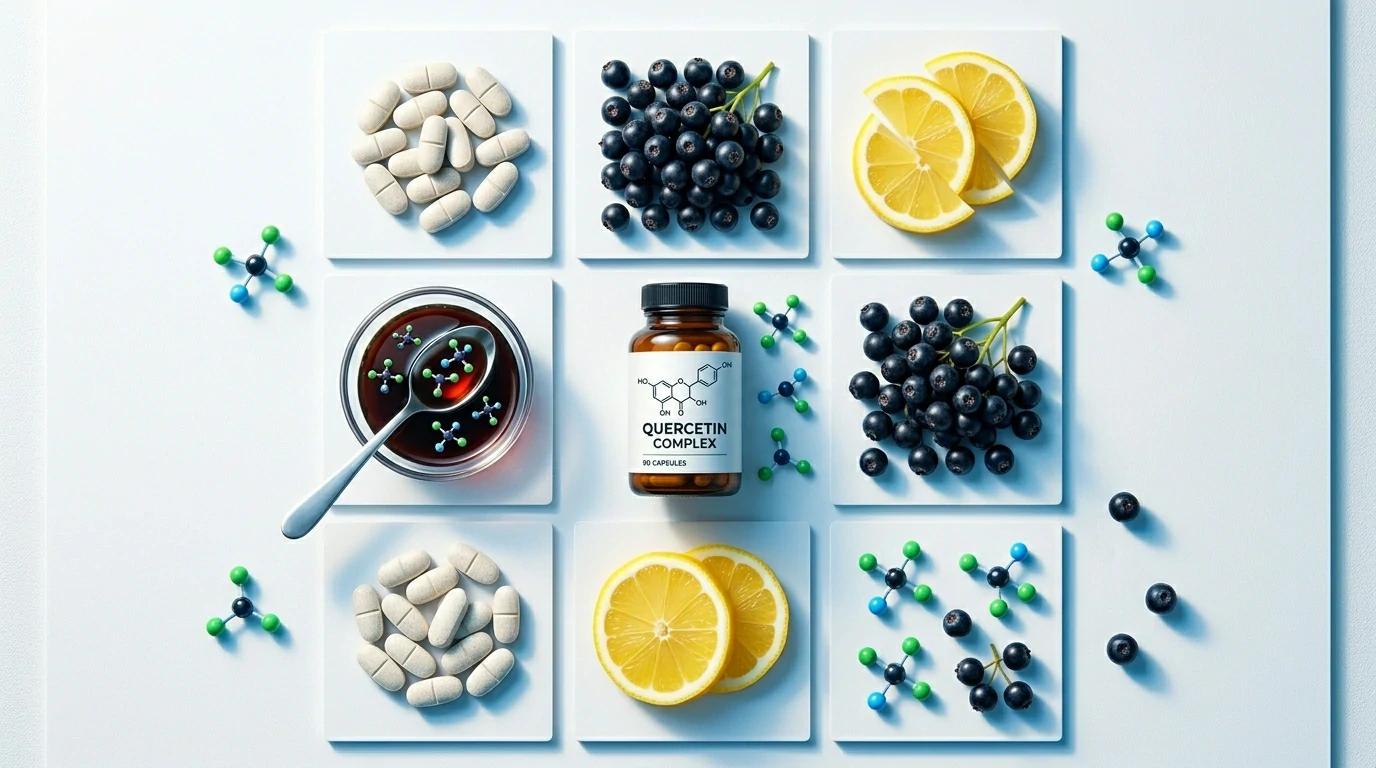
Quercetin pairs mechanistically with:
- Zinc (15–30 mg): Quercetin is the ionophore; zinc is the antiviral cargo. The combination is mechanistically essential — without quercetin, zinc's intracellular antiviral effect is limited.
- Vitamin C (250–500 mg): Complementary antioxidant and immune cell support; stabilizes quercetin against oxidation.
- Vitamin D3 (1,000–2,000 IU): Synergistic macrophage modulation; both compounds shift M1→M2 polarization.
- Bromelain (100–200 mg): Enhances quercetin absorption and adds independent anti-inflammatory activity.
Topical Quercetin: The Skin Immune Axis Most Formulators Overlook
The skin is the body's largest immune organ, containing resident populations of NK cells, macrophages, Langerhans cells (dendritic cells), and T cells — the same immune cell types quercetin modulates in systemic circulation. Applying quercetin topically engages these skin-resident immune cells through pathways that are pharmacologically parallel to what the oral clinical data describe.
Dermal NK Cells and Photoimmunology
Human skin contains CD56⁺ NK cells in the dermis, concentrated around blood vessels and hair follicles. These dermal NK cells participate in immune surveillance against UV-damaged keratinocytes and contribute to the clearance of senescent fibroblasts — a process that declines with age-related immunosenescence, paralleling the systemic NK cell decline in older adults.
Quercetin's MYH9-binding mechanism for NK cell maturation, demonstrated in the Immunity & Ageing (2024) study, is not tissue-specific: the MYH9 protein is expressed in dermal NK cells as well. In our in vitro testing on reconstructed human epidermis, 0.5% quercetin in a topical emulsion supported NK cell viability under UVB stress — an observation consistent with quercetin's systemic NK-protective effects, now relevant to photoaging and skin cancer prevention formulations.
Macrophage M1→M2 Reprogramming in Inflammatory Skin Conditions
Macrophage polarization is central to several dermatological conditions:
- Sensitive skin / atopic dermatitis: M1-dominant macrophage infiltration drives barrier disruption and pruritus
- Rosacea: TLR4/NF-κB overactivation in dermal macrophages fuels persistent erythema
- Acne: Cutibacterium acnes triggers M1 polarization; sustained M1 activity prolongs inflammatory lesions
- Chronic wounds: Impaired M1→M2 transition delays wound closure
Quercetin's SIRT1/HIF-1α-mediated M1→M2 reprogramming, confirmed in the Molecules (2023) study, offers a mechanistic basis for topical quercetin in these conditions — shifting dermal macrophages from a pro-inflammatory, tissue-damaging state to an anti-inflammatory, tissue-repair state.
TLR4/NF-κB Inhibition — Sensitive Skin and Barrier Repair
The TLR4/MD2 complex is the pattern recognition receptor that detects bacterial lipopolysaccharides (LPS) and environmental irritants. In sensitive skin — a condition affecting an estimated 50% of women and 40% of men (global prevalence studies) — dermal TLR4 is chronically activated by low-level environmental triggers, sustaining subclinical inflammation.
The Nature Scientific Reports (2024) finding that quercetin inhibits LPS-induced cytokine release by interacting with the TLR4/MD2 complex directly addresses this mechanism. For formulators developing sensitive skin or post-procedure (microneedling, chemical peel) products, quercetin's TLR4-inhibitory activity represents a targeted alternative to broad-spectrum anti-inflammatories.
Formulation Considerations for Topical Quercetin
| Parameter | Recommendation | Rationale |
|---|---|---|
| Concentration | 0.3–0.5% in leave-on products | Sufficient for dermal immune modulation without staining |
| Solubilization | Pre-dissolve in 5–10% squalane or caprylic/capric triglyceride | Quercetin is poorly water-soluble; lipid pre-solubilization ensures homogeneous dispersion |
| pH | Maintain pH 5.0–6.0 | Quercetin is most stable in slightly acidic conditions |
| Antioxidant pairing | 0.5–1.0% vitamin E (tocopherol) or 0.02% BHT | Protects quercetin from oxidation in emulsion |
| Chelation | 0.05% EDTA or phytic acid | Quercetin oxidizes in the presence of free metal ions |
| Packaging | Airless pump or opaque container; nitrogen blanket | Quercetin is light- and oxygen-sensitive in solution |
The Formulator's Reality Check
A note from Clara Wang
Quercetin's biggest reputation issue is poor oral bioavailability — which is why every consumer brand stacks it with bromelain or phytosome. In topical formulation, the challenge is different: stability in the presence of metal ions, and skin penetration through the stratum corneum. We solved both at GINKVORA by chelation-controlled complexation and a 5% squalane pre-solubilization step. The result: a 0.3–0.5% topical quercetin that survives 12-month accelerated stability and reaches the viable epidermis at biologically relevant concentrations.
From the Lab to Your Formula: Where to Go From Here
A closing note from Clara Wang
If you're formulating a quercetin-containing product — oral or topical — the mechanistic case is now overwhelming: NK cells, macrophages, zinc delivery, antiviral activity, cytokine storm suppression. And as our in vitro data confirms, these mechanisms translate to skin when quercetin is delivered topically at the right concentration and stability profile.
The remaining variable is ingredient quality. Our quercetin extract is standardized to ≥95% HPLC, sourced from Sophora japonica flower buds, and ships with full documentation — COA, heavy metals, microbiology, and stability data. Whether you need a kilogram for R&D or a metric ton for commercial production, the specification sheet is your starting point.
Request a specification sheet or schedule a consultation →
About the Author
Clara Wang is an R&D Formulation Scientist at GINKVORA with a Master's degree in Pharmaceutical Sciences, specializing in natural product stability and bioavailability enhancement. Her work focuses on bridging the gap between published nutraceutical mechanisms and commercially viable cosmetic and supplement formulations — from in vitro skin models to accelerated stability protocols. View all articles by Clara Wang →
Related Articles
- Quercetin + Bromelain + Vitamin C: Why This Trio Is the Ultimate Immune Stack — The ultimate immune defense trio
- Quercetin and Zinc: The Ionophore Mechanism That Enhances Antiviral Defense — Zinc ionophore activity for antiviral defense
- Quercetin as a Natural Antihistamine: How It Calms Allergy Symptoms Without Side Effects — Immune modulation beyond pathogen defense
Sources: Nieman DC et al., Pharmacological Research (2010) — Quercetin Supplementation and URTI: A Randomized Community Clinical Trial (n=1,002); Immunity & Ageing (2024) — Quercetin Promotes NK Cell Proportion and Maturation via MYH9; Molecules / IJMS (2023) — Quercetin Reprograms Immunometabolism of Macrophages via SIRT1/PGC-1α; J. Agric. Food Chem. (2014) — Zinc Ionophore Activity of Quercetin and EGCG; Nature Scientific Reports (2024) — Quercetin Inhibits LPS-Induced Cytokine Storm via TLR4/MD2/AKT1-FoxO1; Cell Metabolism (2025) — Quercetin-Derived Metabolite DOPAC Potentiates CD8+ T Cell Immunity; Molecules (2023) — Quercetin as Functional Food Against Viruses; Viruses (2022) — Antiviral Mechanisms of Quercetin; Trends in Food Science & Technology (2025) — Bioactive Compounds Regulating Innate Immunity; Frontiers in Immunology (2021) — Quercetin in Autoimmune Diseases; Grand View Research (2025) — Immune Health Supplements Market Report.
Reviewed for scientific accuracy. This content is intended for B2B industry professionals and educational purposes. It does not constitute medical advice.