TL;DR
- "99.5% pure" is a number without a unit until you know the method behind it. On a real certificate of analysis (COA), purity is a profile — assay, anomer specificity, water, related substances, metals, solvents, microbiology — not a single percentage.
- There is no full pharmacopoeial monograph for NMN yet; method developers state outright that no unified quality standard exists [Zhou 2023, PMID 36617938]. That means the spec is largely whatever the vendor decides — which is exactly why you have to read it critically.
- The most common blind spot: ordinary reverse-phase HPLC measures chemical purity but cannot separate the active beta-anomer from the inert alpha-anomer. A "99.5%" assay can still carry alpha-NMN unless beta-specificity is confirmed separately (chiral HPLC / optical rotation).
- Purity is time-sensitive. NMN hydrolyzes to nicotinamide riboside and nicotinamide under heat and moisture, following first-order kinetics driven by temperature and pH [Xiang 2023, PMID 38212023]. Lyophilized powder, low water activity, and cold-chain storage protect the number.
- A trustworthy COA is batch-specific and states methods for assay, water (Karl Fischer), heavy metals (ICP-MS), residual solvents (GC), and microbiology — with acceptance limits you can check against a public benchmark such as Australia's TGA guideline.
The Number on the Label Is Not the Number That Matters
Every NMN sales sheet leads with a percentage. 98%. 99%. 99.5%. 99.9%. The numbers creep upward as a marketing arms race, and by themselves they are almost meaningless.
I test raw materials for a living, so let me be blunt about what a purity figure is and isn't. "99.5%" is an output of a specific analytical method run on a specific batch under specific conditions. Change the method — the column, the wavelength, whether you use area normalization or an external standard, whether you even attempt to separate the anomers — and the same powder can return different numbers. A percentage with no method attached is not a result. It's a claim.
The job of a COA (certificate of analysis) is to turn that claim into something verifiable. This article walks through what a real NMN COA should contain, how each value is actually generated in the lab, and where the honest reader should get suspicious.
First, an Uncomfortable Truth: There Is No Official NMN Monograph
For most established pharmaceutical ingredients, you can open a pharmacopoeia — USP, EP, ChP — and find a monograph: a legally recognized identity test, an assay method, and impurity limits that everyone must meet. For NMN, that reference largely does not exist yet.
This isn't my opinion. It's how the analytical chemists building NMN methods describe the field: when Zhou and colleagues published a dedicated HPLC method for NMN-related substances, they stated plainly that "there is no available NMN quality standard and analytical method at present" [Zhou 2023, J Chromatogr Sci, PMID 36617938, DOI 10.1093/chromsci/bmac107].
What that means for a buyer is important: in the absence of a compulsory monograph, the specification is whatever the supplier chooses to write. One vendor's "99% pure" is measured against their own method and their own impurity list. Another's may exclude tests the first one runs. There is no referee.
The closest thing to a neutral, government-published reference is Australia's TGA compositional guideline for nicotinamide mononucleotide, issued for listed medicines. It sets concrete acceptance criteria — HPLC assay of 98.0–102.0%, water content ≤1%, solution pH 2.0–4.0, defined identity tests, residual-solvent and microbial limits — and it names NMN precisely (CAS 1094-61-7, molecular weight 334.22, stereospecific to the beta-anomer) [TGA Compositional Guideline, Nicotinamide mononucleotide]. It is not global law, but it is an excellent yardstick to hold a COA against.
How "Purity" Is Actually Measured
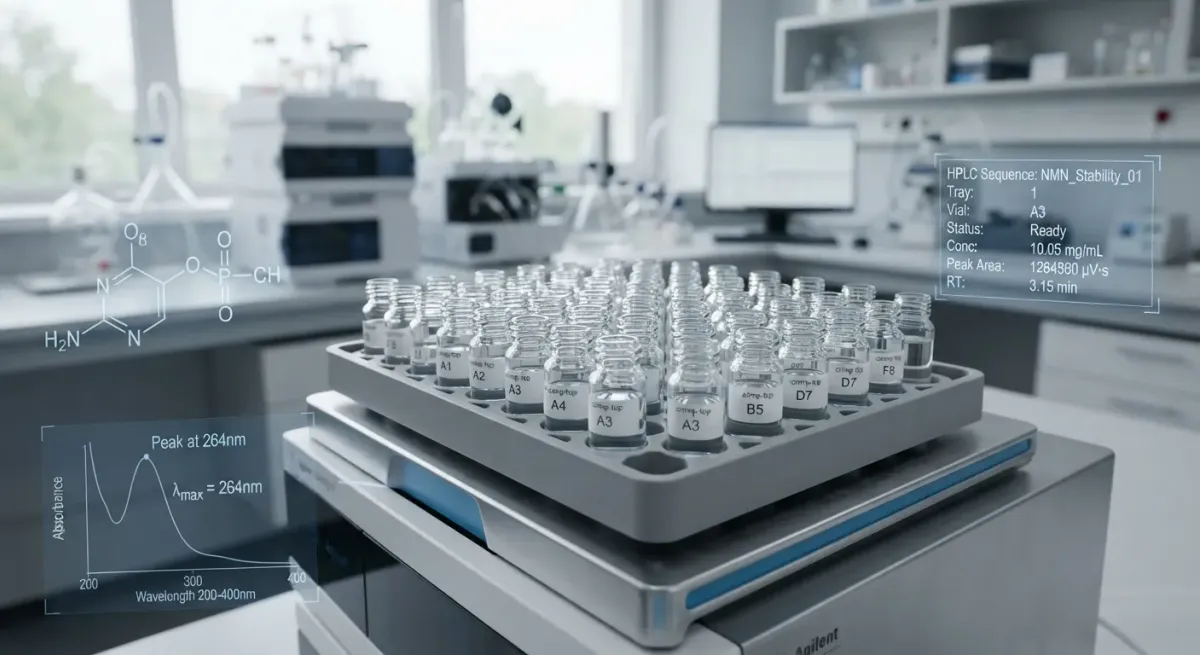
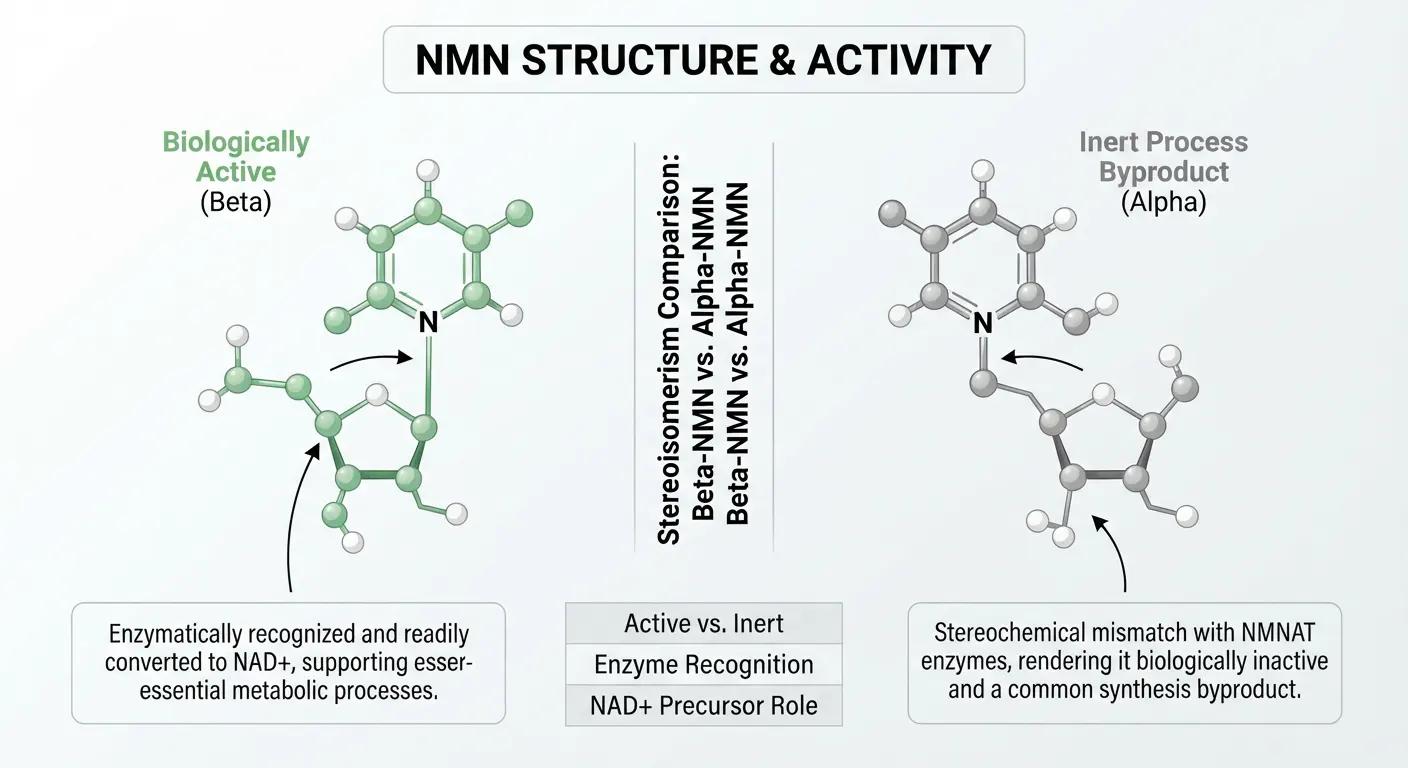 When a COA says 99.5%, it almost always means HPLC assay — high-performance liquid chromatography with UV detection. Here is what happens on the bench, in plain terms:
The sample is dissolved, filtered, and injected onto a chromatography column. NMN and its chemical relatives travel through the column at different speeds and exit at different times, each producing a peak. NMN has a nicotinamide chromophore, so it is detected by UV absorbance — typically around 254–266 nm [Zhou 2023, PMID 36617938; TGA Compositional Guideline]. The "purity" percentage is usually the area of the NMN peak as a fraction of all peaks (area normalization), or the assay against a reference standard.
A validated method proves it can separate NMN from the compounds that matter: nicotinamide riboside (NR), nicotinamide (NAM), and adenine-nucleotide fragments. In the Zhou method, all related substances resolved cleanly (resolution >1.5) with excellent linearity (R² >0.999) [Zhou 2023, PMID 36617938]. That separation is the whole point — an assay that can't distinguish NMN from its degradation product NR will happily count degraded material as "pure."
Now the part the marketing never mentions. Standard reverse-phase HPLC measures chemical purity, but it cannot resolve the alpha and beta anomers of NMN. The two forms have near-identical molecular weight and polarity, so they co-elute on a normal C18 column. Only the beta-anomer is biologically active; alpha-NMN is an inert process byproduct — an impurity by definition. To actually quantify the beta fraction you need a chiral HPLC method (a polysaccharide chiral stationary phase) or an optical-rotation check as a fast screen.
This is the single most important thing I can teach a buyer: "99.5% by HPLC" and "99.5% beta-NMN" are not the same statement. If a COA reports a high assay but is silent on anomer specificity, you do not yet know how much of that powder is the active form.
What a Real COA Must Cover
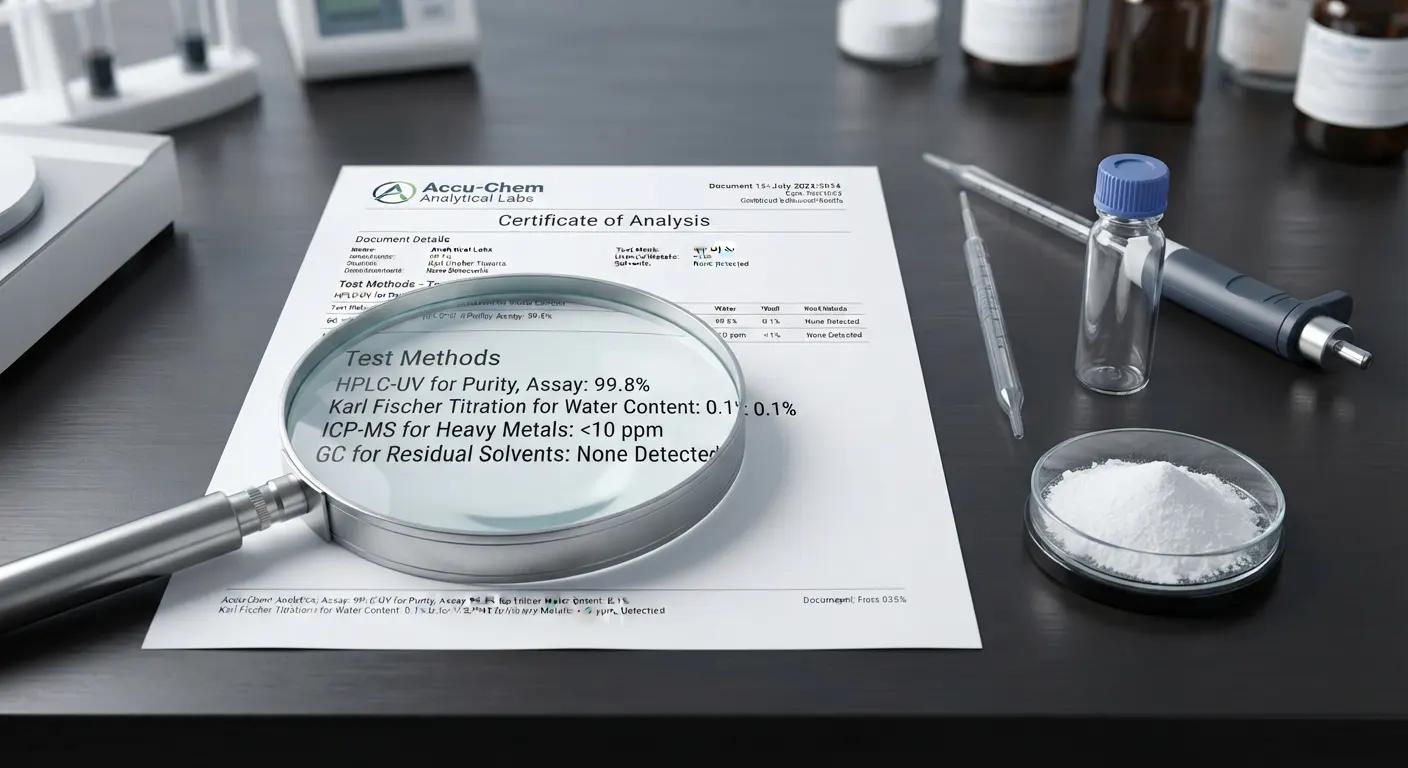 A purity figure is one line. A trustworthy COA is a table. Below is the profile I look for, with the representative method and a public benchmark drawn from the TGA compositional guideline. Your supplier's exact limits may differ — but every one of these rows should be present and quantified, not blank.
| Test | Typical method | Representative acceptance criterion* |
|---|---|---|
| Assay (content) | HPLC-UV, method stated | 98.0–102.0% |
| Beta-anomer specificity | Chiral HPLC / optical rotation | Beta-form confirmed; alpha treated as impurity |
| Identity | FT-IR, MS (m/z 335 [M+H]⁺), NMR, UV (~264 nm) | Matches reference standard |
| Related substances | HPLC | NR, nicotinamide, fragments — each limited |
| Water content | Karl Fischer (or USP water method) | ≤1% |
| Solution pH | USP | 2.0–4.0 |
| Residual solvents | GC | e.g. ethanol ≤1000 ppm |
| Elemental / heavy metals | ICP-MS | e.g. arsenic absent/limited |
| Microbiology | USP | Salmonella absent, S. aureus absent |
*Representative criteria adapted from Australia's TGA compositional guideline for NMN; use as a benchmark, not a universal legal spec.
Two rows deserve extra attention. Water content is not a formality — because NMN degrades in the presence of moisture (more on that below), a high water figure is an early warning that the assay won't hold. And residual solvents plus heavy metals are where synthesis and purification shortcuts show up; NMN is commonly produced by enzymatic synthesis and then purified by column chromatography to strip residual enzymes and reagents [TGA Compositional Guideline], so these tests confirm the clean-up actually worked.
Purity's Silent Partner: Stability and Storage
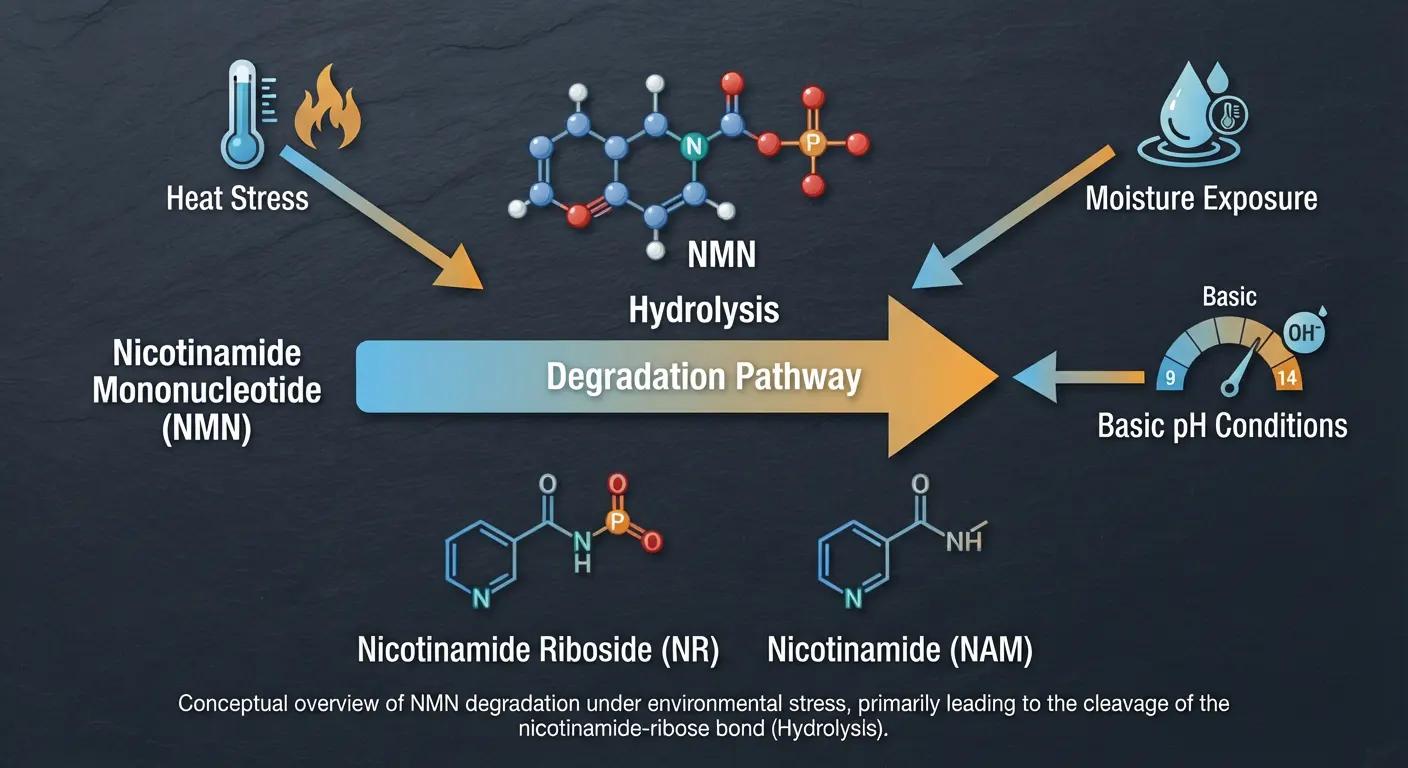 Here is the trap that catches even careful buyers: a COA is a snapshot, and NMN does not sit still.
NMN is a phosphorylated nucleotide, and it hydrolyzes over time — shedding its phosphate toward nicotinamide riboside, and further to nicotinamide plus a ribose-phosphate fragment. Degradation-kinetics work shows this proceeds by apparent first-order kinetics in aqueous solution, driven mainly by high temperature and pH, with the material most stable in cool, low-moisture, weakly acidic conditions [Xiang 2023, China J Chinese Materia Medica, PMID 38212023]. Forced-degradation studies similarly flag thermal and basic conditions as the fastest routes to breakdown [Zhou 2023, PMID 36617938].
The practical consequences for a "99.5%" powder:
- Dry beats wet. A lyophilized (freeze-dried), low-water-activity powder holds its assay far longer than a poorly dried or hydrated one. Water content on the COA and stability are the same story told twice.
- Cool and dark beats warm and bright. Heat accelerates hydrolysis; light and humidity compound it. Cold-chain shipping and desiccated, opaque packaging are not luxuries.
- Fresh beats old. Because degradation is continuous, a certificate that is generic and a year old tells you about a batch, not about your batch today. Insist on a batch-specific COA with a retest or stability window.
Purity and stability are inseparable. The highest assay in the world is worthless if the material arrives having quietly converted a slice of itself to NR in a hot warehouse.
How to Read a Spec Sheet: Red Flags
 When a spec sheet lands on my desk, these are the things that make me pause — and the ones that make me walk away:
- A percentage with no method. "99.9% pure" and nothing else. No column, no wavelength, no area-normalization vs external-standard note. Unverifiable by design.
- Silence on the anomer. A high assay but no chiral HPLC or optical-rotation data. You cannot document a beta-NMN claim without it.
- No water content. Missing Karl Fischer / water result on a moisture-sensitive molecule is a serious omission.
- Generic, undated, batch-less COA. A certificate not tied to your lot number, or with no test dates, is a template — not a result.
- Missing safety panel. No heavy metals (ICP-MS), no residual solvents (GC), no microbiology. These are the tests that protect the end user, and they are the first to be dropped by a cut-rate supplier.
- Round numbers everywhere. Real analytical data has texture (98.7%, water 0.4%, an RSD figure). A sheet of suspiciously clean round numbers often means "typed," not "tested."
The rule I give every formulator: buy the COA, then buy the powder. If a supplier can send a complete, batch-specific certificate — assay with method, beta-specificity, water, metals, solvents, microbiology — before you commit, the material behind it is usually sound. If the paperwork is thin, the powder will be too.
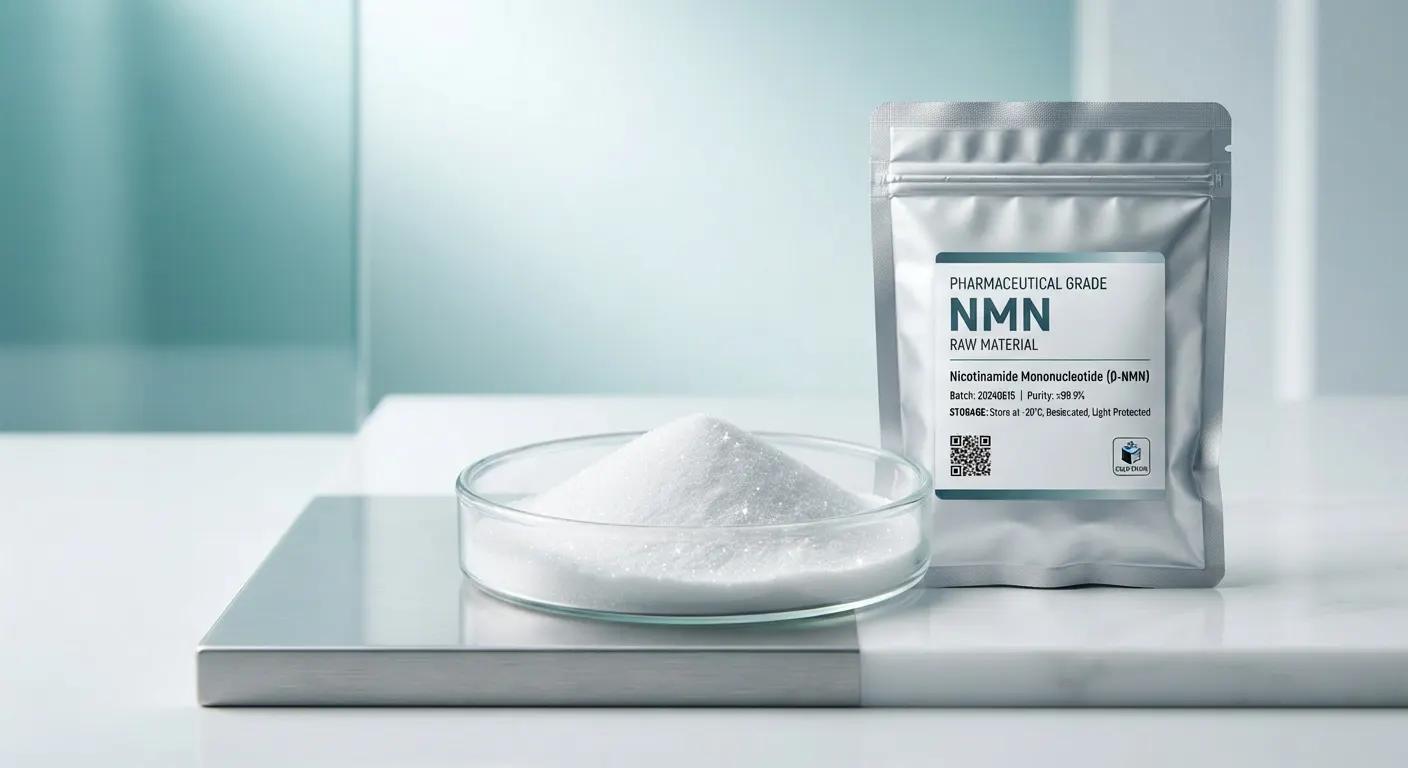
When you are ready to source documented material, GINKVORA supplies pharmaceutical-grade NMN (beta-Nicotinamide Mononucleotide) with beta-specificity and per-batch HPLC COA — the full profile described above, not just a headline number.
Related Articles
- NMN, NMNH & the NAD+ Market: Global Trends — where the category is headed and what buyers are asking for.
- PQQ & Mitochondrial Health: Market Trend — another mitochondrial-angle active where sourcing and testing decide quality.
- Salmon vs Vegan PDRN — how raw-material selection and supply-chain segregation shape a finished active.
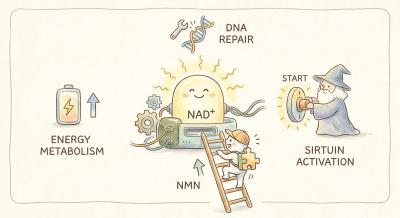
- What Is NMN? A Raw-Material Scientist Breaks Down the Mechanism
- Is NMN Safe? A Compliance View of the Safety Data and Global Rules