The NMN market is split in two.
On one side: consumers who know the name. NMN has accumulated ten years of search volume, Amazon best-sellers, and influencer credibility. On the other side: regulators who are still deciding what NMN is allowed to be. Between them: brand owners trying to build a sustainable business around a molecule whose legal status changes by region, by year, and sometimes by month.
As Marketing Manager at GINKVORA, I spend a disproportionate amount of time on this market — not because it is our only product, but because it is the product where regulatory complexity creates the largest strategic advantage for brands that understand the landscape before their competitors do.
The Science That Makes NMN Worth the Complexity
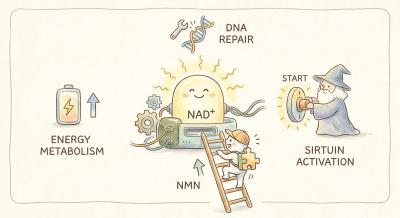
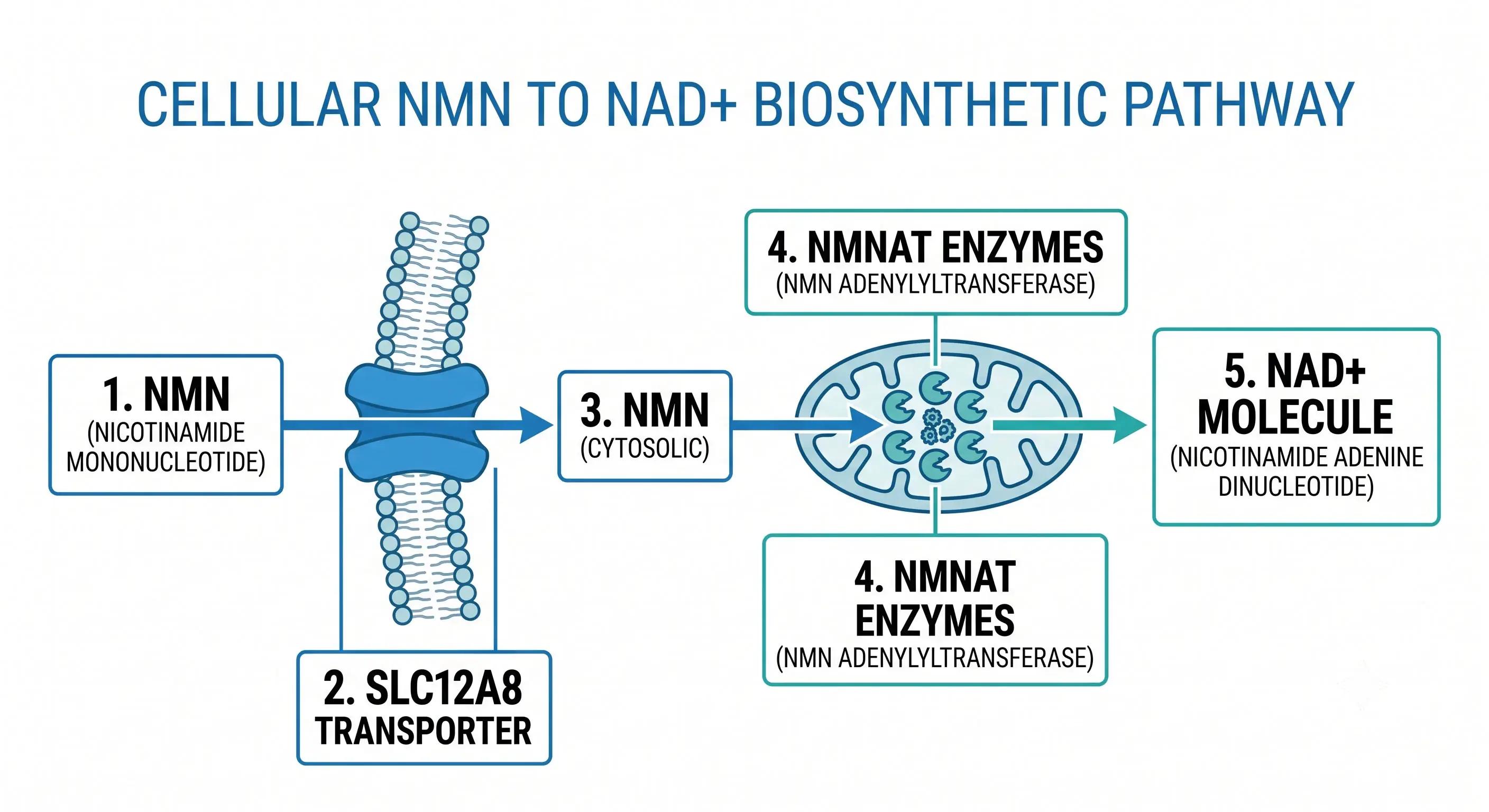 NAD⁺ (nicotinamide adenine dinucleotide) levels decline by approximately 40-50% between age 40 and 60. The decline is measurable, replicable across human populations, and mechanistically linked to age-related cellular dysfunction — mitochondrial efficiency loss, DNA repair failure, and sirtuin pathway silencing.
NMN is a direct NAD⁺ precursor. Oral NMN administration increases plasma NAD⁺ by 2-3× within 30 minutes in human trials. NMN is taken up by the Slc12a8 transporter in the small intestine, converted to NAD⁺ via the NMNAT1-3 enzyme family, and distributed systemically.
The efficacy signal is strong. The regulatory signal is where the complexity begins.
NR vs NMN: What the Evidence Shows
If you work in supplements, you have been asked: "Which is better — NMN or NR?" The question matters because these two NAD⁺ precursors collectively dominate the category, and the comparison keywords alone draw over 3,200 monthly searches.
Let me give you the evidence-based answer, not the marketing one.
The chemistry. NR (nicotinamide riboside) is one enzymatic step upstream from NMN. NR enters cells, gets phosphorylated by NRK1/2 into NMN, then NMN is converted to NAD⁺ by NMNAT enzymes. NMN skips the NRK bottleneck — especially relevant because NRK2 expression varies significantly across tissues and declines with age.
The clinical data. The landmark 2025 Nature Metabolism crossover trial — the first direct human comparison of NMN, NR, and nicotinamide — found NMN and NR produce similar blood NAD⁺ elevation at 130-150% above baseline. No statistically significant difference between the two at equivalent oral doses (250-500 mg/day). Both sustained elevation throughout the treatment period, unlike nicotinamide which produced only a transient 4-hour peak.
The caveat the studies do not advertise. Both NMN and NR are subject to gut microbiome processing before absorption — a significant fraction is converted to nicotinic acid by gut bacteria, then enters NAD⁺ synthesis through the Preiss-Handler pathway. The degree of this conversion varies enormously between individuals. This means the same 500 mg dose of either precursor can produce different NAD⁺ outcomes in different people. NRK-independent uptake via Slc12a8 may give NMN an edge in older populations where NRK2 expression is reduced, though this hypothesis awaits dedicated clinical confirmation.
My positioning recommendation. NR has the advantage of being the molecule behind Tru Niagen (Chromadex), which means it has the largest safety database among NAD⁺ precursors — over a decade of clinical data, multiple published human trials, and NDI notification history. NMN has the advantage of direct uptake and a larger consumer brand ecosystem. For GINKVORA, we supply NMN because our brand partners predominantly serve markets where NMN already has consumer trust. If your brand is US-only and you prefer maximum regulatory safety, NR via the Tru Niagen ingredient ecosystem is the more conservative choice.
The Global Regulatory Map
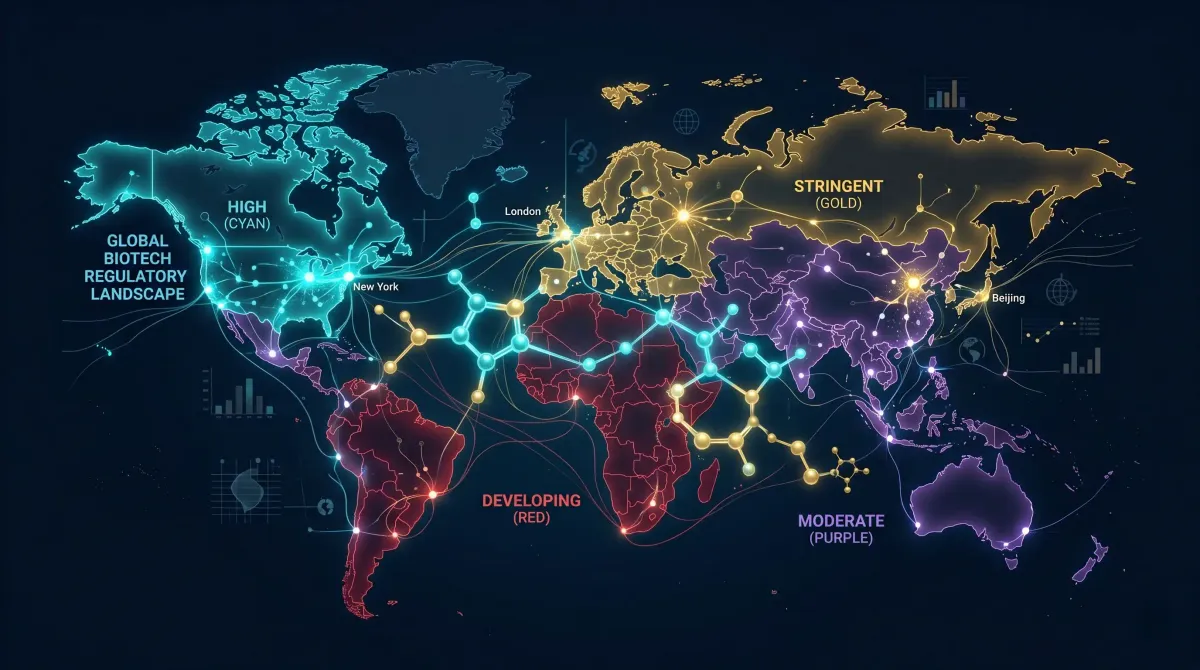
United States: The Contested Market
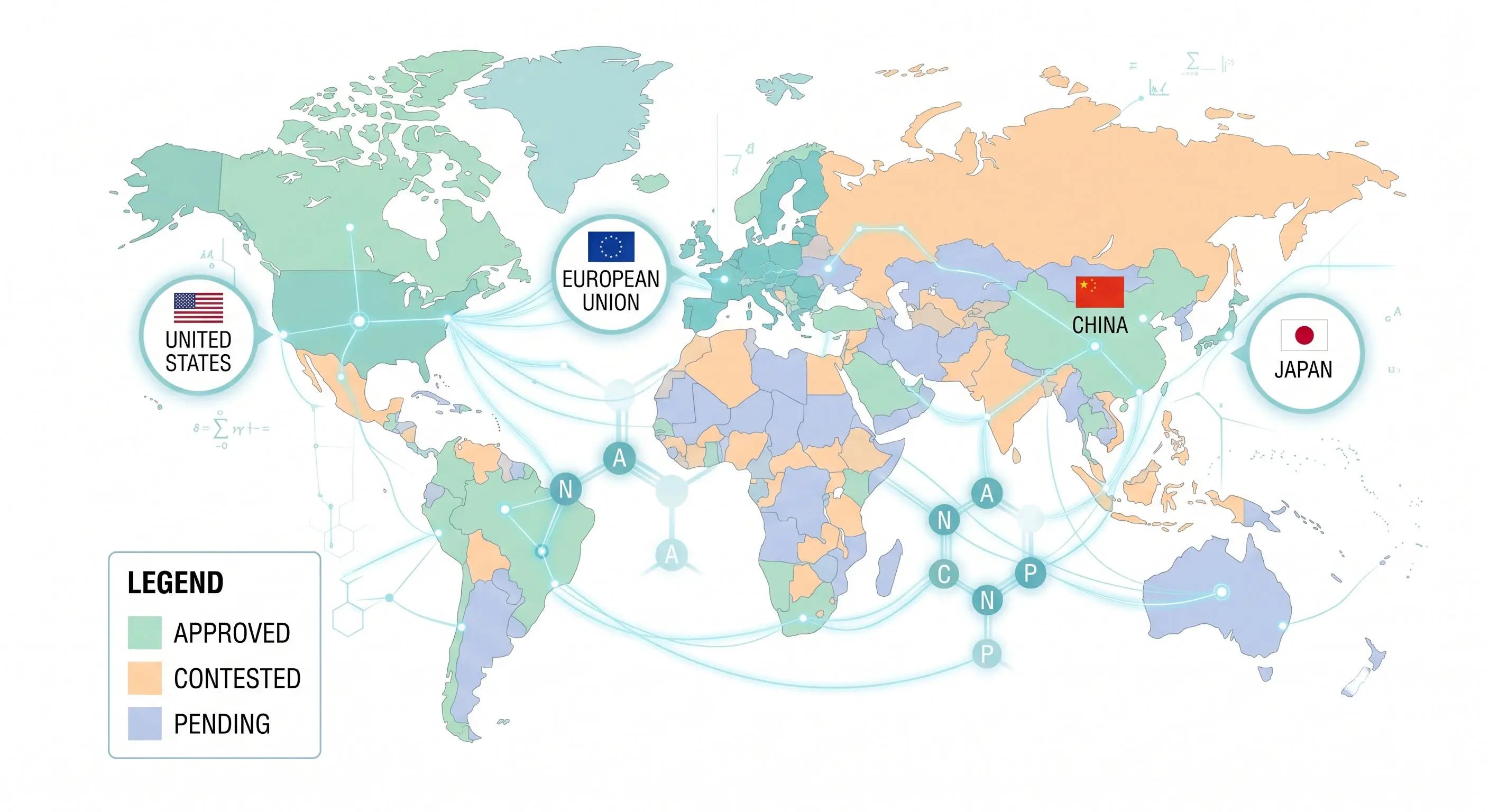
In November 2022, the FDA concluded that NMN could not be marketed as a dietary supplement because it was first authorized for investigation as a new drug by MetroBiotech (an NDA was filed). This triggered immediate consequences: Amazon delisted NMN supplements, and multiple brands suspended US sales.
The Natural Products Association (NPA) filed a citizen petition in 2023, followed by litigation, arguing that MetroBiotech's IND filing does not constitute commercial marketing and should not trigger the drug-exclusion clause. The outcome is unsettled as of 2025, but the practical reality is: many established NMN brands have shifted to NAD⁺ or NR (nicotinamide riboside) in their US-facing products to maintain regulatory safety.
Strategic implication: If your brand is US-focused, liposomal NAD⁺ or NR is the safest regulatory positioning today. NMN remains viable in the US if you can navigate the regulatory ambiguity, but it requires legal counsel and a contingency plan.
For US-facing brands, Liposomal NAD⁺ from GINKVORA bypasses the NMN regulatory debate entirely — direct NAD⁺ delivery with liposomal bioavailability, no IND exclusion risk.
China: The Emerging Giant
In November 2023, China's National Health Commission (NHC) and State Administration for Market Regulation (SAMR) included NMN in the Health Food Raw Material Directory. This is significant: it means NMN can be legally used in registered Chinese health foods with the permitted function claim of "anti-aging".
The Chinese NMN market has been estimated at ¥5-8 billion annually, with much of the supply historically sourced from domestic manufacturers. GINKVORA's position — with NMN available in both Liposomal and Superfood formats — allows us to serve the premium domestic market and export channels simultaneously.
Strategic implication: China is the largest open NMN market globally. Brands that register NMN health food products in China now will have a 12-24 month lead time advantage when the market consolidates.
Japan: The Mature Benchmark
Japan approved NMN as a food ingredient in 2020 and has the most mature NMN consumer market globally. Japanese consumers have high ingredient literacy — they understand NMN as an NAD⁺ precursor, not just a "longevity supplement."
The Japanese market sets the global pricing benchmark ($1,500-3,000/kg for pharmaceutical-grade NMN) and the quality standard (>99% purity with multiple-batch heavy metal certificates).
Strategic implication: If your NMN meets Japanese pharmaceutical-grade specifications, you can compete globally on quality. If not, you are competing on price in a market where the price war has already started.
European Union: The Waiting Game
EFSA (European Food Safety Authority) has not approved NMN as a novel food. Multiple applications are under review, but the process typically takes 18-36 months from submission to authorization. Until EFSA approval, NMN exists in a gray zone in the EU — technically unavailable for sale as a food supplement in most member states.
Strategic implication: EU-focused brands should prioritize NAD⁺ or NR products for the next 2-3 years, while monitoring EFSA proceedings. Preparing NMN Novel Food documentation now — before applications are approved — positions you to enter the EU market on Day 1 of authorization.
NMN vs. NMNH vs. NAD⁺: Three Strategies, One Target
GINKVORA supplies all three NAD⁺-centric molecules, and brand owners often ask me which one to build around. Here is the strategic choice:
| NMN | NMNH | NAD⁺ (Liposomal) | |
|---|---|---|---|
| Consumer Recognition | ✅ Highest | ⚠️ Low (emerging) | Medium |
| Regulatory Certainty | ⚠️ Contested (US) | ❓ Unknown (no separate review yet) | ✅ Bypasses NMN debate |
| NAD⁺ Increase Speed | Fast (2-3× increase) | Faster (2-3× vs. NMN at same dose) | Direct delivery |
| Scientific Data | Large (10+ years) | Small (3-5 years, early stage) | Large |
| GINKVORA Format | Liposomal + Superfood | Liposomal | Liposomal |
NMN is the established player. Consumer search volume, safety data, and brand equity are unmatched. The regulatory risk is real but region-specific — China and Japan are open, the US is contested, the EU is years away.
NMNH is the next-generation play. NMNH (the reduced form of NMN) increases NAD⁺ 2-3× faster than NMN at equivalent doses in early pharmacokinetic data. First identified as an NAD⁺ precursor by Zapata-Pérez et al. (2021, FASEB Journal), NMNH has been shown to elevate NAD⁺ more potently than NMN in mammalian cells and mice — achieving higher peak levels at the same dose. It is worth noting that the evidence base is still emerging: only 3-5 years of published research versus NMN's decade-plus. For a brand that wants to position as "next-generation NAD⁺ technology" rather than "we also sell NMN," NMNH is the molecule — but the smaller safety database means you need to be comfortable with early-adopter risk. Brands entering the NMNH space now will own the content and SEO advantage before the molecule achieves mass consumer recognition.
Source pharmaceutical-grade Liposomal NMNH from GINKVORA — delivering 2-3× faster NAD⁺ elevation than NMN at equivalent doses in liposomal format.
NAD⁺ (Liposomal) is the regulatory-safe play. Because NAD⁺ has never been the subject of an IND filing, it does not invoke the drug-exclusion clause that trapped NMN. Liposomal NAD⁺ is the most practical choice for US-focused brands that want to stay in the NAD⁺ precursor space without regulatory exposure.
NMN Form Factor Comparison
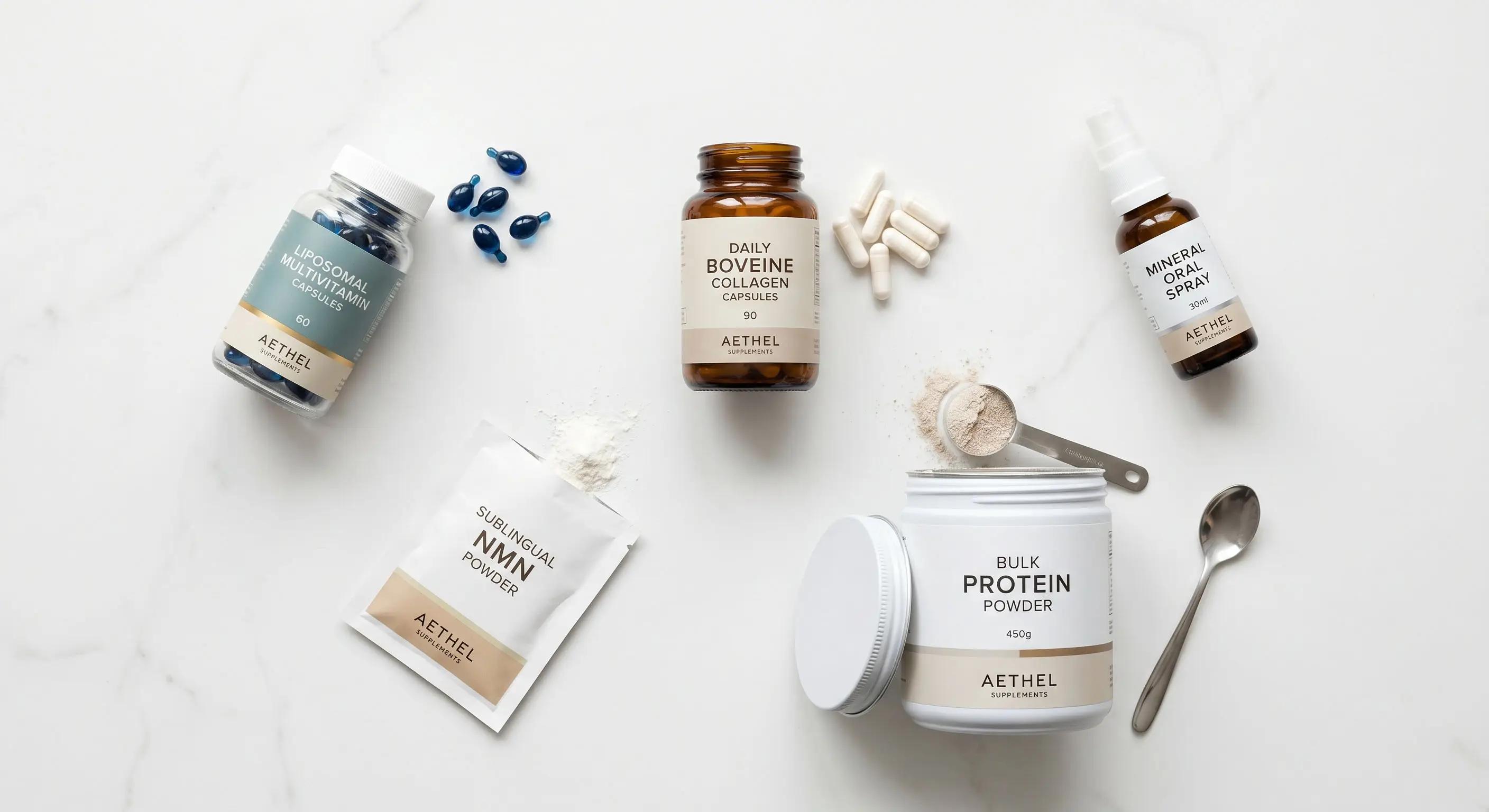
NMN is sold in multiple delivery formats — and they are not interchangeable. Here is how they compare:
| Form Factor | Bioavailability | Onset Time | Consumer Preference | Best For |
|---|---|---|---|---|
| Liposomal Capsule | Highest (3-8× AUC vs. powder) | Gradual (1-3 hr peak) | Premium users | Maximum NAD⁺ elevation per mg |
| Sublingual Powder/Tablet | Higher (bypasses GI first-pass) | Fastest (30-60 min peak) | Convenience users | Quick NAD⁺ boost, morning routine |
| Standard Capsule | Moderate (30-50% absorption) | 1-2 hr peak | Mass market | Budget-conscious consumers |
| Bulk Powder | Moderate (dose-dependent) | 1-2 hr peak | DIY/biohacker community | Dosing flexibility, cost efficiency |
| Nasal Spray | Theoretical (limited clinical data) | Fast (15-30 min) | Niche/early adopter | Direct brain NAD⁺ delivery hypothesis |
The practical advice for brand owners: liposomal NMN commands the highest premium and strongest differentiation. Sublingual appeals to consumers who do not want to swallow capsules. Bulk powder is a race to the bottom on price — avoid it unless you have cost leadership. Nasal spray is an interesting niche but verify stability data before committing — NMN in aqueous solution degrades within hours at room temperature.
My Recommendation for Brand Owners
| Your Market | Your Best NAD⁺ Strategy |
|---|---|
| US-focused brand | Liposomal NAD⁺ (regulatory safety) or NMNH (if you have legal counsel) |
| China-focused brand | NMN (registered health food pathway) |
| Japan-focused brand | NMN (>99% purity, pharma-grade, compete at the quality ceiling) |
| EU-focused brand | Prepare NMN dossier now, sell NAD⁺/NR in the interim |
| Global brand | Multi-product line: NMN (Asia) + NAD⁺ (US/EU) + NMNH (premium SKU) |
What "Pharmaceutical Grade" NMN Means
The label "99% pure NMN" is everywhere. Here is the reality behind that number — and why 99% purity by HPLC alone is not enough.
The 99% HPLC trap. HPLC (High-Performance Liquid Chromatography) quantifies the β-NMN content relative to known impurities. It tells you the chemical purity of the material — but it says nothing about endotoxin contamination (bacterial cell wall fragments that cause inflammatory reactions), residual solvents from chemical synthesis (POCl₃, acetonitrile, DMF), or heavy metals. A batch can read 99.5% on HPLC and still fail on endotoxin.
The six-test pharmaceutical-grade standard. For NMN to be genuinely pharmaceutical-grade, every batch should come with a third-party certificate of analysis (CoA) covering all six of these orthogonal verification methods:
| Test | Method | Specification |
|---|---|---|
| Purity & Identity | HPLC-DAD | ≥99.0% β-NMN |
| Structure Confirmation | ¹H-NMR | Matching reference spectrum |
| α/β Isomer Ratio | LC-MS/MS | β-NMN dominant (α-isomer is biologically inactive) |
| Heavy Metals | ICP-MS | Total ≤10 ppm; Pb, As, Cd, Hg each ≤0.5 ppm |
| Residual Solvents | GC-MS | Below ICH Q3C limits |
| Endotoxin | LAL Assay | <2.0 EU/mg |
The third-party verification checklist. When you receive a CoA from any NMN supplier, check seven things: (1) unique report number; (2) batch number matching the shipment; (3) analysis date within 12 months; (4) testing laboratory is independent and ISO/IEC 17025 accredited — not the supplier's in-house lab; (5) test methods are explicitly named; (6) results are numerical values, not just "Pass"; (7) the full six-test panel above, not just HPLC.
Why this matters for your brand. A $15/kg price difference between two NMN suppliers disappears the moment a single batch fails endotoxin and you recall finished product. Pharmaceutical-grade NMN costs more because it is tested more. For GINKVORA, multi-batch heavy metal and endotoxin certificates are not an upsell — they are the baseline.
GINKVORA's β-Nicotinamide Mononucleotide (NMN) raw material meets the full six-test pharmaceutical-grade standard. For finished-product brands, Liposomal NMN delivers 3-8× AUC improvement with the same quality floor.
NMN + Resveratrol: The Substrate-Activator Pair
No discussion of NMN market strategy is complete without resveratrol. The combination — often called the "Sinclair Protocol" after Harvard's David Sinclair — generates over 1,300 monthly searches and is the most discussed NAD⁺ stack in the longevity community.
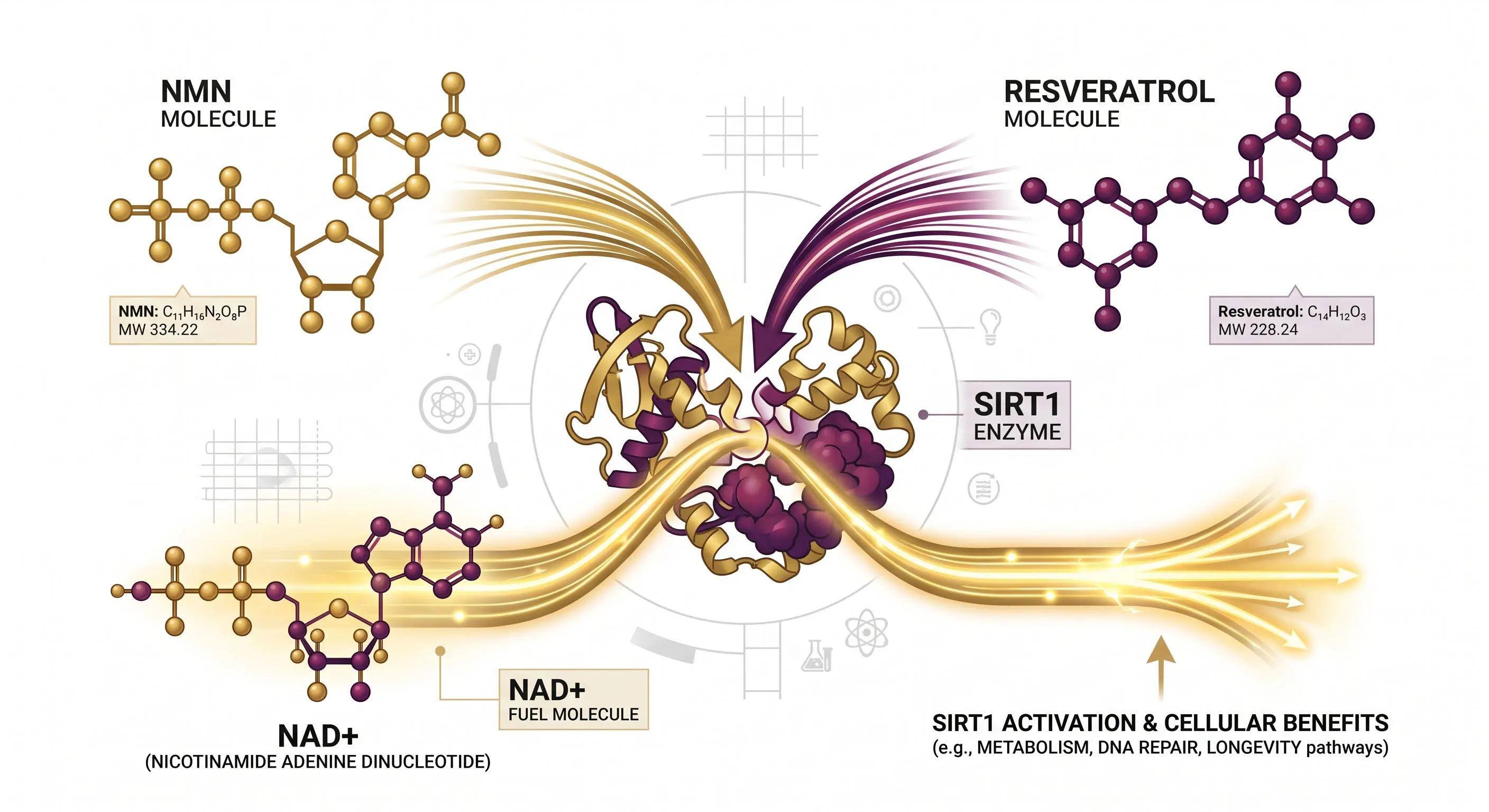
The logic. NAD⁺ is the fuel. Sirtuins (SIRT1-SIRT7) are the enzymes that use NAD⁺ to regulate DNA repair, mitochondrial biogenesis, and inflammation. NMN provides the fuel. Resveratrol acts as a SIRT1 activator — it increases the enzyme's affinity for NAD⁺, effectively pressing the accelerator. Without adequate NAD⁺, resveratrol has nothing to activate. Without resveratrol, elevated NAD⁺ is potential energy sitting unused.
The foundational evidence comes from Sinclair's 2013 Cell paper, which demonstrated that NAD⁺ restoration combined with sirtuin activation reversed age-related mitochondrial decline in mice. Animal studies consistently show the combination outperforms either molecule alone on metabolic function, endurance, and vascular health markers.
The dosage convention. The most widely cited protocol is 1:1 — 500 mg NMN + 500 mg trans-resveratrol daily, taken in the morning. Sinclair's personal protocol is 1 g each. Resveratrol should be taken with a fat-containing meal (it is fat-soluble); NMN timing is more flexible.
The evidence status. Direct human combination trials of NMN + resveratrol are still pending. What exists: strong animal data for the combination, and solid human data for each molecule individually. The mechanism is well-established, but brands should position the stack as "mechanism-supported" rather than "clinically proven for the combination."
For brands building the NMN + resveratrol stack, GINKVORA's Liposomal Resveratrol uses the same encapsulation system as our NMN products — matching particle size, matching phospholipid matrix.
Where the Market Is Heading in 2026-2027
Four signals I am watching:
Pharmaceutical-grade quality becoming the baseline: The days of 95% NMN selling at premium prices are ending. 98-99% with multi-batch heavy metal and endotoxin certificates is the new minimum. Buyers are increasingly sophisticated — they ask about ISO/IEC 17025 lab accreditation, not just the purity number. GINKVORA's Liposomal and Superfood NMN are positioned at this quality ceiling.
Cost compression in NMN manufacturing: Chinese NMN production capacity has expanded significantly, compressing B2B pricing from $3,000/kg (2020) to approximately $800-1,500/kg (2025) for standard grade. The value has shifted from raw NMN supply to delivery format — which is why our investment went into liposomal encapsulation rather than just increasing NMN inventory.
NMNH as the differentiation play: Brands are realizing that NMN differentiation opportunities are shrinking. NMNH — with its faster NAD⁺ elevation profile — is the new frontier. Brands that establish NMNH content now will have the same first-mover advantage that NMN brands had in 2019. Early NMNH adopters face a trade-off: smaller safety database versus the chance to own the next-generation NAD⁺ narrative before competitors arrive.
The form factor premium: The gap between commodity NMN (bulk powder, $800/kg) and premium-formatted NMN (liposomal capsules, $3,000/kg equivalent) is widening. Consumers are increasingly educated about bioavailability differences, and they vote with their wallets. The brand that explains why their NMN absorbs better — with data — wins the premium tier.
The NAD⁺ precursor category is not plateauing. It is bifurcating: NMN becomes the commodity molecule for established markets, while NMNH and advanced delivery (liposomal, sublingual) become the premium, margin-protected tier.
Related Articles
- PQQ: The Market's Most Underrated Mitochondrial Molecule — PQQ generates new mitochondria while NMN provides NAD+ fuel — the three-pillar strategy
- Liposomal Delivery: Why It's Becoming the New Standard — Why liposomal NMN increases AUC 3-8× over standard powder
- GHK-Cu Copper Peptide: A Formulator's Technical Guide — Copper peptide chemistry for anti-aging formulations
Zhilin leads global marketing strategy at GINKVORA, specializing in the intersection of biotechnology and market positioning. This analysis draws on regulatory filings, market data, and GINKVORA's direct experience supplying NAD⁺ precursor molecules across 23 markets.