TL;DR
- PDRN does have real biology behind it — it is a selective A2A adenosine-receptor agonist that calms inflammation and supports skin repair (PMC13264829).
- But the skeptic is also right: intact PDRN fragments are 50–1,500 kDa, roughly 1,000× larger than the ~500-Dalton size that crosses skin easily. Slapping raw powder into a cream does not make it work topically.
- The deciding factor is delivery, not the ingredient. Low-molecular-weight fractions, liposomes, microneedling, and spicule technology are what move PDRN toward the dermis.
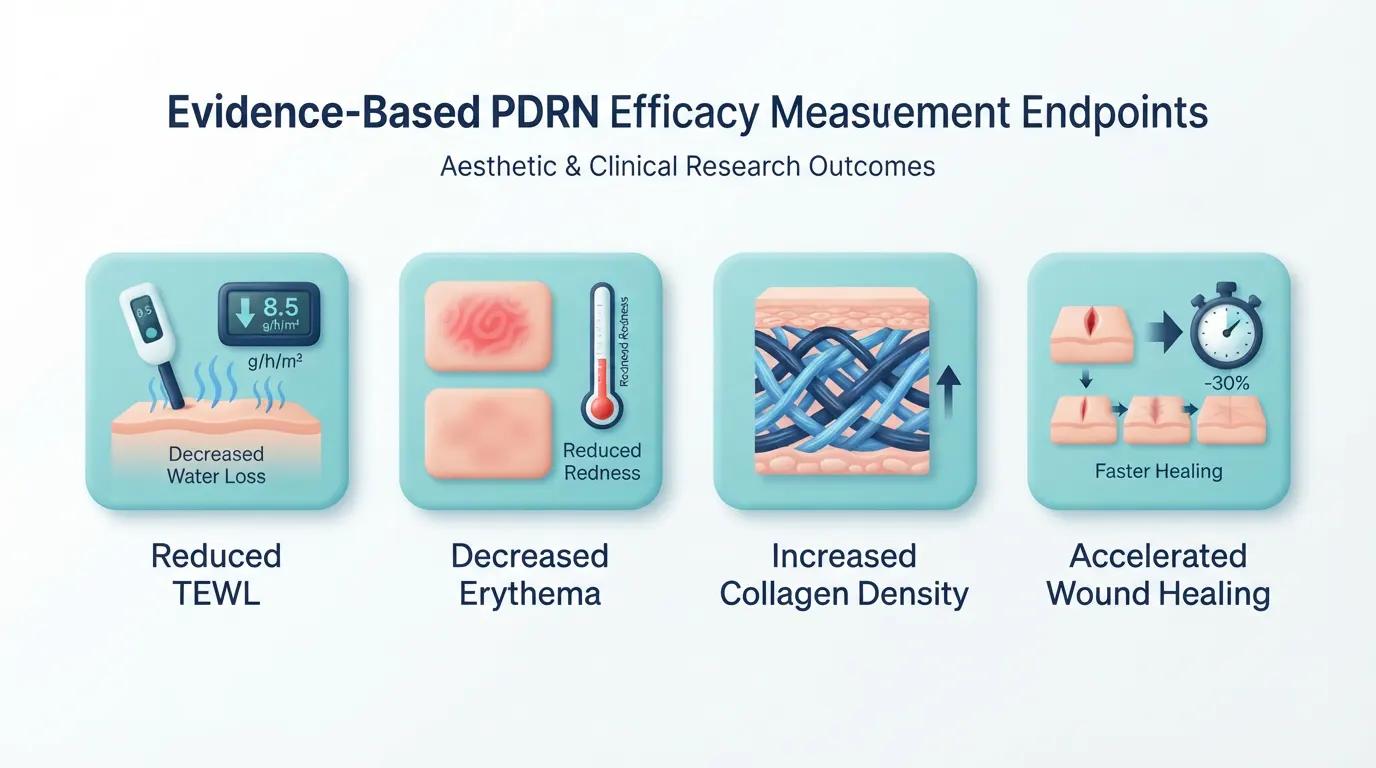
- "Works" honestly means barrier repair, anti-inflammation, hydration, and post-procedure healing — not erasing wrinkles. Judge a formula by TEWL, erythema index, and collagen I/III markers, not marketing.
- If you buy the raw material, demand a molecular-weight distribution report + per-batch COA, not a vague "98% pure" claim.
Everyone Is Asking the Wrong Question
Three years ago, almost no one outside aesthetic clinics had heard of PDRN (polydeoxyribonucleotide). Today it is one of the most searched skincare actives on the planet. In China — the world's largest skincare market — search interest for the term grew over 2,000% year-on-year in 2025, and analysts project the global PDRN market to expand at a ~43% CAGR through 2030 (Jiemian, 2025).
With that explosion came the argument that now dominates comment sections: "Does topical PDRN actually work, or is it hype?"
As someone who supplies the raw material, I have a conflict of interest and no reason to lie to formulators. So here is the honest version: both sides are partially right, and the fight is mostly about delivery, not the molecule. Let me show you the chemistry.
The Chemist Is Right (About the Objection)
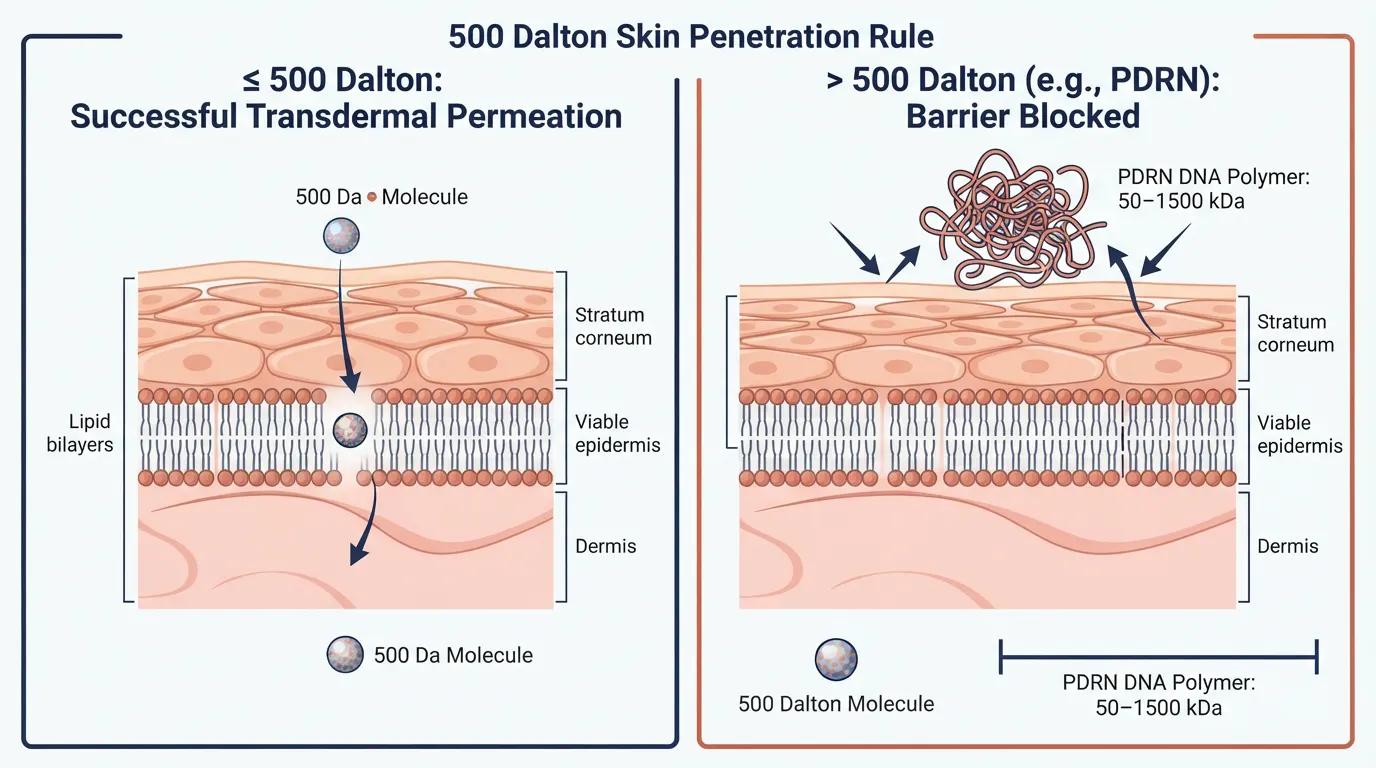 The skepticism starts from a solid fact. PDRN is a mixture of DNA fragments, and the published ranges put it at 50–1,500 kDa, with a representative band around 80–200 kDa and a peak near 132 kDa (Marine Drugs, 2021; 2025 clinical consensus).
Skin, meanwhile, obeys a long-standing heuristic often called the ~500-Dalton rule: molecules much larger than ~500 Da do not readily cross the intact stratum corneum on their own.
Do the math:
1,500,000 Da (upper PDRN bound) ÷ 500 Da ≈ 3,000× too big to stroll through skin unassisted.
So the chemist who says "a big DNA polymer can't penetrate, therefore topical PDRN is nonsense" is correct about the raw molecule. Cell-culture studies where you bathe cells directly in PDRN tell you almost nothing about what happens when you rub it on top of dead skin cells.
That is the real trap in this debate: people cite in-vitro efficacy as if it were topical efficacy. It isn't.
 A useful analogy: collagen drunk in a beverage is absorbed as amino acids, not as intact collagen — so "eat collagen, get collagen" is false even though collagen is a real, useful protein. Topical PDRN with no delivery assistance is the same category error. The molecule is legitimate; the route is what a petri dish never proved.
Why It's a Formulation Problem, Not an Ingredient Problem
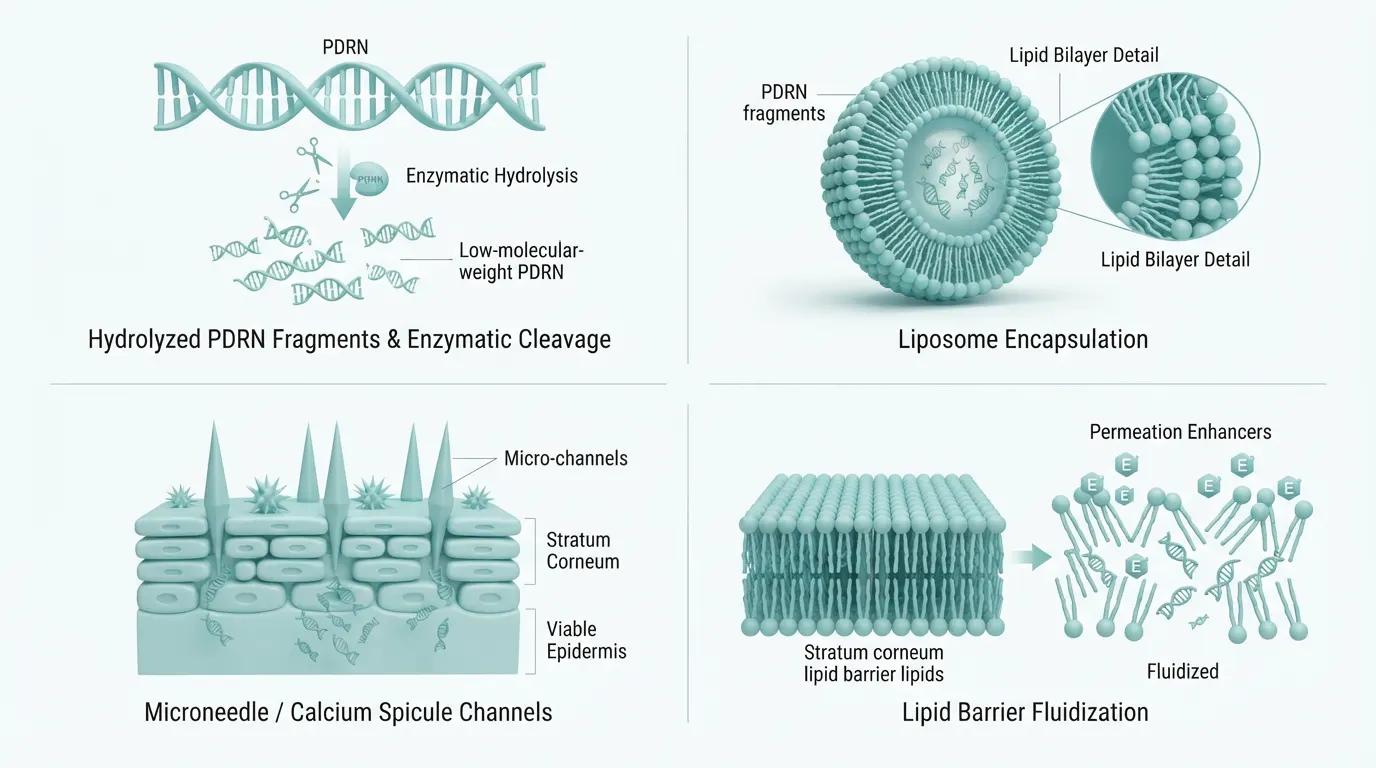 Here is the part the skeptics miss. "PDRN can't penetrate" is only true for untreated PDRN. The molecule is a mixture of fragment sizes, and the formulator has levers:
- Fragment-size distribution. A Spec sheet that reports the full distribution — not just an average — tells you how much of the batch sits in the low-penetrating range. Lower-weight fractions (well under 50 kDa) behave very differently from the 1,500 kDa tail.
- Fragment optimization. Controlled enzymatic hydrolysis can shift more mass into the bioavailable band without destroying the A2A-active sequence.
- Permeation enhancers. Ethanol, lecithin, and certain fatty aids temporarily fluidize the lipid barrier and let fragments through.
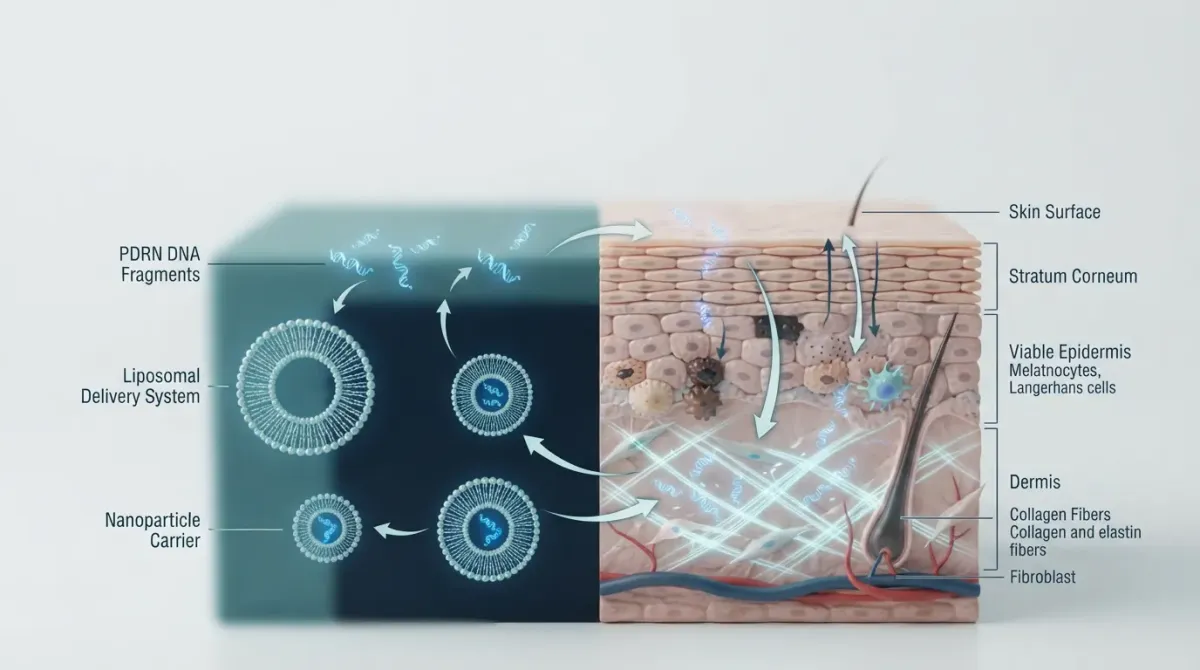
- Carriers. Liposomes, nanoparticles, and polymer microspheres protect PDRN from nuclease breakdown and ferry it deeper (see the delivery-science literature).
In other words: the ingredient is fine. The product lives or dies on whether someone engineered a way to get it past the barrier. This is true of almost every hero active — retinol, peptides, even some vitamins started life as "too big to work."
Delivery Makes or Breaks It
Once you accept that delivery is the variable, the evidence splits cleanly by route:
- Injectable (clinic) PDRN places material directly in the dermis. This is the original, best-studied use — wound healing, post-laser recovery, scar modulation all have the strongest data here (KMJ 2025 review). Depth = stronger, faster endpoints.
- Microneedling / spicules. Tiny physical channels (or calcium-carbonate "spicules") bypass the stratum corneum entirely. This is the bridge that makes "topical PDRN" clinically meaningful rather than cosmetic theater.
- Liposomal / nanoparticulate topicals. Newer carrier work shows meaningful in-vitro and in-vivo penetration gains — one study reported >200% improvement in transdermal flux with a nanoparticle form (Beijing Tech of Chemical Engineering, IJBM summarizes the direction). Still early, but the trend line is clear.
The honest summary: a leave-on serum without assistive delivery will underperform; the same active in a microneedled or carrier-engineered format can reach living tissue. "Works or not" is really "delivered or not."
What "Works" Actually Means
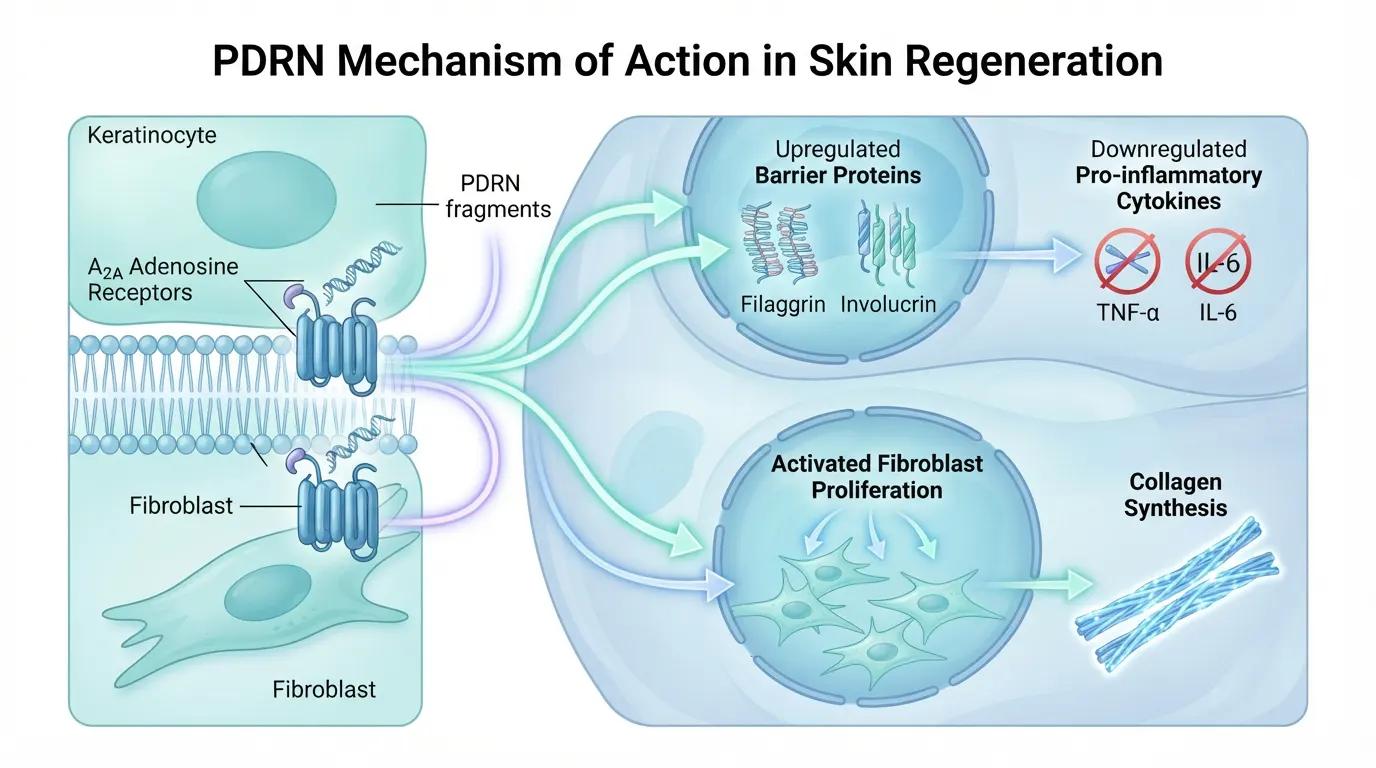 This is where brands oversell and skeptics over-correct. PDRN is not a wrinkle-eraser. The biology points at a specific, defensible set of benefits:
- Barrier repair. A2A signaling supports fibroblast and keratinocyte activity and down-regulates inflammatory cytokines (TNF-α, IL-6), which reads as calmer, more resilient skin (PMC13264829).
- Anti-inflammation. The same pathway is why clinic PDRN is used after lasers and peels — it shortens the angry, red recovery phase.
- Hydration & recovery. Better barrier = better water retention; post-procedure healing is the most consistent real-world win.
- Collagen support. Indirect, via fibroblast proliferation — measurable, but slower and subtler than a needle.
A 2025 clinical consensus on PDRN in dermatology summarizes barrier repair and post-procedure healing as the best-supported uses, while noting that high-quality randomized data in cosmetic (leave-on) formats is still limited (KMJ 2025). Translation for brands: set consumer expectations in weeks, not days, and pair every claim with a measured endpoint. The actives that win long-term are the ones that can show the data, not just tell the story.
If you are a formulator or brand, judge a PDRN claim by verifiable endpoints, not adjectives:
| Claim | Honest endpoint to measure |
|---|---|
| "Repairs barrier" | TEWL (transepidermal water loss) ↓ |
| "Calms redness" | Erythema index ↓ |
| "Supports firmness" | Collagen I / III mRNA or procollagen ↑ |
| "Speeds recovery" | Post-procedure healing time ↓ |
If a supplier or competitor can't point to one of those, you're looking at hope, not data.
The Reality Check
If your brand sells a standard serum with ~0.5% PDRN and no assistive delivery, the honest outcome is modest: some barrier support, a calmer feel, a little more resilience — not a clinical transformation. That is still a real, sellable benefit; "supports the skin's repair processes" is a defensible claim. What fails is promising needle-level results from a pump bottle. Match the claim to the delivery, and PDRN earns its shelf space. Over-promise, and the next Reddit thread writes itself.
How to Judge If a PDRN Raw Material Can Make an Effective Topical
If you formulate or buy bulk PDRN, the molecule on the COA is only half the story. Here is the checklist I give serious buyers:
- Molecular-weight distribution report. Average MW is a vanity metric. You want the curve — how much is in the <50 kDa bioavailable band vs the 1,500 kDa tail.
- Homology / DNA-content method. "95% human homology" or ">95% DNA content" should come with a stated method (sequencing or hybridization), not a slogan.
- Delivery-compatibility guidance. PDRN is heat- and acid-sensitive (phosphodiester bonds). A supplier who can't tell you the stable pH window and max addition temperature isn't ready for a topical line.
- Per-batch COA, not a sample COA. Endotoxin (EU/mg), heavy metals (Pb / As / Cd / Hg in ppm), microbiology, and moisture — every batch, because bulk biologicals drift.
- Source traceability. Salmon-derived vs plant-fermented (vegan) — and, if both are offered, proof the two supply chains are segregated (cross-contamination is a real risk for fish-allergen and halal/kosher brands).
Source pharmaceutical-grade PDRN (Polydeoxyribonucleotide) bulk powder from GINKVORA — salmon-derived and plant-based vegan grades, segregated supply chains, with a molecular-weight distribution report and per-batch COA on every lot.
Educational note: The mechanistic and clinical research cited here describes PDRN as studied in topical, microneedled, and injectable contexts. GINKVORA supplies PDRN as a cosmetic-grade raw material; this article is for formulator and brand education and is not intended as medical advice or a drug claim. Final product claims must comply with the regulations of your target market (e.g., FDA, EU CPR, MFDS).
Related Articles
- What Is PDRN? The Complete Guide to Salmon DNA in Skincare — the biochemistry, homology, and why 95% matters.
- Where Does PDRN Come From? Salmon DNA Source, Extraction & Purity Explained — source, enzymatic hydrolysis, and how purity is actually measured.
- PDRN vs Exosomes, EGF, Retinol & Peptides — how PDRN compares to the other "regeneration" actives on the shelf.