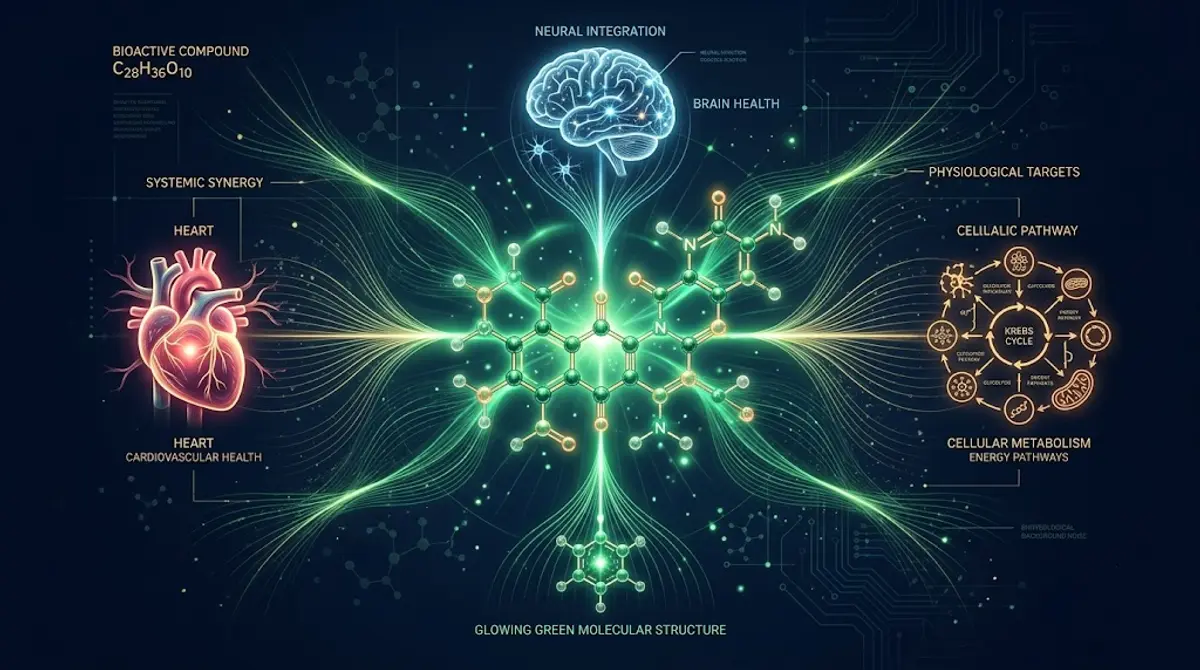
TL;DR — EGCG (Epigallocatechin gallate) is the most abundant and biologically active catechin in green tea, accounting for 50–60% of total tea catechins. Its unique chemical architecture — 8 phenolic hydroxyl groups plus a gallate ester at C-3 — gives it the strongest antioxidant capacity among all tea polyphenols. Across 15 RCTs (n=1,945), EGCG supplementation at 270–800 mg/day increases fat oxidation by 16% (p<0.001) and 24-hour energy expenditure by ~100 kcal. A 12-week trial (n=240) reported 1.38 kg greater weight loss vs placebo. In a mouse lifespan study, 100 mg/kg/day EGCG reduced mortality risk by 46.96% and extended median lifespan by ~25%. EGCG also demonstrates clinically meaningful effects on blood pressure, endothelial function, neuroinflammation, and multiple cancer-related signaling pathways. For supplement formulators and raw material buyers, EGCG offers the broadest and most clinically validated benefit profile among single-compound antioxidant ingredients, with a well-characterized safety window (tolerable ≤800 mg/day).
Whether you are sourcing raw materials for a metabolic health formula, an anti-aging stack, or a cardiovascular supplement, you need to answer one question first: what, exactly, does this ingredient do — and how strong is the evidence? This article walks through the complete benefit spectrum of EGCG, from molecular mechanism to human clinical data, so you can make sourcing and formulation decisions on a solid evidence base — not on a marketing brochure.
EGCG: The Most Bioactive Catechin in Green Tea
Green tea contains four major catechins, but they are not equal. EGCG (C₂₂H₁₈O₁₁, MW 458.4 g/mol) is the dominant species — making up approximately 50–60% of total tea catechins and 7–13% of green tea dry weight — and it is the only one that combines both a tri-hydroxy B-ring and a gallate ester group. This dual structural feature is what gives EGCG its outsized biological activity.
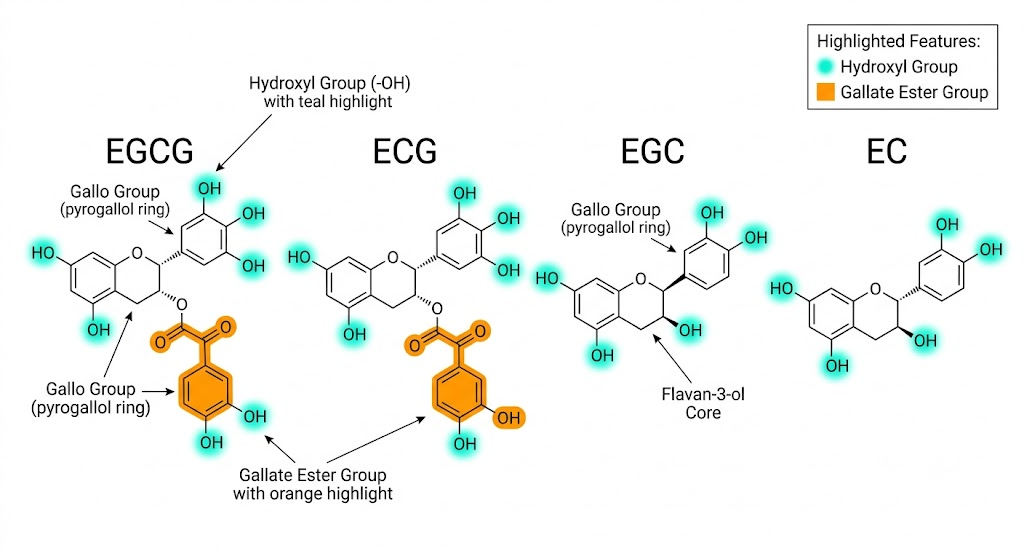
| Catechin | MW (g/mol) | B-ring OH | Gallate Ester | Relative Antioxidant Activity | % of Total Tea Catechins |
|---|---|---|---|---|---|
| EGCG | 458.4 | 3 | Yes | Strongest | 50–60% |
| ECG | 442.4 | 2 | Yes | Strong | 10–15% |
| EGC | 306.3 | 3 | No | Moderate | 15–20% |
| EC | 290.3 | 2 | No | Weak | 5–10% |
The B-ring hydroxyl count determines radical-scavenging capacity (more OH groups = more hydrogen atoms available to donate to free radicals). The gallate ester at C-3 enables EGCG to bind protein targets with higher affinity and engage in additional hydrogen-bonding interactions that the non-esterified catechins cannot. EGCG also directly chelates transition metal ions (Fe²⁺, Cu²⁺), blocking the Fenton reaction that generates hydroxyl radicals in vivo.
For buyers evaluating ingredient specifications: a product labeled "Green Tea Extract 50% Polyphenols" typically delivers only 20–30% EGCG. If your formula requires meaningful clinical dosing (400–500 mg/day EGCG), you need an extract standardized to ≥90% EGCG. EGCG (Epigallocatechin Gallate) 98% HPLC delivers the purity required for clinical-dose formulations without excipient overload.
Antioxidant & Anti-Inflammatory: The Molecular Foundation
EGCG's broad therapeutic profile rests on two interlocking mechanisms: direct radical scavenging and cell signaling modulation.
Direct antioxidant activity. With 8 phenolic hydroxyl groups per molecule, EGCG neutralizes superoxide, hydroxyl, and peroxyl radicals at nanomolar to low-micromolar IC₅₀ values. Each hydroxyl can donate a hydrogen atom to quench a free radical, converting the EGCG molecule into a relatively stable phenoxyl radical that downstream antioxidants (ascorbate, glutathione) can regenerate — a catalytic cycle rare among dietary polyphenols.
Nrf2 pathway activation. EGCG upregulates the transcription factor Nrf2 (nuclear factor erythroid 2-related factor 2), the master regulator of the endogenous antioxidant response. Nrf2 translocates to the nucleus and binds to the Antioxidant Response Element (ARE), triggering the expression of over 200 cytoprotective genes — including superoxide dismutase (SOD), catalase, glutathione peroxidase, and heme oxygenase-1 (HO-1). Unlike direct antioxidants that consume themselves in the process, Nrf2 activation provides sustained, amplified cellular protection.
NF-κB and inflammatory cascade suppression. EGCG inhibits the nuclear factor kappa-B (NF-κB) pathway through multiple targets: it blocks IκB kinase (IKK) phosphorylation, preventing IκB degradation and NF-κB nuclear translocation, and directly interferes with NF-κB DNA binding. Downstream, this reduces the transcription of pro-inflammatory cytokines TNF-α, IL-1β, and IL-6, as well as enzymes COX-2 and iNOS. A 2025 comprehensive review in Molecules summarized the evidence: EGCG's anti-inflammatory effects are consistently observed at physiologically achievable concentrations (0.1–10 μM) across endothelial, immune, and neuronal cell types.
For formulators, this dual antioxidant/anti-inflammatory mechanism is particularly valuable because it addresses the root causes of most chronic conditions — oxidative stress and low-grade inflammation — with a single ingredient, reducing the need for multi-compound stacks at the antioxidant/anti-inflammatory layer.
Metabolic Health: Fat Oxidation & Weight Management
The metabolic effects of EGCG are among the most thoroughly studied in the nutraceutical space, supported by multiple meta-analyses and large-scale RCTs.
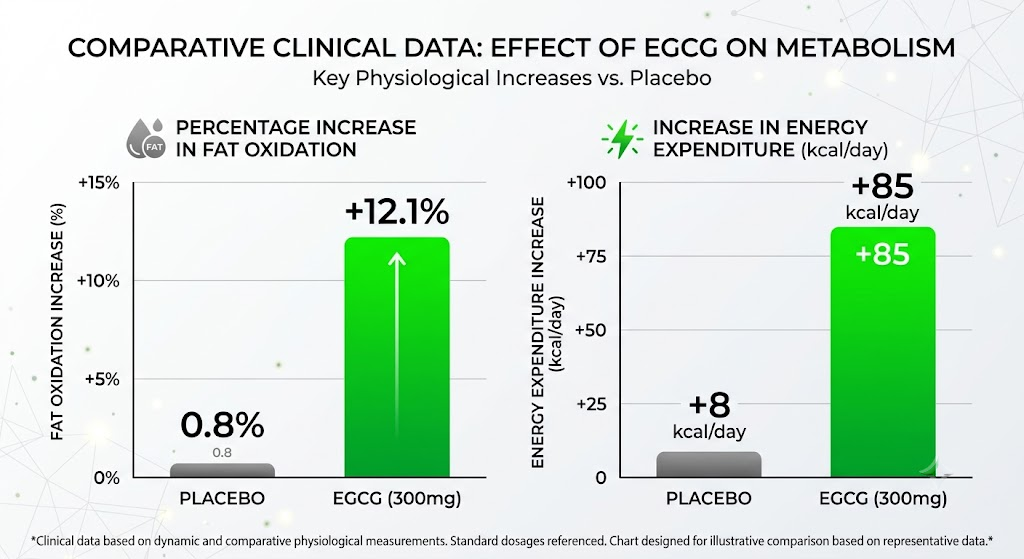
Fat oxidation meta-analysis (15 RCTs, n=1,945). A landmark meta-analysis published in the International Journal of Obesity aggregated data across 15 randomized controlled trials and found that green tea catechins containing EGCG increased 24-hour fat oxidation by 16% vs placebo (SMD = 0.56, 95% CI: 0.32–0.80, p<0.001). 24-hour energy expenditure increased by approximately 100 kcal/day at EGCG doses of 270–800 mg. The effect was larger during exercise (+33%) than at rest (+12%), and was more pronounced in individuals with higher BMI and lower habitual caffeine intake.
Weight loss clinical trial (n=240). Nagao et al. conducted a 12-week double-blind RCT in Japanese adults with a 690 mg/day catechin beverage (containing ~400 mg EGCG). The catechin group lost an additional 1.38 kg of body weight vs placebo (p=0.002), with significant reductions in body fat area, visceral fat, and subcutaneous fat. LDL cholesterol also decreased significantly.
Exercise synergy. A 2024 systematic review and meta-analysis of 10 RCTs in the Journal of the International Society of Sports Nutrition confirmed that adding green tea catechins to structured exercise programs produced a small but statistically significant additional reduction in body weight (SMD = -0.30, p=0.011), BMI (SMD = -0.33, p=0.03), and fat mass (SMD = -0.29, p=0.049) compared to exercise alone.
Clinical dose range. Across all studies, the effective EGCG dose cluster is 400–500 mg/day. Doses below 270 mg show inconsistent effects; doses above 800 mg/day increase the risk of hepatic enzyme elevation in a small subset of users. The practical takeaway for formulators: design your serving size to deliver 400–500 mg EGCG, and recommend administration with food and 30–60 minutes before exercise for maximum metabolic benefit.
Cardiovascular Protection
The cardiovascular protective effects of EGCG operate through three complementary pathways:
Endothelial function. EGCG stimulates endothelial nitric oxide synthase (eNOS) via the PI3K/Akt pathway, increasing nitric oxide (NO) bioavailability. NO is the primary vasodilatory signal in the vascular system; loss of NO function is a hallmark of endothelial dysfunction and hypertension. A 2024 randomized clinical trial published in Scientific Reports demonstrated that 8 weeks of EGCG supplementation significantly reduced blood pressure in human subjects, with accompanying improvement in flow-mediated dilation (FMD) — the gold-standard measure of endothelial function.
LDL oxidation and lipid profiles. EGCG inhibits the oxidation of LDL cholesterol — the critical step that transforms native LDL into the atherogenic, foam-cell-forming species that drives atherosclerosis. The Nagao et al. (2007) trial showed that 12 weeks of catechin supplementation reduced both LDL cholesterol and malondialdehyde-modified LDL (an oxidative damage marker). A 2025 review in the Journal of Clinical Hypertension concluded that regular EGCG intake significantly decreases blood pressure and improves lipid profiles across animal and human studies, though the authors note that larger confirmatory trials are still needed.
Arterial stiffness. EGCG reduces arterial stiffness by inhibiting vascular smooth muscle cell proliferation and collagen deposition in the arterial wall, an effect mediated through TGF-β/Smad pathway suppression and matrix metalloproteinase (MMP) regulation.
For cardiovascular supplement formulators, EGCG's multi-target vascular profile — simultaneously addressing endothelial function, lipid oxidation, and arterial stiffness — makes it a compelling alternative to single-mechanism ingredients.
Neuroprotection & Brain Health
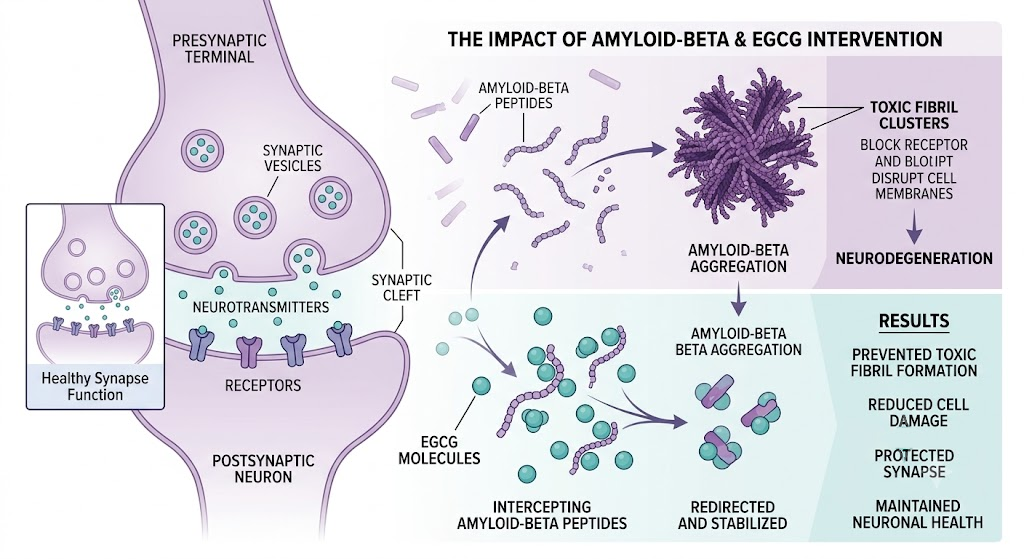
EGCG crosses the blood-brain barrier — a property not shared by all polyphenols — and exerts neuroprotective effects through several mechanisms:
Amyloid-β aggregation inhibition. EGCG directly binds to amyloid-β (Aβ) peptides and redirects them into non-toxic, unstructured oligomers that do not form the neurotoxic fibrils characteristic of Alzheimer's disease pathology. A 2024 review in Frontiers in Nutrition compiled evidence showing that EGCG inhibits Aβ aggregation at concentrations as low as 1 μM in vitro, and that oral EGCG administration reduces brain Aβ plaque burden in transgenic mouse models of Alzheimer's disease.
α-Synuclein fibril disruption. In Parkinson's disease models, EGCG prevents the aggregation of α-synuclein into Lewy body-like fibrils and disaggregates pre-formed fibrils into non-toxic monomers — a rare dual action among natural compounds.
Microglial modulation. EGCG shifts microglial activation from the pro-inflammatory M1 phenotype toward the neuroprotective M2 phenotype, reducing neuroinflammation — a driver of all major neurodegenerative diseases.
Mitochondrial protection. By scavenging mitochondrial ROS and maintaining mitochondrial membrane potential, EGCG protects neurons from the energy failure that precedes cell death in Parkinson's and Huntington's diseases.
A 2025 review in Inflammopharmacology described EGCG as a "paradigmatic multi-target molecule capable of modulating convergent molecular pathways in neurodegeneration," highlighting its ability to simultaneously address protein aggregation, neuroinflammation, and oxidative stress — the three pillars of neurodegenerative pathology — with a single compound.
Anti-Aging & Longevity
The most direct evidence for EGCG's longevity-promoting effects comes from a 2022 lifespan study published in the Journal of Nutritional Biochemistry.
Sharma et al. supplemented male Swiss albino mice with EGCG at 100 mg/kg/day for 18 months, profiling cellular senescence markers in multiple organs at four time points across the lifespan. The results were striking:
- 46.96% reduction in mortality risk compared to untreated controls.
- ~25% extension of median lifespan.
- Significant suppression of p21, a cyclin-dependent kinase inhibitor and canonical senescence marker, in adipose tissue — preventing the age-related accumulation of senescent ("zombie") cells that drive tissue degeneration.
- Restoration of LC3-II levels, a marker of autophagic flux, in both adipose and intestinal tissues — essentially reversing the age-associated decline in cellular self-cleansing machinery.
The study focused on post-mitotic adipose tissue as a primary site of EGCG's anti-aging action, consistent with the compound's well-documented metabolic effects. For perspective, the mouse dose of 100 mg/kg/day translates to a human equivalent of approximately 8 mg/kg/day — roughly the amount of EGCG in 8 cups of brewed green tea, or a 400–500 mg EGCG supplement dose for a 60 kg adult.
Cancer Prevention: Emerging Evidence
EGCG's anticancer potential has been extensively studied in preclinical models, with clinical trials now following. A 2024 review in Molecules summarized the molecular targets: EGCG interferes with all eight "hallmarks of cancer" — from sustained proliferative signaling and evasion of growth suppressors, to angiogenesis, invasion, and metastasis. Key mechanisms include:
- Inhibition of telomerase and topoisomerase, blocking unlimited replicative potential
- Suppression of VEGF signaling, reducing tumor angiogenesis
- Downregulation of matrix metalloproteinases (MMP-2, MMP-9), limiting invasion
- Epigenetic modulation through DNA methyltransferase (DNMT) and histone deacetylase (HDAC) inhibition
- Induction of apoptosis via the intrinsic (mitochondrial) pathway in cancer cells while sparing normal cells
The clinical evidence remains preliminary but encouraging. A 2023 review in Molecules catalogued completed and ongoing cancer trials with green tea catechins, showing signals of chemopreventive activity in colorectal adenoma, prostate cancer, and oral premalignant lesions — though the authors emphasize that EGCG is best positioned as a chemopreventive agent in at-risk populations, not as a cancer treatment.
EGCG vs Other Antioxidant Raw Materials
For B2B buyers building supplement formulations, understanding how EGCG stacks up against other popular antioxidant ingredients is critical for product positioning and stack design.
| Ingredient | Primary Mechanism | Clinical Evidence Level | Unique Strength | Typical Clinical Dose |
|---|---|---|---|---|
| EGCG | Direct ROS scavenging + Nrf2 + NF-κB inhibition | Meta-analysis (15 RCTs) | Broadest single-compound evidence | 400–500 mg/day |
| Quercetin | Nrf2 + senolytic activity | Multiple RCTs | Senescent cell clearance | 500–1,000 mg/day |
| Resveratrol | SIRT1 activation + AMPK | Multiple RCTs | Sirtuin pathway activation | 150–500 mg/day |
| NMN | NAD⁺ precursor | Growing RCT evidence | Direct NAD⁺ boosting | 250–500 mg/day |
| PQQ | Mitochondrial biogenesis (PGC-1α) | Early clinical data | Mitochondrial support | 10–20 mg/day |
EGCG + Quercetin. Quercetin is a known senolytic — it selectively eliminates senescent cells that EGCG's p21 suppression keeps from forming. The two compounds also share overlapping Nrf2 targets but engage different upstream kinases, potentially producing synergistic antioxidant induction. For anti-aging formulations, the combination is mechanistically complementary.
EGCG + NMN. NMN raises intracellular NAD⁺ levels, fueling sirtuin activity and mitochondrial function; EGCG provides the antioxidant shield that protects those newly energized mitochondria from oxidative damage. This "fuel + shield" logic is increasingly common in premium longevity stacks.
EGCG + PQQ. PQQ stimulates mitochondrial biogenesis through PGC-1α activation — it creates more mitochondria. EGCG protects them. At radically different dose ranges (mg-level for EGCG vs microgram-level for PQQ), these two ingredients occupy non-overlapping formulation slots with complementary mechanisms.
For raw material buyers, the key insight is that EGCG is rarely the only antioxidant in a formula, but it is frequently the anchor — the ingredient with the largest body of clinical evidence, the broadest mechanistic coverage, and the most established safety profile. Other antioxidants reinforce specific aspects of the EGCG benefit spectrum rather than replacing it.
Related Articles
- EGCG 98% Purity vs Green Tea Extract: What Ingredient Buyers Need to Know — If you are sourcing EGCG, purity matters more than the "green tea" label. This article explains why.
- Before and After EGCG: UV-Induced Collagenase Activity With and Without Green Tea's Main Catechin — How EGCG protects skin collagen from UV damage, with clinical imaging evidence.
- Free Radicals vs. Quercetin: The Antioxidant Mechanism Explained for Non-Scientists — Understanding antioxidant mechanisms at the molecular level helps formulators position EGCG correctly in their stacks.