TL;DR
GHK-Cu is a naturally occurring copper tripeptide first isolated from human plasma by Dr. Loren Pickart in 1973. Over five decades of research have established it as one of the most extensively studied bioactive peptides in tissue regeneration science. At concentrations as low as 10⁻¹² M (one part per trillion), GHK-Cu stimulates collagen synthesis in human fibroblasts. It modulates the expression of over 4,000 human genes — roughly 32% of the human genome — shifting expression patterns toward a younger profile. Two 12-week randomized controlled trials in women with photoaging demonstrated measurable improvements in skin density, thickness, and wrinkle depth. As a formulation scientist who works with this ingredient daily, I want to walk you through the complete scientific picture: from molecular structure to clinical data, from what we know definitively to where the research gaps remain.
What Is GHK-Cu? Discovery and Chemical Structure
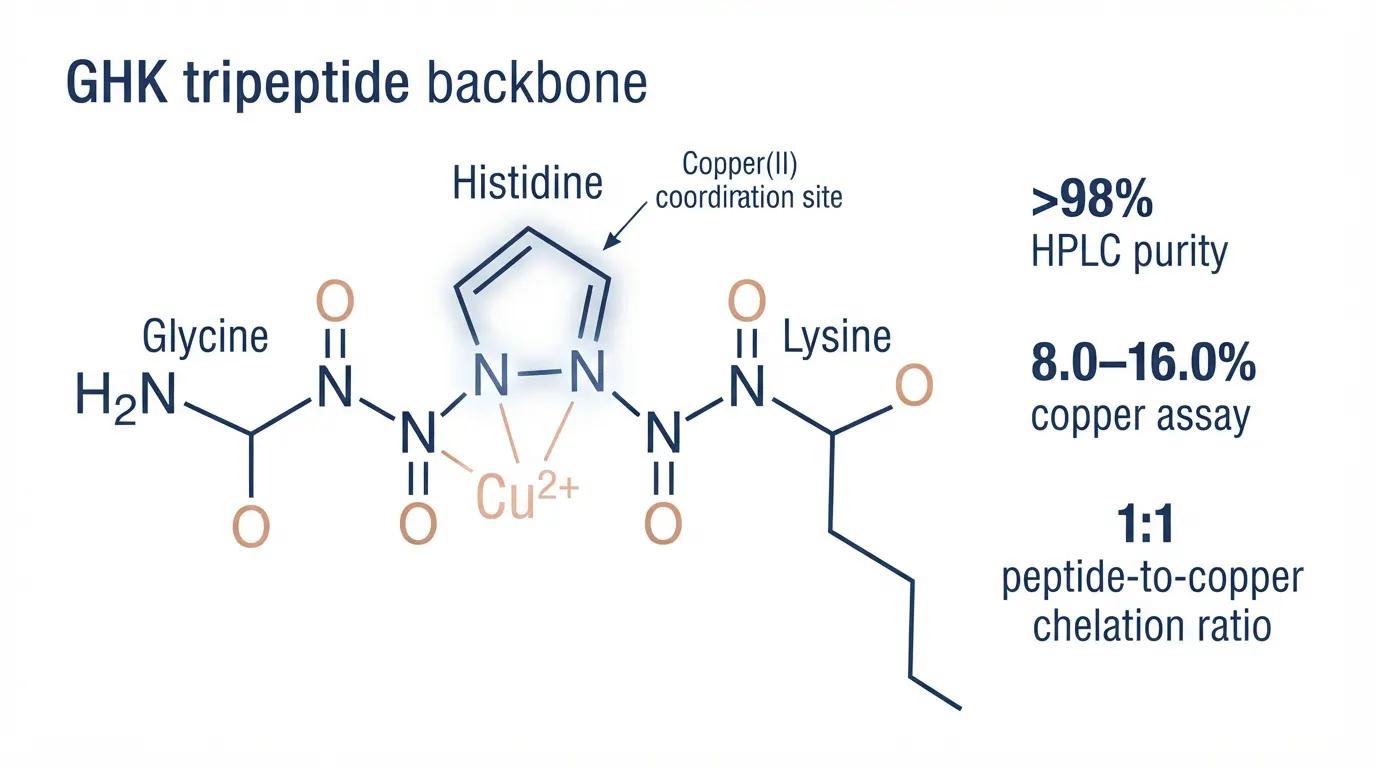
Glycyl-L-histidyl-L-lysine (GHK) is a tripeptide — a chain of just three amino acids: glycine, histidine, and lysine. When GHK binds a single copper(II) ion, it forms the GHK-Cu complex (molecular formula C₁₄H₂₄N₆O₄·Cu, molecular weight ~404 g/mol), the biologically active form of the peptide.
The discovery of GHK-Cu traces back to 1973, when Dr. Loren Pickart at the University of Washington was studying human albumin isolated from plasma of young adults. He noticed that a small peptide fraction — not the albumin itself — was responsible for the tissue-repair-promoting effects he observed in aged liver cell cultures [Pickart & Thaler, 1973, PMID: 4349963]. That fraction turned out to be GHK bound to copper.
What makes GHK-Cu structurally significant for a formulator is the histidine residue at position 2. Histidine's imidazole side chain provides the primary coordination site for the copper(II) ion, forming a stable 1:1 complex. This is why GHK-Cu preparations have their characteristic blue color — the copper-histidine coordination absorbs light in the visible spectrum. If a "copper peptide" product doesn't have a subtle blue tint, the copper is either absent or not properly chelated.
For brands sourcing this ingredient, the purity and copper assay on the Certificate of Analysis are the two most critical quality indicators. Copper Tripeptide-1 (GHK-Cu) Hydrochloride from GINKVORA is supplied at >98% HPLC purity with batch-specific copper content verification (8.0%–16.0% copper assay), ensuring the peptide-to-copper chelation ratio is maintained. Learn more about pharmaceutical-grade GHK-Cu raw material.
The Age Connection: Why GHK-Cu Declines and Why It Matters
One of the most clinically relevant facts about GHK-Cu is its age-dependent decline. Circulating GHK levels in human plasma are approximately 200 ng/mL at age 20 but drop to roughly 80 ng/mL by age 60 — a ~60% reduction [Pickart et al., 2012, PMID: 22577490; Choi et al., 2012, PMID: 23019153].
This decline parallels a broader loss of tissue regenerative capacity: slower wound healing, reduced collagen synthesis, decreased dermal thickness. While GHK-Cu's decline is not the sole cause of skin aging, the timing correlation is striking. The peptide's concentration drops precisely when the visible signs of photoaging — laxity, fine lines, loss of density — begin to accelerate.
For cosmetic brands and formulators, this creates a clear scientific rationale: supplementing GHK-Cu topically addresses a measurable, age-related deficit rather than introducing a foreign active. This is fundamentally different from synthetic peptides that have no endogenous counterpart.
How GHK-Cu Works: A Multi-Pathway Mechanism
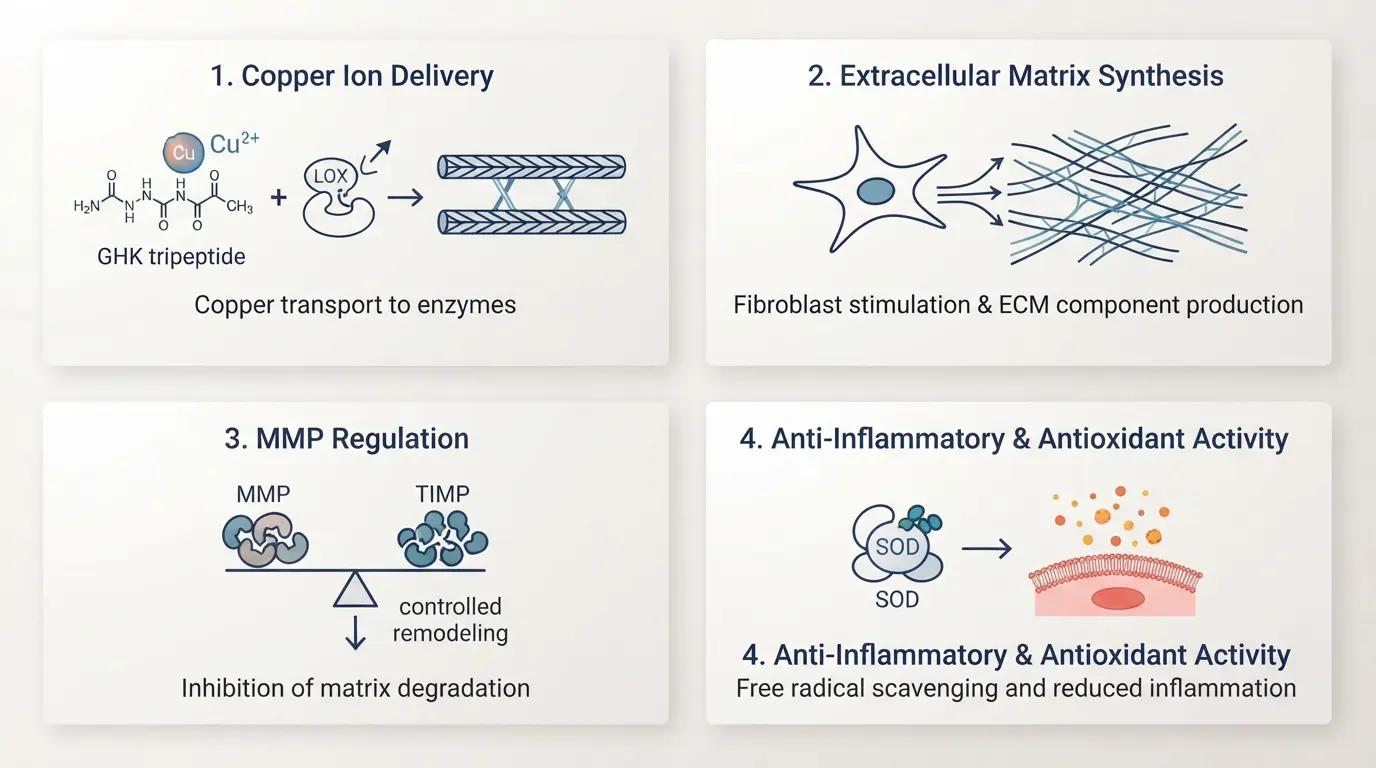
Unlike single-target actives, GHK-Cu operates through four interconnected mechanisms that collectively explain its broad effects on skin physiology.
1. Copper Ion Delivery
Copper is an essential cofactor for lysyl oxidase (LOX), the enzyme responsible for collagen and elastin crosslinking. GHK-Cu delivers copper into the extracellular matrix in a controlled, peptide-bound form. Unlike free copper salts, peptide-bound copper does not generate hydroxyl radicals through Fenton chemistry — a critical safety advantage [Pickart et al., 2018, PMID: 29986520].
2. Extracellular Matrix (ECM) Synthesis
GHK-Cu directly stimulates fibroblasts to produce collagen types I, III, and V, as well as elastin, decorin (a small leucine-rich proteoglycan), and sulfated glycosaminoglycans. In a landmark 1988 study, Maquart et al. showed that GHK-Cu stimulated collagen production at concentrations between 10⁻¹² M and 10⁻⁹ M, with the maximum effect at the nanomolar level — concentrations far below what would affect cell proliferation [Maquart et al., 1988, PMID: 3169264].
3. Matrix Metalloproteinase (MMP) Regulation
GHK-Cu modulates MMP-2 (gelatinase A) and MMP-9 (gelatinase B) expression in dermal fibroblasts [Siméon et al., 1999, PMID: 10383745; Siméon et al., 2000, PMID: 11045606]. This is crucial because MMP activity must be balanced — too little and damaged ECM accumulates; too much and healthy collagen is degraded. GHK-Cu appears to restore the balance rather than simply inhibiting MMPs, which distinguishes it from broad-spectrum MMP inhibitors.
4. Anti-Inflammatory and Antioxidant Activity
GHK-Cu demonstrates superoxide dismutase (SOD)-like activity and inhibits iron-driven lipid peroxidation. It suppresses pro-inflammatory cytokines including TNF-α and IL-6 in wound and inflammation models [Park et al., 2016, PMID: 27517151]. This anti-inflammatory mechanism is distinct from the immunosuppressive action of corticosteroids, making it suitable for chronic, daily-use cosmetic formulations.
Collagen Synthesis: From Nanomolar to Clinical Evidence
The collagen synthesis data for GHK-Cu is among the most robust in cosmetic peptide science, spanning three levels of evidence:
In vitro (1988): Maquart demonstrated dose-dependent collagen stimulation at 10⁻¹² to 10⁻⁹ M in human dermal fibroblasts. Critically, this effect was independent of cell proliferation — GHK-Cu increases collagen output per fibroblast, not just fibroblast count [Maquart et al., 1988, PMID: 3169264].
In vivo animal (1993): A rat subcutaneous implant study showed GHK-Cu increased collagen synthesis at roughly twice the rate of non-collagen protein synthesis, with upregulation of Type I and Type III collagen mRNA without a corresponding increase in TGF-β mRNA [Maquart et al., 1993, PMID: 8227353]. This TGF-β independence is notable — it means GHK-Cu stimulates collagen through a pathway distinct from the profibrotic TGF-β cascade, which can lead to hypertrophic scarring when overactivated.
In vivo human: In a controlled clinical model, GHK-Cu treatment produced procollagen synthesis in 70% of treated subjects, compared to 50% with vitamin C and 40% with retinoic acid [Pickart & Margolina, 2024, PMID: 39963574]. This is one of the few direct comparisons between a cosmetic peptide and established anti-aging benchmarks — and GHK-Cu led across all three groups.
Gene Expression Reset: Modulating 4,000+ Human Genes
Perhaps the most structurally significant finding in the GHK-Cu literature is its effect on gene expression. A 2014 analysis by Pickart and colleagues using the Connectivity Map found that GHK modulates the expression of over 4,000 human genes — approximately 32% of the human genome [Pickart et al., 2014, PMID: 25302294].
Critically, GHK's gene modulation pattern is directional: it upregulates genes associated with tissue repair, antioxidant defense, and neuroprotection, while downregulating genes involved in inflammation, apoptosis, and tissue destruction. When mapped against gene expression profiles from various tissue states, GHK-Cu's pattern most closely resembles the gene expression profile of healthy young tissue.
This gene-level mechanism explains why GHK-Cu's effects are so broad — it doesn't target a single receptor or enzyme. It reprograms cellular behavior at the transcriptional level. For R&D teams evaluating this ingredient, the gene expression data provides a systems-level rationale: GHK-Cu is not just a collagen booster; it is a tissue-remodeling signal.
Clinical Evidence: What Human Trials Actually Show
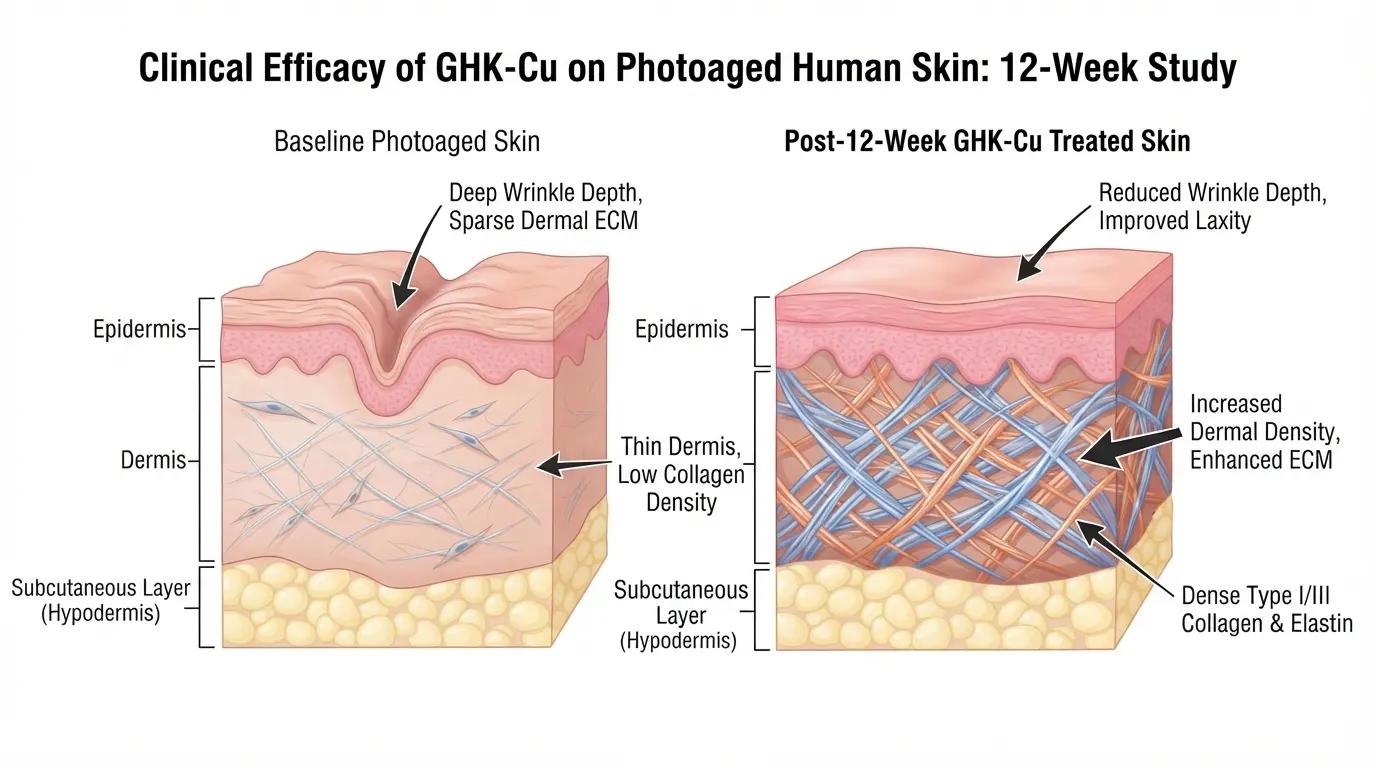
The human clinical evidence for topical GHK-Cu comes primarily from two 12-week randomized controlled trials reviewed comprehensively by Pickart and Margolina (2024):
Facial Photoaging (71 women): GHK-Cu facial cream applied to 71 women with mild to advanced photoaging over 12 weeks produced measurable improvements in skin density, dermal thickness, reduction in skin laxity, and depth of wrinkles [Pickart & Margolina, 2024, PMID: 39963574].
Periorbital Photodamage (41 women): A smaller 12-week RCT in 41 women with eye-area photodamage showed GHK-Cu outperformed both placebo and vitamin K control. Within the same trial, procollagen synthesis increased in 70% of GHK-Cu-treated subjects versus 50% with vitamin C and 40% with retinoic acid.
An earlier 8-week RCT reported 31.6% wrinkle reduction with topical GHK-Cu compared to Matrixyl (palmitoyl pentapeptide-4) [Leyden et al., 2002, presented at AAD Annual Meeting, reviewed in Pickart & Margolina 2024].
Important caveat: These trials, while positive, are small by pharmaceutical standards and were not registered on ClinicalTrials.gov. Large-scale, independently powered randomized controlled trials are absent from the published literature. But within the cosmetic ingredient category — where most actives have zero human RCTs — GHK-Cu's clinical record is comparatively strong and has been remarkably consistent across independent research groups.
Beyond Skin: Wound Healing, Hair Growth & Broader Applications
GHK-Cu's regenerative properties extend well beyond cosmetic anti-aging into multiple therapeutic frontiers:
Wound Healing: GHK-Cu accelerates wound closure by 30–50% in experimental models by attracting immune cells, promoting angiogenesis, and stimulating healthy granulation tissue formation [Siméon et al., 2000, PMID: 11045606]. It also modulates the TGF-β1/TGF-β3 ratio, potentially shifting scar outcomes toward regeneration rather than fibrosis.
Hair Growth: Pyo et al. (2007) demonstrated that GHK-Cu stimulated human hair follicle elongation in vitro [Pyo et al., 2007, PMID: 17703734]. Combined with GHK-Cu's angiogenic effects — which support perifollicular vasculature — this provides a mechanistic basis for its use in scalp and hair growth products.
Neuroprotection: Zhang et al. (2020) showed GHK protects astrocytes from damage following intracerebral hemorrhage through the Akt/miR-146a-3p/AQP4 signaling pathway [PMID: 31809714], an unexpected finding that opened a new research direction.
Anti-Fibrotic: Ma et al. (2020) demonstrated GHK-Cu's protective effects in bleomycin-induced pulmonary fibrosis via antioxidant and anti-inflammatory pathways [PMID: 31809714].
Bone Regeneration: Zhou et al. (2021) used GHK-Cu-loaded 3D-printed silk fibroin scaffolds to promote vascularized bone regeneration — an emerging biomaterials application.
For the cosmetic and personal care industry, the most immediately actionable applications are anti-aging serums and creams, post-procedure recovery formulations, and scalp and hair growth products.
GHK-Cu vs Other Anti-Aging Actives: A Scientific Comparison
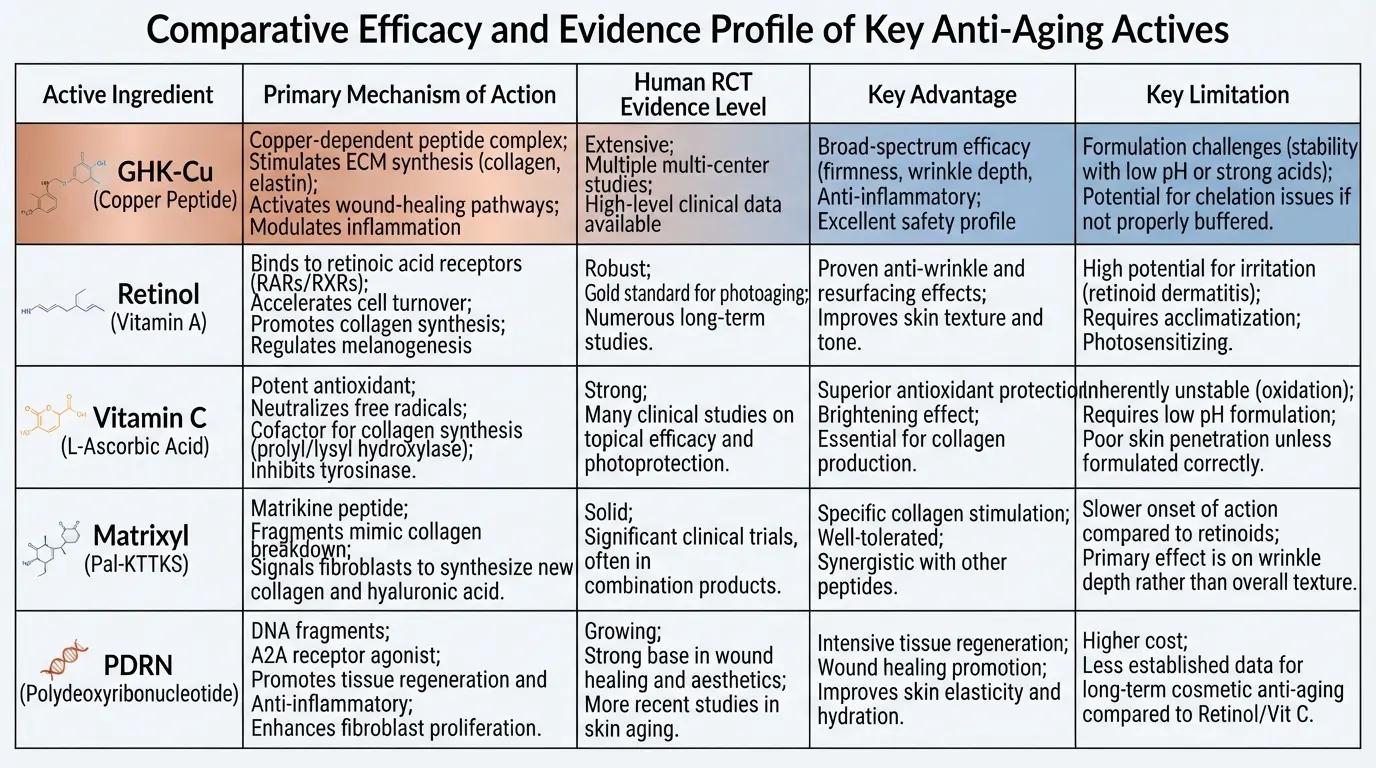
| Active | Primary Mechanism | Human RCTs | Key Limitation |
|---|---|---|---|
| GHK-Cu | Multi-pathway: collagen stimulation, gene modulation, copper delivery, antioxidant | 2 RCTs (71+41 subjects) | No large-scale independent trials |
| Retinol/Tretinoin | RAR/RXR nuclear receptor → cell turnover | 50+ RCTs | Irritation, photosensitivity |
| Vitamin C (L-AA) | Collagen cofactor, antioxidant | Multiple RCTs | Instability, pH-sensitive |
| Matrixyl (Pal-KTTKS) | Procollagen I mRNA upregulation | Several small RCTs | Single-pathway, narrower effects |
| PDRN | Adenosine A2A agonist → tissue regeneration | Multiple RCTs | Injectable delivery, different category |
GHK-Cu's distinguishing advantage is its multi-pathway mechanism combined with an excellent safety profile. Unlike retinol, it does not cause irritation or photosensitivity. Unlike vitamin C, it is pH-stable. Its key limitation is the absence of large-scale, independently funded trials — the data we have is consistent but modest in scale.
Related Articles
- GHK-Cu Copper Peptide: A Formulator's Technical Guide — Practical formulation parameters: pH range, compatibility, concentration, and stability for GHK-Cu in cosmetic products
- What Is PDRN? The Complete Guide to Salmon DNA in Skincare — Another evidence-backed regenerative active with a distinct adenosine A2A receptor mechanism and over 20 years of clinical data
- Glabridin: The Complete Guide to Licorice Root's Most Powerful Bioactive for Skin — Multi-pathway skin brightening active with a similarly deep research foundation across whitening and anti-inflammatory pathways