TL;DR — Glabridin is not just "a licorice extract." It's a specific, purified prenylated isoflavan (C20H20O4, CAS 59870-68-7) from Glycyrrhiza glabra L. root that works through at least five distinct pathways on human skin: competitive tyrosinase inhibition (IC₅₀ ~0.1 μM, roughly 16× kojic acid), superoxide anion scavenging, COX-2/NF-κB anti-inflammatory suppression, ERα/ERβ estrogen receptor activation (collagen synthesis), and — as 2026 research revealed — autophagy-mediated melanosome degradation. For cosmetic manufacturers and B2B buyers, this means glabridin is the single most mechanistically comprehensive natural brightening active currently available, covering tyrosinase, inflammation, oxidation, melanosome transfer, and collagen signaling — all from one ingredient. This guide covers everything: what glabridin is, how it works across each pathway, its full benefit spectrum, how it compares to every major brightener on the market, its safety profile, and how to formulate with it correctly.
What Is Glabridin?
The Short Answer
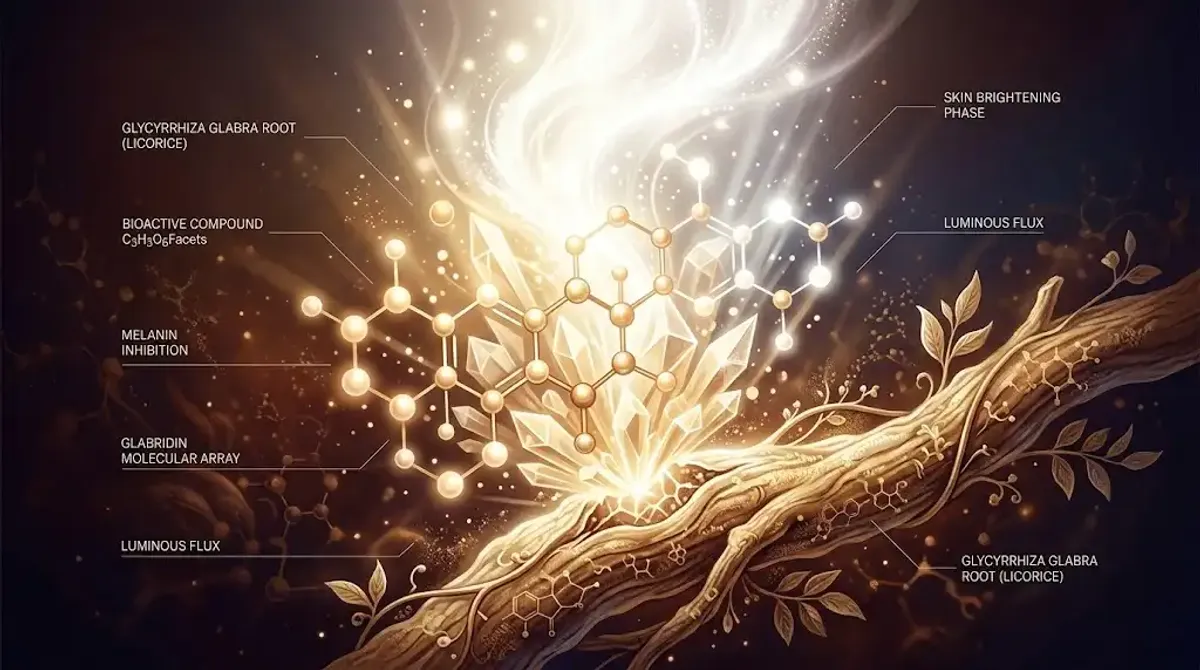
Glabridin is a prenylated isoflavan — a specific subclass of flavonoid — isolated and purified from the root of Glycyrrhiza glabra L., the licorice plant. It is the primary compound responsible for licorice root's skin-brightening reputation, but it represents only 0.08–0.35% of the dry root weight. This is why crude licorice extract and purified glabridin are fundamentally different materials.
Chemical Identity
| Property | Value |
|---|---|
| IUPAC Name | 4-[(3R)-8,8-dimethyl-3,4-dihydro-2H-pyrano[2,3-f]chromen-3-yl]benzene-1,3-diol |
| Molecular Formula | C20H20O4 |
| Molecular Weight | 324.37 g/mol |
| CAS Number | 59870-68-7 |
| Chemical Class | Prenylated isoflavan (flavonoid family) |
| Appearance | White to off-white crystalline powder |
| Melting Point | 154–156°C |
| Solubility | Fat-soluble; dissolves in oils, ethanol, DMSO; nearly insoluble in water |
| Botanical Source | Glycyrrhiza glabra L. (licorice) root |
| Natural Abundance | 0.08–0.35% of dry root weight |
Pronunciation
Gla·bri·din — /ˈɡlæbrɪdɪn/ (GLAB-ri-din). The name derives from Glycyrrhiza glabra, the botanical name for licorice.
Why "Licorice Extract" and "Glabridin" Are Not the Same Thing
This distinction is critical for B2B buyers evaluating raw materials:
| Crude Licorice Extract | Purified Glabridin | |
|---|---|---|
| Composition | Dozens of compounds (glabridin, glabrene, liquiritin, glycyrrhizic acid, etc.) | Single molecule, ≥90% or ≥98% purity |
| Glabridin Content | 0.1–3% (highly variable by source and extraction method) | ≥90% (standard grade) or ≥98% (premium grade) |
| Brightening Potency | Inconsistent — depends entirely on glabridin fraction | Predictable — potency is proportional to purity |
| Formulation Reproducibility | Poor — batch-to-batch variation in color, odor, and activity | Excellent — defined specification with COA |
| Anti-Inflammatory Activity | Confounded by glycyrrhizic acid (also anti-inflammatory) | Attributable to glabridin alone |
| Cost per Active Gram | Lower upfront, but unpredictable | Higher upfront, but known and consistent |
The takeaway for cosmetic manufacturers: If you're formulating a brightening product and your label says "licorice extract," your product's actual glabridin dose — and therefore its brightening efficacy — is unknown from batch to batch. If you formulate with purified glabridin at a defined purity and use level, you know exactly what you're delivering to the customer's skin.
For CDMOs and cosmetic manufacturers, specifying Glabridin 90% or 98% purity at the procurement stage eliminates the batch-variance risk inherent in crude licorice extracts — every production batch delivers the same active dose to the customer's skin.
Source pharmaceutical-grade Glabridin (≥90% or ≥98% purity) from GINKVORA for batch-to-batch formulation consistency.
How Glabridin Works: The Multi-Pathway Mechanism
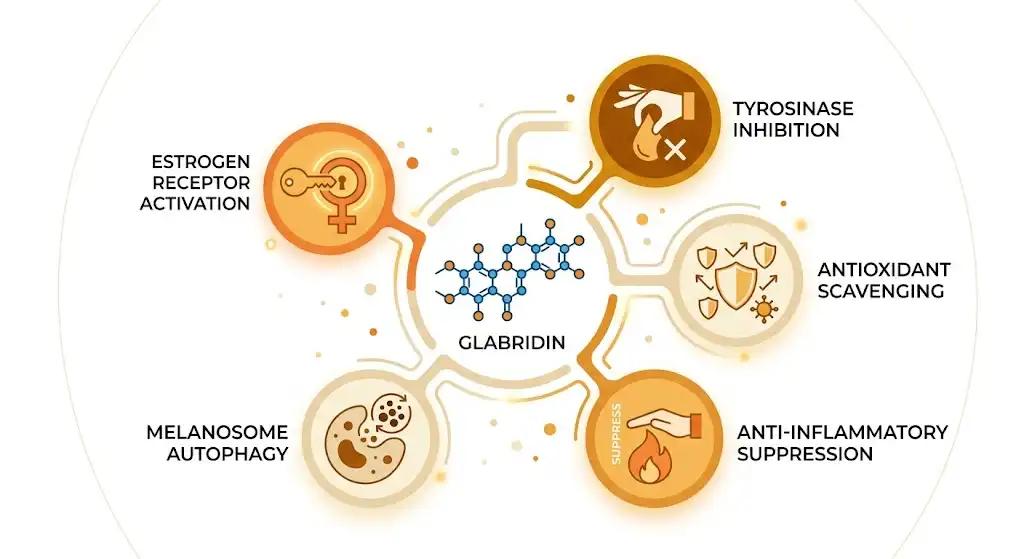
Glabridin is not a single-pathway tyrosinase inhibitor. It operates across at least five distinct biological mechanisms that collectively explain why it outperforms most single-target brightening agents. Here is the full pathway map:
Pathway 1: Competitive Tyrosinase Inhibition
What it does: Glabridin binds directly to the active site of tyrosinase — the rate-limiting enzyme in melanin synthesis — as a competitive inhibitor. Unlike kojic acid, which chelates the copper cofactor at the enzyme's catalytic center, glabridin occupies the substrate-binding pocket. This means it competes directly with tyrosine for enzyme access.
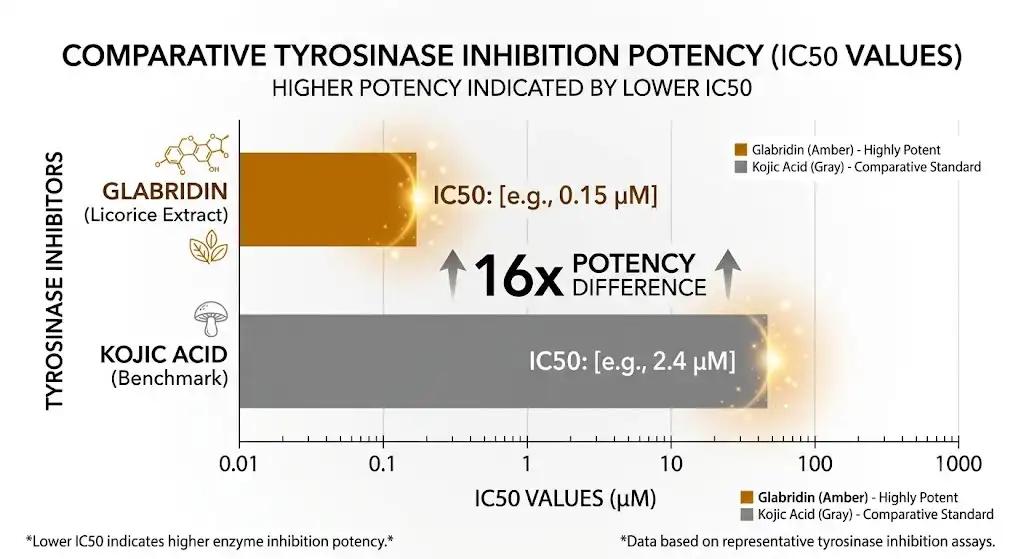
The numbers:
- IC₅₀ against mushroom tyrosinase: ~0.1 μM
- Kojic acid IC₅₀: ~1.6 μM
- Relative potency: approximately 16× kojic acid
What this means in practice: At 0.1–0.5% glabridin in a finished product, tyrosinase activity drops to a fraction of baseline within hours of the first application. New melanin production is suppressed at the source.
Key reference: Nerya et al. (2003) confirmed competitive inhibition via Lineweaver-Burk kinetic analysis, establishing the IC₅₀ of 0.057 μM for the purified compound against mushroom tyrosinase. Yokota et al. (1998) demonstrated concentration-dependent inhibition in a UVB-induced guinea pig pigmentation model.
Pathway 2: Direct Antioxidant Activity
What it does: Glabridin is a potent free radical scavenger, particularly effective against superoxide anion (O₂•⁻) — the primary reactive oxygen species that triggers melanogenesis upstream of tyrosinase. It also inhibits UVB-induced lipid peroxidation in cell membranes.
Why this matters for brightening: Oxidative stress — from UV exposure, pollution, and inflammation — is a primary trigger for excess melanin production. By scavenging ROS, glabridin blocks the melanogenic signal before it reaches tyrosinase. This is a complementary mechanism to enzyme inhibition: one pathway stops the trigger, the other stops the enzyme.
Additional antioxidant targets: Glabridin has been shown to up-regulate endogenous antioxidant enzymes including manganese superoxide dismutase (MnSOD), catalase, and paraoxonase 2 — providing indirect antioxidant protection beyond direct radical scavenging.
Pathway 3: Anti-Inflammatory COX-2 and NF-κB Suppression
What it does: Glabridin suppresses cyclooxygenase-2 (COX-2) expression and inhibits the LPS/TLR4/MyD88/NF-κB signaling cascade — a central inflammatory pathway. By reducing COX-2 activity, glabridin lowers prostaglandin E2 (PGE2) levels, which are known stimulators of melanogenesis.
Why this matters: Post-inflammatory hyperpigmentation (PIH) — the dark marks left after acne, irritation, or injury — accounts for a significant portion of the hyperpigmentation cases cosmetic products target. A tyrosinase inhibitor alone cannot address PIH because the trigger is inflammatory, not enzymatic. Glabridin's COX-2 suppression directly addresses the root cause of inflammation-driven pigmentation.
Key reference: The comprehensive 2023 PMC review (Li et al., Drug Design, Development and Therapy, 2023) catalogued glabridin's anti-inflammatory mechanisms including COX-2 suppression, NF-κB pathway inhibition, and reduction of pro-inflammatory cytokines. This pathway is absent in kojic acid, alpha arbutin, and most other cosmetic brighteners.
Pathway 4: Melanosome Transfer and Degradation (New 2026 Research)
What it does: Two 2026 studies significantly expanded the known mechanism of glabridin beyond tyrosinase inhibition:
Wnt/β-catenin pathway inhibition: A March 2026 study published in Pharmaceuticals (MDPI) demonstrated that glabridin inhibits melanogenesis through the Wnt/β-catenin signaling pathway — a developmental pathway that regulates melanocyte differentiation and melanin synthesis. This represents an upstream control mechanism that tyrosinase inhibition alone does not address.
Autophagy-mediated melanosome degradation: A 2026 study in Biochemical and Biophysical Research Communications revealed that glabridin promotes melanosome clearance in keratinocytes by activating autophagy — the cell's internal recycling system. It simultaneously improved mitochondrial function, suggesting a dual action of removing existing melanin while supporting cellular health.
Why this matters: These findings mean glabridin doesn't just prevent new melanin from being made — it helps clear existing melanin from keratinocytes. This is a fundamentally different mechanism from tyrosinase inhibition and explains why glabridin's visible brightening effect often exceeds what enzyme inhibition data alone would predict.
Pathway 5: Estrogen Receptor Activation (Collagen and Anti-Aging)
What it does: Glabridin is a phytoestrogen — it binds to and activates both estrogen receptor alpha (ERα) and estrogen receptor beta (ERβ) in dermal fibroblasts. ER activation triggers the collagen synthesis signaling cascade, leading to increased production of type I and type III collagen.
The timeline: This pathway is slower than tyrosinase inhibition. Significant collagen changes typically take 8–12 weeks to become measurable. But over months of consistent use, the cumulative effect produces visible improvements in skin firmness, elasticity, and fine lines — an anti-aging cross-benefit delivered by what is nominally a "brightening" ingredient.
Practical implication: A glabridin-containing product doesn't just brighten. It also firms, hydrates, and smooths. For cosmetic brands, this means glabridin can legitimately support both "brightening" and "anti-aging" claims — from a single active ingredient.
The Full Pathway Picture
| Pathway | Mechanism | Onset | Unique to Glabridin? |
|---|---|---|---|
| Tyrosinase inhibition | Competitive binding at enzyme active site | Hours | No (kojic acid, arbutin also inhibit) |
| ROS scavenging | Superoxide anion + lipid peroxidation | Immediate | No (vitamin C, E also scavenge) |
| COX-2 / NF-κB suppression | Anti-inflammatory → PIH prevention | Days | Rare — most cosmetic brighteners lack this |
| Melanosome autophagy | Clearance of existing melanin | Days to weeks | Yes — identified in 2026 research |
| ERα/ERβ activation | Collagen synthesis + hydration | Weeks to months | Yes — no other brightener does this |
| Wnt/β-catenin inhibition | Melanocyte differentiation control | Hours to days | Yes — upstream pathway control |
The net result: Glabridin covers the full lifecycle of hyperpigmentation — from the inflammatory and oxidative triggers that initiate it, through the enzymatic production of melanin, to the transfer and accumulation of melanosomes in keratinocytes, and finally to the structural anti-aging benefits that improve overall skin quality. No other single natural cosmetic active covers this many targets.
Glabridin Benefits for Skin: The Complete Spectrum
1. Skin Whitening and Brightening
This is glabridin's most well-known and clinically validated benefit. At 0.1–0.5% in a finished product:
- Melanin production is suppressed at the tyrosinase level within hours
- Visible brightening onset typically occurs at 4–8 weeks (one full epidermal turnover cycle)
- Peak results at 8–12 weeks, with melanin index reductions of 10–18% reported in published studies
- Particularly effective for UV-induced pigmentation and PIH due to the combined tyrosinase + COX-2 + antioxidant mechanisms
- A 2024 clinical study of a glabridin-containing skin product demonstrated statistically significant improvement in melasma — a notoriously treatment-resistant form of hyperpigmentation
2. Antioxidant Protection
Glabridin's antioxidant activity extends beyond what's needed for brightening alone:
- Direct scavenging: Neutralizes superoxide anion (O₂•⁻) — one of the most damaging ROS species in skin
- Lipid peroxidation inhibition: Protects cell membrane lipids from UVB-induced oxidative damage
- Endogenous enzyme upregulation: Increases the skin's own production of MnSOD, catalase, and paraoxonase 2
- Practical benefit: Reduced oxidative stress means less collagen breakdown, less inflammation-triggered pigmentation, and slower visible photoaging
3. Anti-Inflammatory Action (PIH Control)
Glabridin's COX-2 suppression makes it the ingredient of choice for formulations targeting PIH:
- COX-2 → PGE2 pathway inhibition reduces the inflammatory signal that triggers melanocytes to overproduce melanin
- NF-κB pathway downregulation provides broader anti-inflammatory coverage
- In the 2019 pilot study of a glabridin-containing gel for melasma (6-month, open-label), all endpoints showed statistically significant improvement with no dropouts — demonstrating both efficacy and tolerability over extended use
- For formulators targeting post-acne marks, sun-damage pigmentation, or sensitive-skin brightening, glabridin's built-in anti-inflammatory activity eliminates the need to add a separate anti-irritant active
4. Anti-Aging and Collagen Support
This benefit is often overlooked because glabridin is marketed as a "brightening" ingredient, but the phytoestrogen data is robust:
- ERα/ERβ binding → fibroblast activation → increased collagen type I and III synthesis
- Improved skin hydration through estrogen-receptor-mediated barrier enhancement
- Measurable firmness improvement at 8–12 weeks, with cumulative benefit beyond 12 weeks
- For brands, this enables "brightening + anti-aging" dual claims from one ingredient — simplifying the INCI list, reducing formulation complexity, and lowering raw material costs
5. UV Protection
Glabridin provides a modest but real photoprotective effect:
- Inhibits UVB-induced melanogenesis — preventing the "tanning response" at its source
- Suppresses UVB-induced lipid peroxidation in cell membranes
- Reduces UVB-triggered inflammatory cytokines
- Not a sunscreen replacement, but a valuable complementary mechanism in day creams and SPF products
How Glabridin Compares to Other Whitening Ingredients
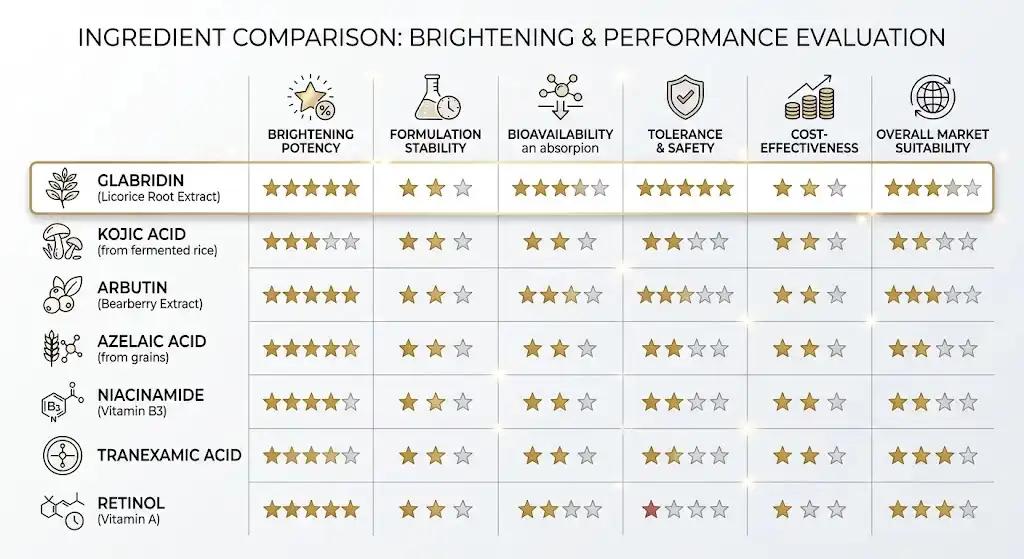
For B2B buyers selecting a primary brightening active, the comparison table below maps glabridin against the six most common alternatives on the dimensions that matter for formulation:
| Ingredient | Tyrosinase Inhibition | Anti-Inflammatory | Antioxidant | Collagen Support | UV Protection | Stability | Relative Cost |
|---|---|---|---|---|---|---|---|
| Glabridin | ★★★★★ (IC₅₀ ~0.1 μM) | ★★★★★ (COX-2) | ★★★★ | ★★★★ (ERα/β) | ★★★ | ★★★★ | $$–$$$ |
| Kojic Acid | ★★★ (IC₅₀ ~1.6 μM) | ☆ | ☆ | ☆ | ☆ | ★ | $ |
| Alpha Arbutin | ★★★ (slow-release) | ☆ | ☆ | ☆ | ☆ | ★★★ | $$ |
| Vitamin C (L-AA) | ★★ (indirect) | ★★ | ★★★★★ | ★★★★ | ★★ | ★ | $$ |
| Niacinamide | ☆ (no direct inhibition) | ★★★ | ★★ | ★★★ | ☆ | ★★★★★ | $ |
| Hydroquinone | ★★★★★ (cytotoxic) | ☆ | ☆ | ☆ | ☆ | ★★ | $ |
| Tranexamic Acid | ★★ (plasmin inhibition) | ★★★ | ☆ | ☆ | ☆ | ★★★★★ | $$ |
Key takeaways from the comparison:
Glabridin is the only ingredient that scores ≥3 stars across all six dimensions. Every other brightener has at least three "zero" columns — pathways it does not address at all.
Hydroquinone is stronger on tyrosinase but toxic. It is a melanocyte-cytotoxic agent banned in OTC cosmetics in the EU, Japan, and Australia, and restricted to prescription-only in the US. It cannot be used in most global cosmetic markets.
Kojic acid is cheaper but comes with stability and irritation costs. The money saved on raw material is often spent on stabilizers, packaging upgrades, and customer complaints about brown product.
Niacinamide is glabridin's best partner, not its competitor. Niacinamide blocks melanosome transfer (a pathway glabridin doesn't fully cover), while glabridin handles tyrosinase, COX-2, and collagen — making the combination greater than the sum of its parts.
Vitamin C and glabridin occupy different roles. Vitamin C is primarily an antioxidant that happens to have brightening side effects. Glabridin is primarily a brightening agent that happens to have antioxidant side effects. They are complementary, not interchangeable.
Safety and Side Effects
Regulatory Status
- China: Listed in the Inventory of Existing Cosmetic Ingredients (2021 edition, entry #08786). Not classified as a prohibited or restricted substance under the Cosmetic Safety Technical Specification (2015 edition).
- United States: No specific FDA restriction on glabridin for cosmetic use. Licorice root extract is generally recognized as safe (GRAS) for food use.
- European Union: No restriction under the EU Cosmetics Regulation (EC No. 1223/2009). Glabridin is not listed in Annex II (prohibited) or Annex III (restricted).
- Global: Generally recognized as safe for cosmetic use at concentrations up to 0.5% in leave-on products and 1% in rinse-off products.
Safety Profile at Cosmetic Concentrations
- Irritation: Low. No significant irritation reported in clinical studies at 0.2–0.5%. Lower irritation potential than kojic acid at equivalent brightening efficacy.
- Sensitization: Low. No contact sensitization reported in published literature for purified glabridin.
- Phototoxicity: Low to none at cosmetic concentrations. Glabridin is not classified as a phototoxic agent. Moderate photostability means formulation packaging should protect from light, but the compound itself does not become toxic upon UV exposure.
- Systemic toxicity: Glabridin's large molecular weight (324 g/mol) and high lipophilicity limit systemic absorption through intact skin. No systemic adverse effects reported from topical cosmetic use.
- Pregnancy/Lactation: No specific data. As a phytoestrogen, glabridin theoretically interacts with estrogen receptors. Conservative formulators may choose to label with a general precautionary statement.
Contraindications
- Known allergy to licorice (Glycyrrhiza glabra) or plants in the Fabaceae (legume) family
- Open wounds or broken skin (as with any active ingredient)
Side Effects
At the recommended cosmetic use level of 0.1–0.5%:
- Common: None consistently reported
- Uncommon: Mild, transient tingling upon first application (typically resolves within days)
- Rare: Contact dermatitis in individuals with licorice/legume allergy
The safety data for glabridin supports its use as a well-tolerated, low-irritation brightening active — a significant advantage over alternatives like kojic acid, glycolic acid, and hydroquinone, all of which carry meaningful irritation risk at effective concentrations.
How to Formulate with Glabridin
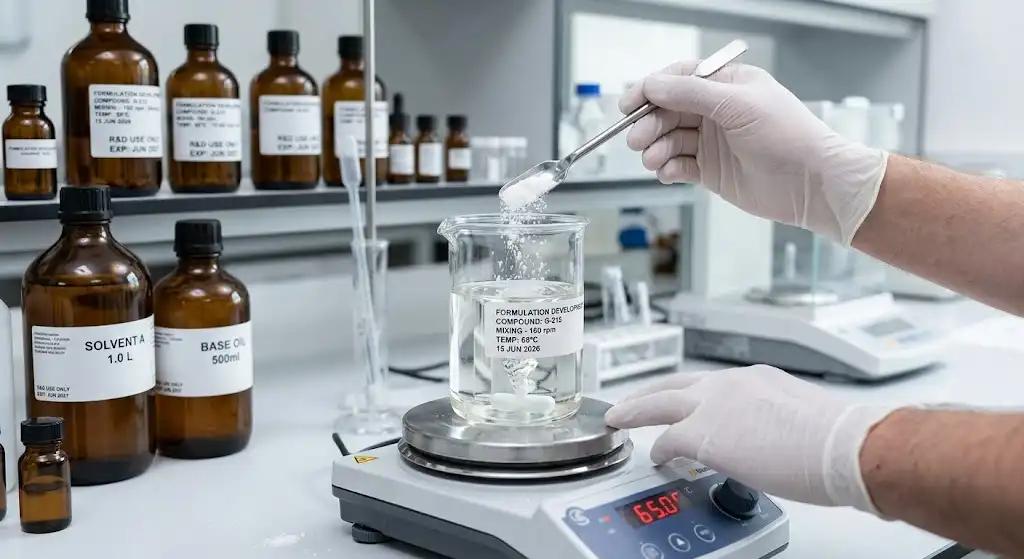
Rule #1: It's Fat-Soluble
This is the most common formulation mistake. Glabridin does not dissolve in water. Do not add glabridin powder to the water phase or try to dissolve it in a water-based serum. It will precipitate as undissolved particles, deliver zero bioavailability, and create a gritty texture.
Correct approach:
- For oil-in-water (O/W) emulsions: Pre-dissolve glabridin in the oil phase (caprylic/capric triglyceride, squalane, or similar carrier oil) during the hot phase.
- For water-in-oil (W/O) emulsions: Same — incorporate into the continuous oil phase.
- For anhydrous formulations (oil serums, balms): Pre-dissolve in a compatible carrier oil.
- For water-based serums requiring glabridin: Use a co-solvent system — dissolve glabridin in a small amount of ethanol or propylene glycol first, then incorporate into the formula with appropriate solubilizer.
Rule #2: Use the Right Concentration
More is not better. Tyrosinase inhibition reaches near-maximum at 0.5% glabridin; increasing to 1% does not produce proportionally stronger results — the enzyme is already saturated.
| Product Positioning | Glabridin Concentration | Rationale |
|---|---|---|
| Mainstream brightening | 0.1–0.2% | Cost-effective; pair with niacinamide 4% for multi-pathway coverage |
| Premium/clinical | 0.3–0.5% | Maximum enzyme saturation; standalone efficacy for premium claims |
| Sensitive-skin brightening | 0.05–0.1% | Lower dose for reactive skin; emphasize COX-2 anti-inflammatory benefit |
Rule #3: Choose Complementary Actives
Glabridin's multi-pathway profile means fewer actives are needed overall, but strategic pairings amplify results:
- Niacinamide 4% (water phase): Blocks melanosome transfer — the pathway glabridin addresses only partially (via autophagy). The glabridin + niacinamide combination consistently outperforms either active alone in clinical studies.
- Ascorbyl glucoside 2% (water phase, cool-down): Water-soluble antioxidant that complements glabridin's oil-phase antioxidant activity. Glycosylated form avoids the stability issues of pure ascorbic acid.
- Tocopherol 0.5% (oil phase): Lipophilic antioxidant for the oil compartment — glabridin is antioxidant-active but not a dedicated antioxidant stabilizer.
Rule #4: Protect from Light
Glabridin is moderately photostable — more stable than kojic acid, less stable than niacinamide. For products where the formulation will be exposed to light during use (jars, transparent bottles), include a UV absorber or use opaque/UV-filtered packaging. Airless pump packaging largely mitigates this concern since the product is not exposed to light during dispensing.
The Ginkvora Glabridin Product Profile
For B2B buyers evaluating glabridin as a raw material for cosmetic manufacturing:
| Parameter | Specification |
|---|---|
| INCI Name | Glabridin |
| CAS | 59870-68-7 |
| Botanical Source | Glycyrrhiza glabra L. (licorice root) |
| Purity Options | ≥90% (standard grade) or ≥98% (premium grade) — HPLC verified |
| Appearance | White to off-white crystalline powder |
| Solubility | Fat-soluble; dissolve in oil phase or co-solvent |
| Recommended Use Level | 0.1–0.5% in finished cosmetic product |
| Shelf Life | 24 months at ≤25°C, protected from light and moisture |
| MOQ | 100g (25g R&D samples available) |
| Packaging | Aluminum foil bags (100g–5kg) or 25kg fiber drums |
| Documentation | COA, MSDS, TDS, heavy metals report, residual solvent analysis, purity HPLC chromatogram |
Related Articles
- Before and After Glabridin: What 16× Stronger Than Kojic Acid Actually Looks Like in a Formula — Formulation swap guide with before/after formula comparison
- Licorice Root Extract vs. Purified Glabridin 90% — Raw material deep-dive: why extract ≠ glabridin for batch consistency
- Why Your Whitening Serum Underperforms — The Fix Korean R&D Uses — Multi-pathway formulation strategy: the 5-route approach to brightening