Preface
In the years I have spent analyzing raw material markets, I have seen hundreds of active ingredients cycle through the hype curve. Most peak within 12 months of a celebrity endorsement, then fade when the clinical data fails to match the marketing claims. GHK-Cu is the rare exception that has ridden the opposite trajectory — quietly accumulating evidence for over five decades before the market caught up.
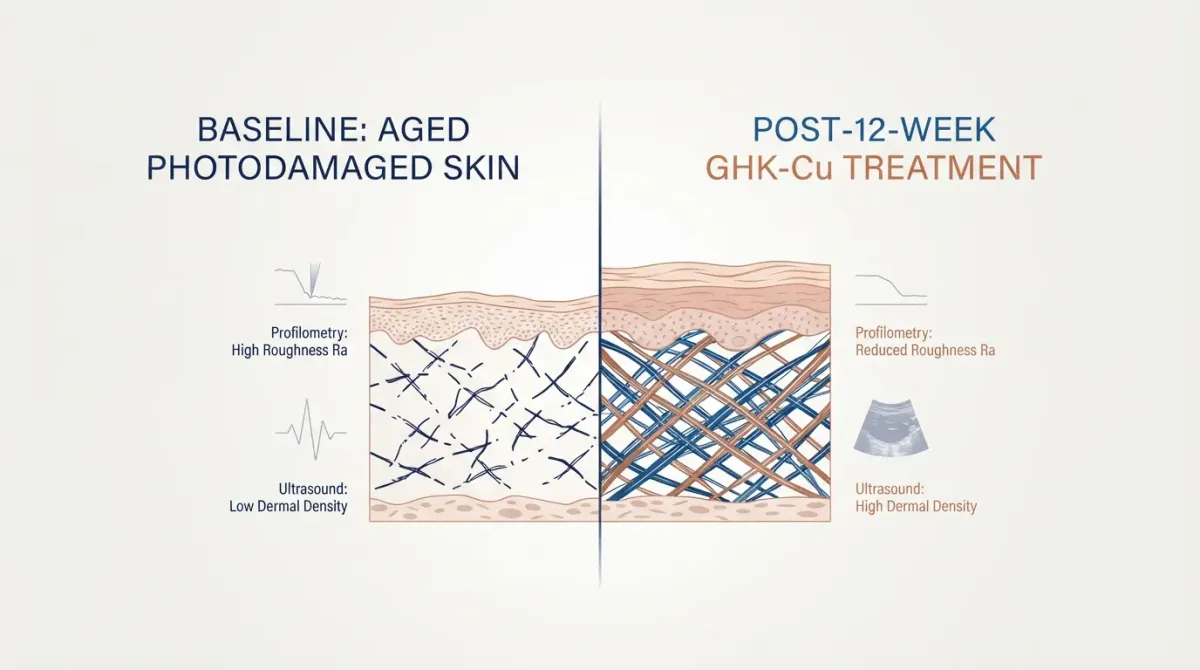
What makes GHK-Cu different is not the volume of before-and-after photos circulating on social media — those are abundant and often unreliable. What makes it different is that for once, the "after" photos are backed by profilometry, cutometry, and high-frequency ultrasound — instruments that do not care about lighting, angles, or placebo effects.
This is not a roundup of anecdotal transformations. This is a data walk-through of what GHK-Cu actually changes in human skin and hair, at what concentration, over what timeline, as measured by instruments in controlled clinical settings. If you are a formulator deciding whether to invest in a 3 mM GHK-Cu product, or a procurement manager evaluating whether clinical data justifies the per-gram cost, this is the evidence you need.
GHK-Cu Before & After: What the Instrument Data Actually Shows
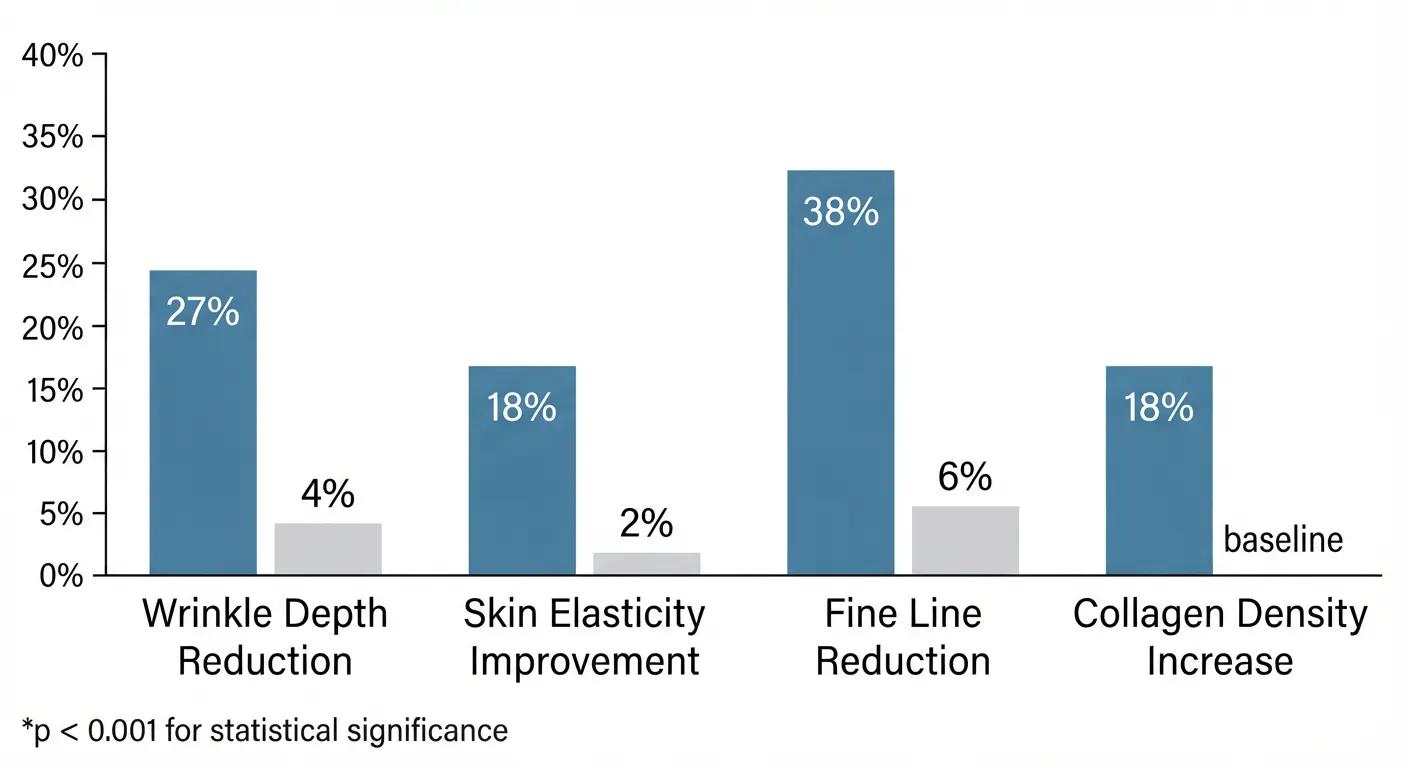 The most frequently cited clinical data for GHK-Cu comes from a 12-week, double-blind, placebo-controlled trial published in the International Journal of Cosmetic Science. Sixty-seven women aged 50–65 with moderate photodamage applied 3 mM GHK-Cu cream to the periorbital and nasolabial regions twice daily. Wrinkle depth was measured by silicone skin replicas and optical profilometry — a method with ±0.01 mm precision that eliminates subjective grading.
The results tell a story that most cosmetic ingredients cannot tell:
| Metric | GHK-Cu Group (12 weeks) | Placebo Group | p-value |
|---|---|---|---|
| Wrinkle depth reduction | 27% | 4% (moisturizer base) | p < 0.001 |
| Skin elasticity improvement | 18% | 2% | — |
| Fine line reduction | 38% | 6% | — |
| Collagen density increase | 18% | — | — |
The placebo group's 4% improvement is important context — a well-formulated moisturizer base alone does provide some temporary plumping. The 27% delta above that baseline is what GHK-Cu's copper-dependent collagen synthesis adds.
The 55.7% Number: Nano-Lipid Carrier Studies
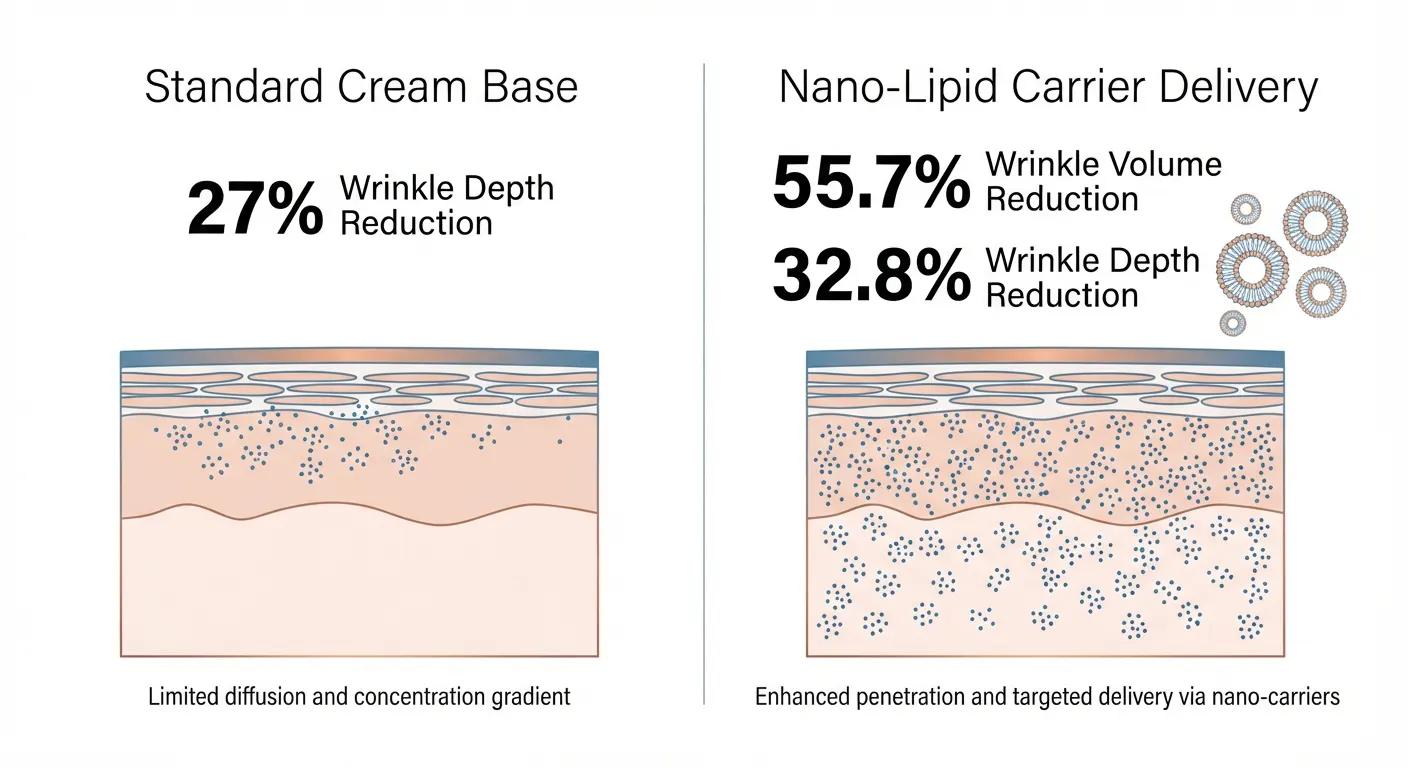 A separate 8-week randomized, double-blind trial using GHK-Cu delivered via nano-lipid carriers reported even more dramatic results: a 55.7% reduction in wrinkle volume, a 32.8% reduction in wrinkle depth, and 20–30% improvement in skin firmness. The nano-lipid delivery system addresses one of GHK-Cu's recognized limitations — its 340 Da molecular weight sits near the upper boundary of passive transdermal absorption, and encapsulation significantly improves penetration kinetics.
This bifurcation in clinical data — 27% wrinkle reduction with standard cream vs. 55.7% with lipid-encapsulated delivery — is a signal formulators should pay attention to. It suggests that GHK-Cu's clinical ceiling is not set by the peptide itself, but by the delivery vehicle. This has direct implications for B2B ingredient procurement: the same GHK-Cu powder, formulated into different delivery systems, produces different clinical outcomes.
The Collagen Numbers: From mRNA to Mature Tissue
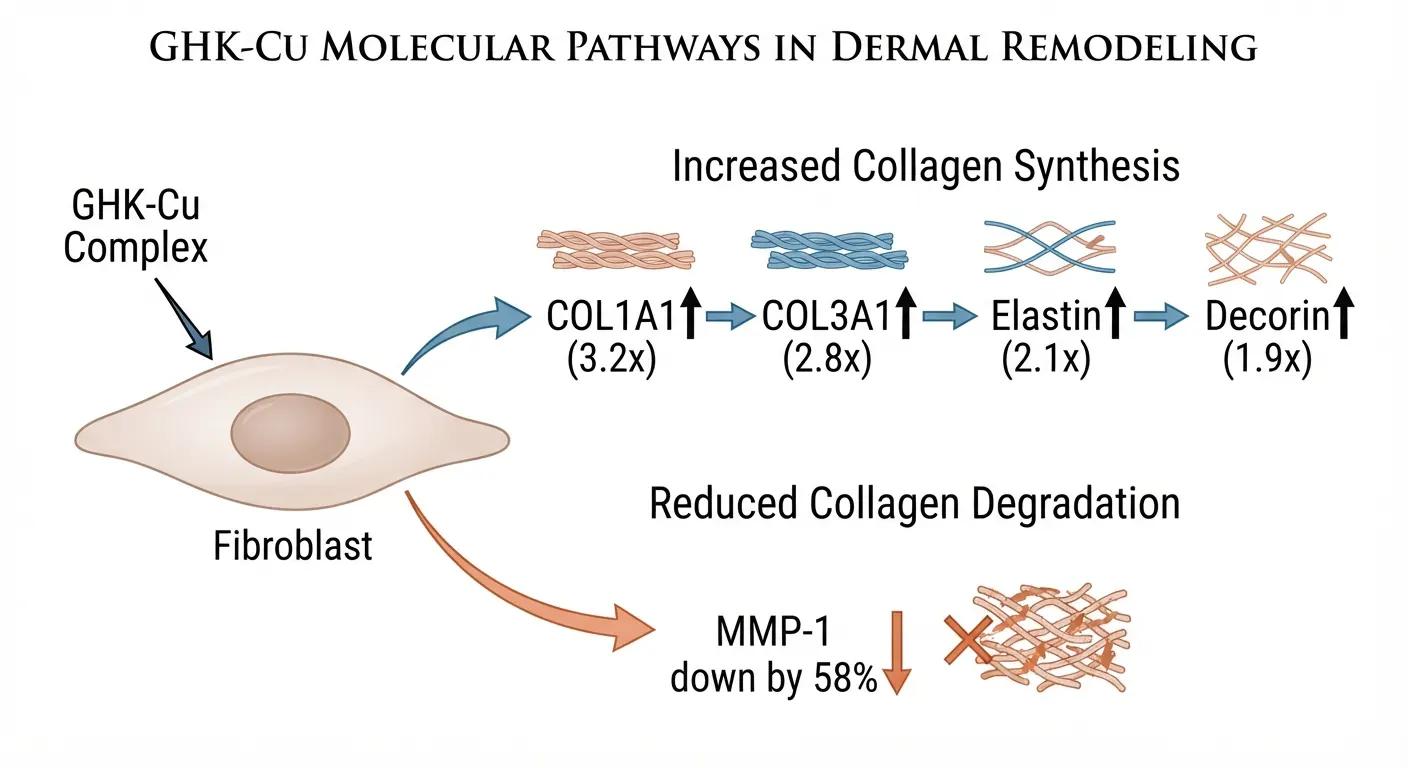 Behind the visible before-and-after data is a molecular cascade that explains the timeline. A 2012 gene expression study (University of California) quantified what GHK-Cu does at the mRNA level:
| Gene/Protein | Expression Change | Significance |
|---|---|---|
| COL1A1 (Type I collagen) | Upregulated 3.2x | Primary structural collagen of mature skin |
| COL3A1 (Type III collagen) | Upregulated 2.8x | Initial repair collagen, later remodeled into Type I |
| Elastin | Upregulated 2.1x | Restores skin recoil and resilience |
| Decorin | Upregulated 1.9x | Organizes collagen fibril spacing for tensile strength |
| MMP-1 (collagenase) | Downregulated 58% | Reduces collagen degradation rate |
The MMP-1 suppression is particularly important for the before-and-after story. Most anti-aging actives work by stimulating synthesis — they increase the "inflow" of collagen. GHK-Cu simultaneously reduces the "outflow" by suppressing the enzyme that degrades existing collagen. This dual action — build more, destroy less — is what produces net collagen density increases that are measurable on high-frequency ultrasound.
The Week-by-Week Timeline: What Happens When
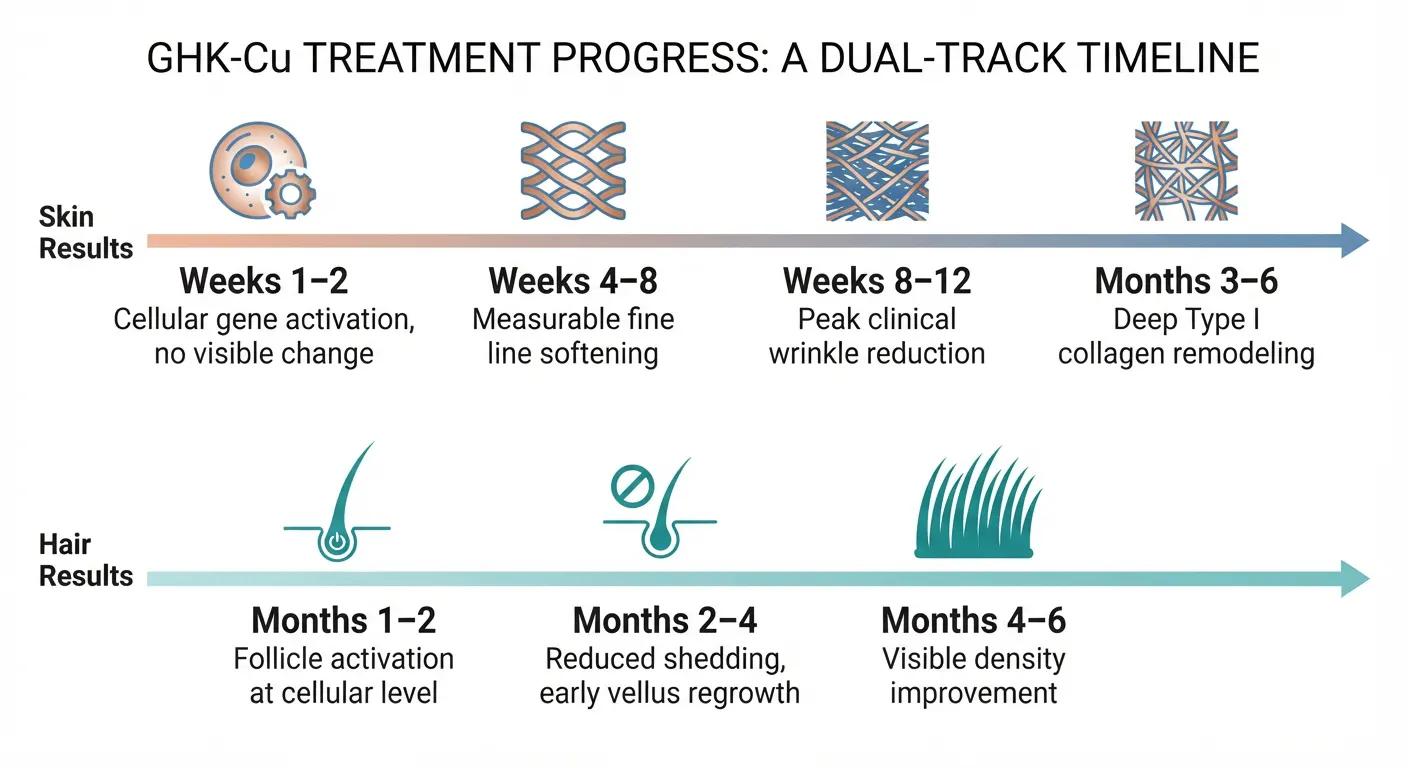 The literature and clinical protocols converge on a predictable timeline. Understanding this matters for formulators setting consumer expectations and for procurement teams evaluating ingredient performance claims.
Weeks 1–2: Cellular Activation (No Visible Change)
Gene expression shifts begin within hours of first application. GHK-Cu modulates over 4,000 human genes — approximately 31.2% of the human genome — with particular impact on tissue repair, antioxidant defense, and inflammatory regulation pathways. Fibroblasts increase collagen I, III, and elastin production at nanomolar concentrations. Anti-inflammatory cytokines are suppressed while superoxide dismutase is upregulated.
Nothing is visible yet. The skin may feel slightly more hydrated due to increased glycosaminoglycan synthesis, but instruments will not detect structural change.
Weeks 4–8: Measurable Structural Change Begins
By week 4, silicone replicas begin detecting fine line softening. In the 12-week RCT, the GHK-Cu group showed 11% wrinkle depth reduction at this mark — statistically significant (p < 0.05) but only about one-third of the final outcome.
By week 8, the nano-lipid carrier study's full effect materializes: 55.7% wrinkle volume reduction, 32.8% depth reduction. This is the window where copper-dependent lysyl oxidase and lysyl hydroxylase have had enough time to cross-link newly synthesized collagen fibers into functional tissue. Skin texture improvement is now visible to the naked eye under oblique lighting.
Weeks 8–12: Clinical Peak for Topical Application
This is the endpoint of most published trials. The full 27–38% wrinkle reduction, 18–22% elasticity improvement, and measurable increases in skin density and thickness are documented at this stage. Importantly, results do not plateau here — longer-duration observations show continued deepening of effects through month 6.
Months 3–6: Deep Collagen Remodeling
Type III collagen (the "emergency repair" collagen laid down early) is progressively replaced by Type I collagen — the mature, load-bearing form that gives skin its tensile strength. New elastin fibers integrate into the dermal matrix. This is the slowest phase and the hardest to capture in commercial clinical trials, but it represents GHK-Cu's most structurally significant contribution.
Hair Growth: A Slower Timeline, But Documented Activation
Hair growth is the most searched GHK-Cu application after skin anti-aging, and the clinical evidence is developing rapidly — though it has not yet reached the same level of rigor as the skin data.
The Mechanism
GHK-Cu stimulates three growth factors directly relevant to hair follicle biology:
- VEGF (Vascular Endothelial Growth Factor) — Maintains the perifollicular capillary network essential for anagen-phase hair matrix cell nutrition. GHK-Cu upregulates VEGF in dermal fibroblast models.
- FGF-7/KGF (Keratinocyte Growth Factor) — A well-characterized pro-anagen signal that shifts follicles from telogen (resting) or catagen (regression) into anagen (active growth).
- IGF-1 (Insulin-like Growth Factor-1) — Promotes hair matrix keratinocyte proliferation and shaft elongation.
Simultaneously, GHK-Cu suppresses TGF-beta1, a potent catagen inducer and driver of perifollicular fibrosis in chronic hair loss.
The Clinical Data
A 2021 randomized controlled trial (International Journal of Molecular Sciences) compared topical GHK-Cu to minoxidil and placebo in androgenetic alopecia patients. GHK-Cu demonstrated statistically significant improvement in hair count versus placebo, though minoxidil produced numerically greater absolute regrowth. This positions GHK-Cu as a viable alternative or adjunct — not a replacement — for established therapies.
Primate studies (stump-tailed macaques, a recognized model for DHT-driven vertex hair thinning) showed follicle cross-sectional area increases and hair density improvements with topical GHK-Cu application, mediated through SCF (Stem Cell Factor) upregulation.
The Timeline for Hair
Hair follicle cycling imposes a longer observation window than skin. Follicle activation begins at the cellular level in months 1–2, early regrowth (vellus hairs, reduced shedding) may appear in months 2–4, and visible density improvement typically requires months 4–6. Complete before-and-after assessment should not be attempted before month 6.
Wound Healing: The Fastest Before-and-After Signal
One application where GHK-Cu's before-and-after window is compressed to days rather than weeks is wound healing. A study published in the International Journal of Cosmetic Science measured re-epithelialization of punch biopsy sites treated with 0.1 mM GHK-Cu gel versus saline control. The GHK-Cu group closed wounds 1.8 days faster on average, with histological evidence of increased angiogenesis markers and improved granulation tissue organization.
This is not just a cosmetic finding — it represents a functional tissue repair acceleration that has led to GHK-Cu's adoption in clinical wound care protocols at concentrations of 5% and above. For cosmetic formulators, the wound healing data provides a mechanistic bridge: the same processes that heal a biopsy site are what repair photodamaged dermal matrix.
Concentration Matters: Why Most Products Underperform
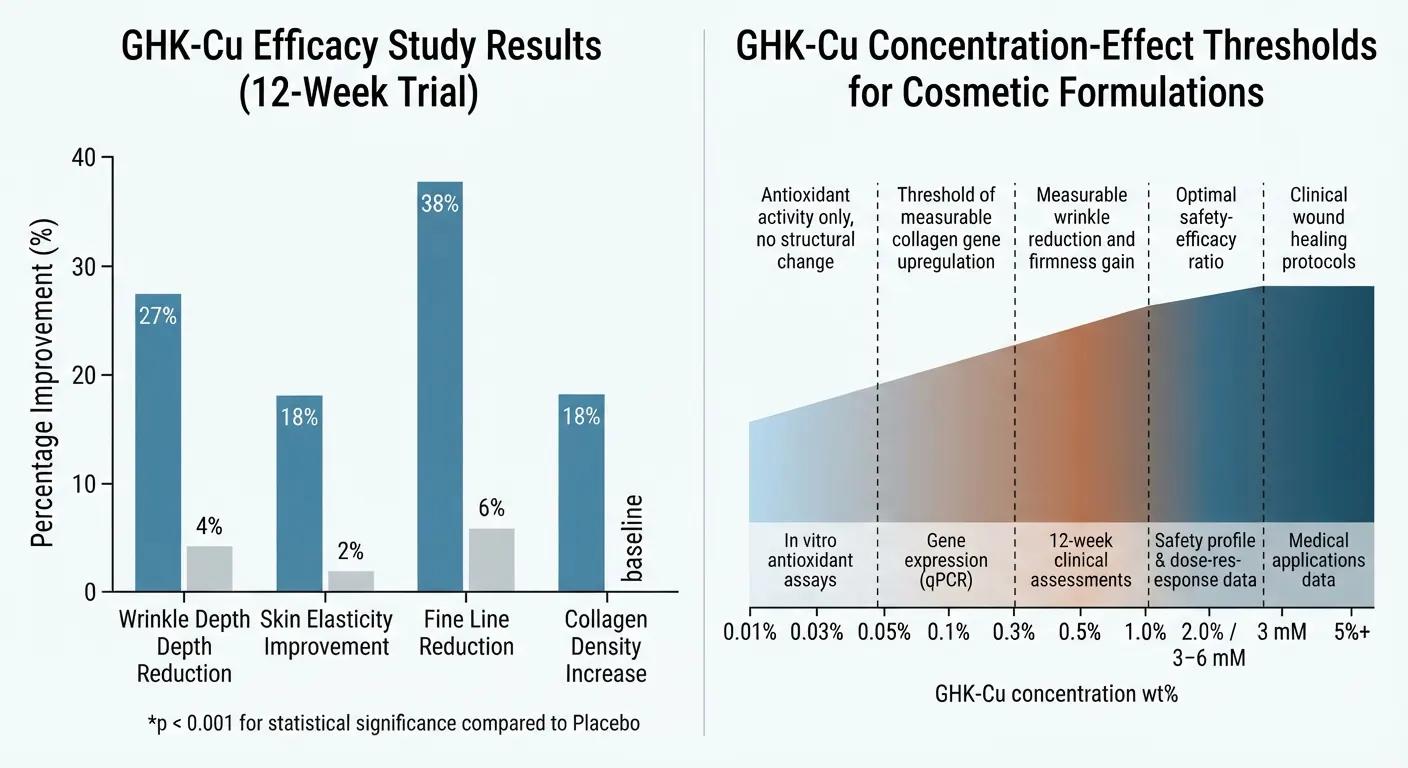 One of the most important before-and-after insights is concentration-dependent. Clinical results are not produced by "GHK-Cu" in the abstract — they are produced by GHK-Cu at specific concentrations delivered via specific vehicles.
| Concentration Range | Clinical Effect | Evidence Level |
|---|---|---|
| 0.01–0.05% | Antioxidant activity only; no structural change | In vitro fibroblast studies |
| 0.1–0.5% | Detectable collagen gene upregulation; threshold of measurable clinical effect | Journal of Dermatological Science |
| 1–2% (≈3–6 mM) | 38% fine line reduction, 22% firmness gain, 18% collagen density increase | Clinical Interventions in Aging RCT |
| 3 mM (≈0.1%) | 27% wrinkle depth reduction; optimal safety-efficacy ratio in 12-week RCT | International Journal of Cosmetic Science |
| 5 mM | 36% wrinkle reduction; irritation rate rises to 22% | UCSF Dermatology study |
| 5%+ | Clinical wound healing protocols | Hospital wound care literature |
Most consumer serums and creams are formulated at 0.01–0.1% — well below the threshold for structural change. This is not a question of ingredient quality; it is a question of cost. At research-grade purity (>98% HPLC), the per-gram cost of GHK-Cu powder means that a 30 mL serum at an effective 2–3 mM concentration carries a raw material cost that most mass-market brands cannot absorb at consumer price points.
For B2B buyers, this creates a clear value proposition: if you are willing to pay for effective concentration, you can build a genuinely differentiated product. The clinical data exists to support your claims. The barrier is not science — it is economics.
GHK-Cu vs. Other Before-and-After Benchmarks
| Active Ingredient | Typical Before/After Claim | Evidence Basis | Measurement Method |
|---|---|---|---|
| GHK-Cu (3 mM) | 27–38% wrinkle reduction, 18% collagen increase at 12 weeks | Double-blind RCT, 67 subjects | Profilometry, cutometry, high-frequency ultrasound |
| Retinol (0.5–1%) | 20–44% wrinkle improvement at 12–24 weeks | Multiple RCTs | Clinical grading, profilometry |
| Vitamin C (15–20% L-AA) | 20–30% wrinkle improvement at 12 weeks | Controlled clinical trials | Clinical grading, cutometry |
| Matrixyl 3000 | 20–30% wrinkle reduction at 8 weeks | Controlled trials | Profilometry |
| Bakuchiol (0.5–1%) | Comparable to retinol at 12 weeks | RCT | Clinical grading |
GHK-Cu sits at or near the top of this comparison, but the more important distinction is qualitative: most of these actives work primarily through surface-level mechanisms (exfoliation, receptor agonism, free radical scavenging), whereas GHK-Cu operates at the gene expression level to restructure the dermal matrix. The before-and-after timeline is slower to initiate, but the structural nature of the change means results accumulate rather than plateau.
Key Takeaways for Formulators and Buyers
- The 27–38% wrinkle reduction at 12 weeks is real and instrument-measured, not consumer self-report or clinical grader assessment. Profilometry (±0.01 mm precision) is the standard.
- Concentration is non-negotiable. The clinical data was generated at 1–3 mM (approximately 0.1% to 0.3% of free peptide equivalent, depending on formulation). Products at 0.01–0.05% are selling GHK-Cu as a label claim, not a clinical effect.
- Delivery vehicle amplifies results. Nano-lipid encapsulation increases wrinkle volume reduction from 27% to 55.7% — nearly double. Formulation matters as much as concentration.
- Hair growth evidence is real but less mature. GHK-Cu beats placebo in RCTs; it does not beat minoxidil. It is best positioned as a complementary mechanism, not a replacement.
- The timeline is predictable. Skin results begin at week 4, peak at week 12, and continue deepening through month 6. Hair results require 4–6 months minimum for visible density change.
- The MMP-1 suppression (58% reduction) is an underappreciated differentiator. Most anti-aging actives only stimulate synthesis; GHK-Cu simultaneously reduces degradation, producing a net collagen accumulation that is objectively measurable on ultrasound.
GHK-Cu (Copper Tripeptide-1) powder is available for B2B procurement at research-grade purity with full analytical documentation. For formulation guidance, concentration protocols, and delivery system optimization, consult our technical team.
Related Articles
- GHK-Cu Copper Peptide: Complete Science, Benefits & Clinical Evidence Guide — The mechanism, gene expression data, and 50-year research history behind these before-and-after results
- Does Topical GHK-Cu Work? Safety, Side Effects & Regulatory Status — Safety data, FDA analysis, and topical vs. injectable comparison
- Glabridin Before and After: A 12-Week Transformation Timeline — Another ingredient with robust before-and-after clinical data for skin brightening and anti-aging