Preface
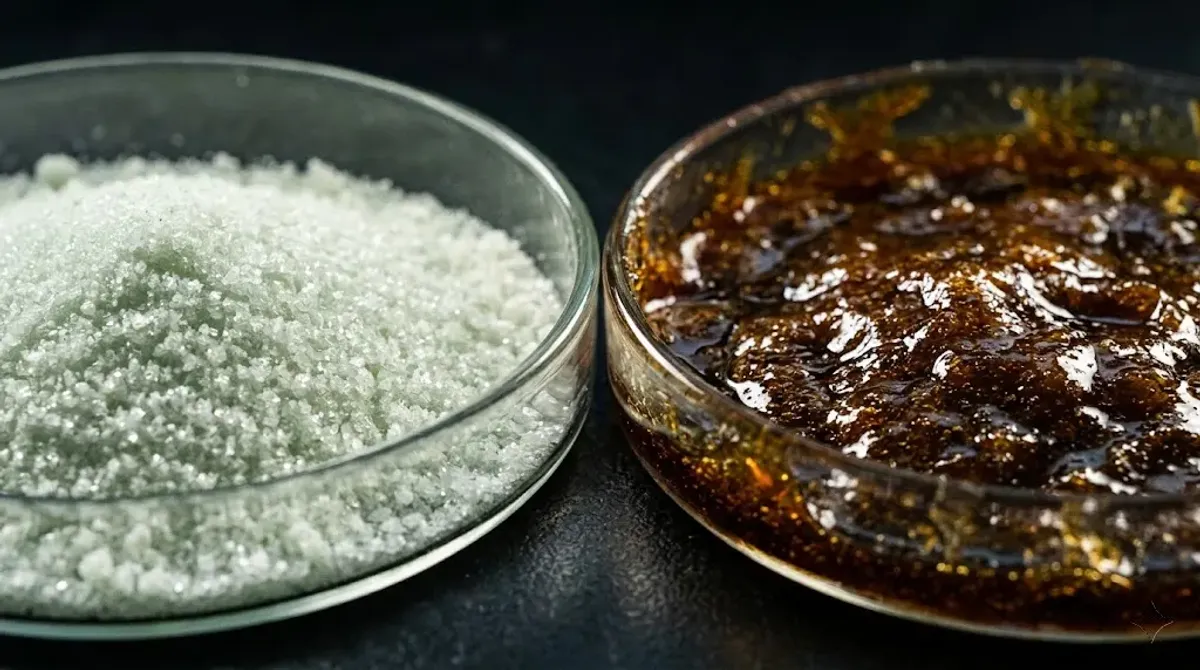
I have opened more vials of oxidized EGCG than I want to remember. The transition is unambiguous: a pale white-green powder becomes a sticky brown resin, sometimes within hours of exposure to ambient air. This happens faster than most formulators expect.
EGCG is not a forgiving ingredient. It is the most abundant catechin in green tea extract, the most bioactive in nearly every clinical endpoint, and the most prone to self-destruction in a formulation matrix. This article explains the five variables that control EGCG stability and how I handle them in the lab.
Why EGCG Matters: The Case for Dealing With a Difficult Molecule
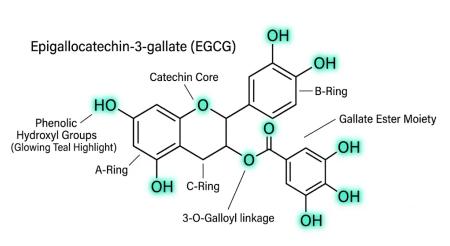
EGCG (epigallocatechin-3-gallate, CAS 989-51-5) accounts for 50-80% of the total catechins in green tea extract. Chemically, it is a polyphenol with eight phenolic hydroxyl groups and a gallate ester at the C-3 position. That phenolic density is the source of both its potency and its instability.
 Five verified mechanisms make EGCG relevant for cosmetic and nutraceutical formulation:
COX-2 and LOX inhibition: EGCG downregulates COX-2 expression at the transcriptional level (NF-κB pathway) and directly inhibits lipoxygenase activity. This dual anti-inflammatory action is measurable at 10-50μM in vitro — within the range achievable in topical formulations at 0.5-1.0% EGCG.
MMP suppression: EGCG inhibits MMP-2 and MMP-9 activity by chelating the catalytic zinc ion and blocking TIMP degradation. In practical terms: EGCG helps preserve dermal collagen and elastin, which is why it appears in anti-aging and post-procedure formulations.
5-alpha-reductase inhibition: EGCG inhibits type I 5-alpha-reductase, reducing the conversion of testosterone to DHT. This is the mechanism that justifies EGCG in anti-hair-loss and scalp-care products. It is a rare functional claim with biochemical validation rather than anecdotal support.
Direct radical scavenging: Eight phenolic hydroxyl groups provide an exceptionally high ORAC value. EGCG is 5-10× more potent than vitamin C as a peroxyl radical scavenger in liposomal oxidation assays.
AMPK activation (nutraceutical): Oral EGCG activates AMPK, increasing fatty acid oxidation and improving insulin sensitivity. This is the metabolic health mechanism — distinct from the topical effects above.
These mechanisms justify the formulation effort. But the effort is real.
The Five Variables That Control EGCG Stability
Variable 1: pH — The Primary Switch
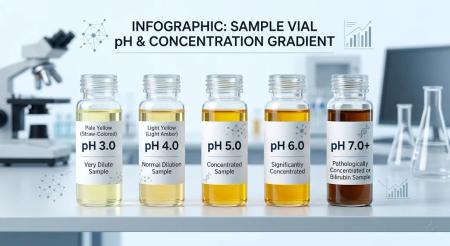
EGCG stability is a function of pH, and the relationship is steep:
| pH | EGCG Half-Life (25°C, aerobic) | Visual Change | Formulation Viability |
|---|---|---|---|
| 3.0-4.0 | >48 hours | Pale yellow → pale amber | ✓ Stable for finished product |
| 4.0-5.0 | 24-48 hours | Pale yellow → amber | ✓ Acceptable with antioxidants |
| 5.0-6.0 | 4-8 hours | Rapid browning | ⚠️ Requires oxygen exclusion |
| 6.0-7.0 | 1-2 hours | Dark brown within hours | ❌ Not viable for leave-on |
| >7.0 | <30 minutes | Immediate oxidation | ❌ Post-formulation only |
The mechanism is deprotonation-driven autoxidation. As pH rises, phenolic hydroxyl groups lose protons, generating phenolate anions that react with dissolved oxygen. The reaction is autocatalytic — oxidation products accelerate further oxidation.
Protocol: I buffer EGCG at pH 4.2 using a citrate-phosphate system (50mM). At this pH, EGCG remains protonated, and the citrate provides mild metal-chelating support without competing with EGCG's activity.
Variable 2: Dissolved Oxygen — The Silent Degrader
Dissolved oxygen degrades EGCG even at optimal pH. The degradation rate is first-order with respect to dissolved O₂ concentration — meaning every reduction in oxygen exposure directly extends EGCG shelf life.
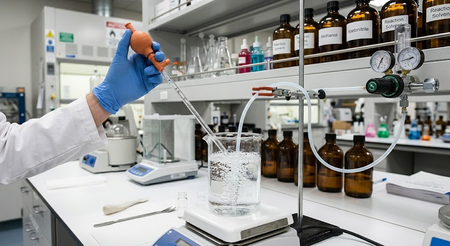
In my lab, I measure dissolved O₂ in finished formulations with a Clark-type electrode. A formulation with <0.5mg/L dissolved O₂ (achievable with nitrogen sparging) extends EGCG stability at pH 4.2 by 3-5× compared to an aerated control.
Protocol:
- Sparge the water phase with nitrogen (10 minutes at 200mL/min per liter of formulation)
- Fill headspace with nitrogen before capping
- Avoid vortex mixing during preparation (incorporates air)
Variable 3: Temperature — Above 40°C, Everything Accelerates
| Storage Temperature | EGCG Retention After 12 Weeks | Notes |
|---|---|---|
| 4°C | 98% | Ideal for raw material storage |
| 25°C | 92% | Acceptable for finished product at optimal pH |
| 40°C | 68% | Degradation accelerates, brown discoloration visible |
| 50°C | 31% | Unacceptable for any shelf life |
The Arrhenius activation energy for EGCG oxidation is approximately 60 kJ/mol — which means degradation rate doubles with every 10°C increase above 25°C.
Protocol: Store bulk EGCG at 2-8°C under nitrogen. Finished products should ship and store at ≤25°C. If your supply chain cannot guarantee <30°C in transit, EGCG is not the right active for that market.
Variable 4: Metal Ions — Catalytic Destruction
Fe³⁺ and Cu²⁺ catalyze EGCG oxidation at trace concentrations. The reaction produces dark-colored iron-EGCG and copper-EGCG complexes that are visually obvious — brown and green-black precipitates, respectively.
Protocol:
- Use deionized water (<0.1μS/cm conductivity) — tap water typically contains 5-50μg/L Fe and can destroy an EGCG batch
- Avoid steel vessels — use glass or HDPE
- If metal contamination is suspected, add 0.05% EDTA as a sacrificial chelator
- Verify with ICP-MS: Fe <0.1ppm and Cu <0.05ppm in the finished formulation
Variable 5: Light — Cumulative and Irreversible
EGCG undergoes direct photodegradation under UV and visible light. The gallate ester at the C-3 position is the primary photolabile site — it cleaves to release gallic acid, which then oxidizes further.
A 12-week light exposure test in my lab (ambient fluorescent light, 25°C):
| Container | EGCG Retention | Visual |
|---|---|---|
| Amber glass (UV-blocking) | 94% | Pale yellow, acceptable |
| Clear glass | 61% | Dark brown, rejected |
| Opaque HDPE | 97% | Pale yellow, excellent |
Protocol: Use amber glass or opaque packaging. If clear packaging is non-negotiable for marketing reasons, add a UV-absorbing excipient (e.g., 0.1% bis-ethylhexyloxyphenol methoxyphenyl triazine) to the formulation as a sacrificial photoprotectant.
Dual Application: Cosmetic vs. Nutraceutical EGCG
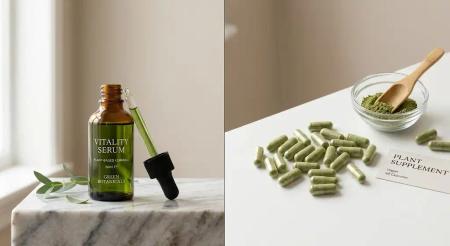
GINKVORA supplies EGCG for both routes, and the formulation requirements differ:
| Parameter | Cosmetic (Topical) | Nutraceutical (Oral) |
|---|---|---|
| EGCG Purity | ≥90% | ≥90% (same specification) |
| Concentration | 0.1-1.0% in product | 100-500mg per serving |
| pH Target | 4.0-5.0 | Not critical (GI tract buffers) |
| Stability Concern | Color, oxidation in bottle | API degradation in capsule |
| Key QC Check | HPLC at T=12 weeks | HPLC at T=24 months (shelf life) |
| Excipient Compatibility | Avoid metal ions, maintain low pH | Standard capsule fillers acceptable |
| Special Consideration | DHT inhibition for hair care | Hepatotoxicity threshold >800mg single dose |
The nutraceutical formulation is technically simpler (you do not need to maintain pH in a capsule), but the shelf-life requirement is far longer (24 months vs. 12 months for cosmetics).
Source high-purity EGCG (≥90%) from GINKVORA — full HPLC CoA, caffeine ≤0.5%, available for cosmetic and nutraceutical grades with batch-specific stability data.
The Formulation I Start With
Topical Serum, 30mL batch:
| Component | Function | Concentration |
|---|---|---|
| EGCG (≥90%) | Active | 0.5% |
| Citrate-phosphate buffer, pH 4.2 | pH stabilizer | 50mM |
| Ascorbic acid | Sacrificial antioxidant | 0.2% |
| Pentylene glycol | Humectant, booster | 4% |
| Phenoxyethanol + Ethylhexylglycerin | Preservative | 0.8% |
| Purified, deionized, nitrogen-sparged water | Solvent | q.s. |
| Packaging | Amber glass or opaque airless pump | — |
Process: Dissolve EGCG in water phase first (room temperature, nitrogen blanket), add buffer, add ascorbic acid, then pentylene glycol, then preservative. Check pH — adjust to 4.2 with dilute NaOH. Fill under nitrogen, seal immediately.
Expected stability: 12 months at 25°C in amber glass, with EGCG retention >85%.
I have run this formulation through three cycles of accelerated stability testing. It holds. If a brand comes to me with an EGCG project, this is what I give them as a starting point — not a finished product, but a scaffold that eliminates the most common failure modes.
Related Articles
- GHK-Cu Copper Peptide: A Formulator's Technical Guide — pH-sensitive active formulation with similar stability control requirements
- Liposomal Delivery: Why It's Becoming the New Standard — Protect EGCG from oxidation with liposomal encapsulation
- NMN, NMNH, NAD+: Navigating the Global NAD Precursor Market — Ingredient shelf-life and regulatory strategy for oral bioactives
Hui is an R&D Formulation Scientist at GINKVORA, specializing in the stability and delivery of high-purity bioactive ingredients. The EGCG stability protocols described here are validated in the GINKVORA applications laboratory and represent the formulation conditions under which GINKVORA EGCG is tested.
Frequently Asked Questions
Why does EGCG oxidize so quickly in formulations?
EGCG has eight phenolic hydroxyl groups — this is what gives it exceptional antioxidant capacity, but also makes it chemically unstable. At pH>5, the hydroxyl groups deprotonate and react with dissolved oxygen, triggering a chain autoxidation that turns the formulation brown and renders EGCG inactive. The half-life at pH 7.4 and 25°C is approximately 30 minutes.
What is the optimal pH range for EGCG in a cosmetic formulation?
EGCG is most stable at pH 3.5-5.0. At this range, the phenolic hydroxyl groups remain protonated, minimizing autoxidation. Use a citrate-phosphate buffer at pH 4.2 for the best combination of EGCG stability and skin compatibility. Avoid formulating EGCG above pH 6.0 — degradation is exponential beyond that point.
Can EGCG be used in hair care formulations?
Yes — EGCG inhibits 5-alpha-reductase, reducing DHT production at the follicle level. This makes it a functional ingredient in anti-hair-loss and scalp-care formulations. The pH requirement is less strict for hair care (pH 4.5-6.5 is acceptable for rinse-off products), but EGCG still requires oxygen exclusion and light-protective packaging.
How do I verify EGCG purity and stability in a finished product?
For raw material: RP-HPLC at 280nm, C18 column, acetonitrile/0.1% formic acid gradient. Acceptance: EGCG ≥90% peak area, caffeine ≤0.5%. For finished product stability: extract EGCG from the formulation, run HPLC, and compare against the theoretical concentration at T=0. Degradation >10% over 12 weeks at 25°C indicates formulation failure.
What is the recommended EGCG concentration for cosmetic vs. nutraceutical use?
Cosmetic topical: 0.1-1.0% in leave-on products, 0.5-2.0% in rinse-off. Higher concentrations increase formulation difficulty without linear efficacy gains. Nutraceutical oral: 100-500mg per serving is the clinical range for green tea catechin benefits. Note: high-dose EGCG (>800mg single dose) can cause hepatotoxicity — this is a dose-response ceiling, not a formulation issue.