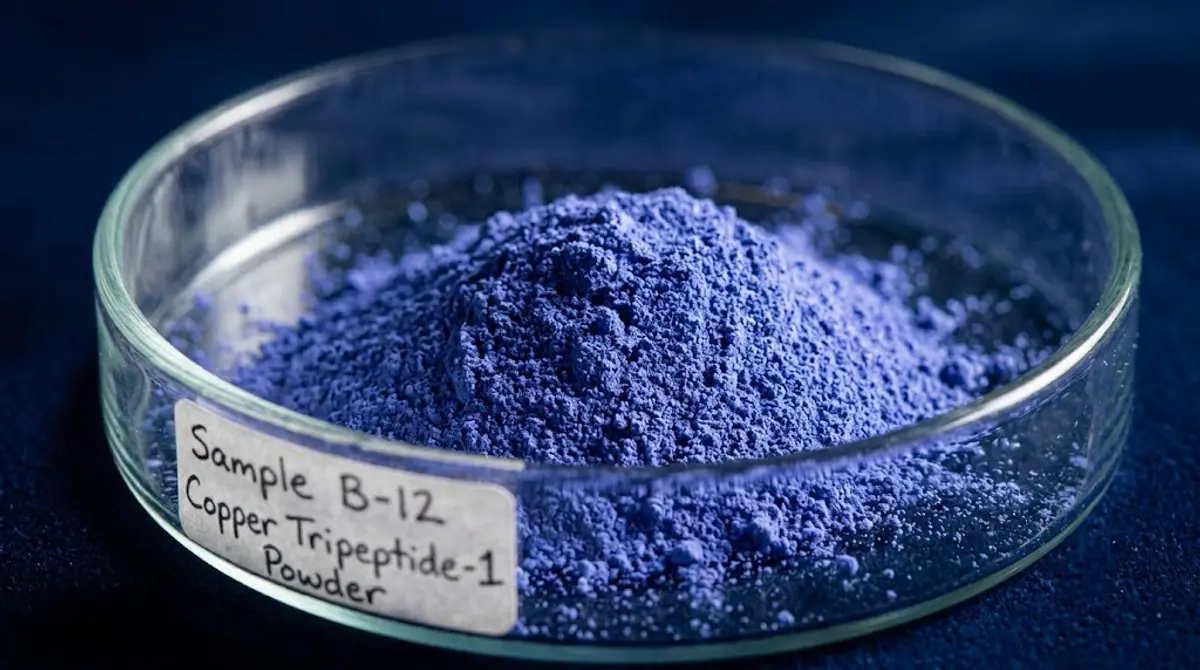
I have been formulating with copper peptides for long enough to know one thing: GHK-Cu is not difficult. It is just unforgiving.
Give a formulator GHK-Cu and they get a tripeptide that signals tissue remodeling at nanomolar concentrations — arguably the most potent repair signal in cosmetic chemistry. Give a formulator GHK-Cu without the stability protocol, and they get a blue-green precipitate, free copper ions driving oxidation, and a batch that fails QA.
This guide is what I wish someone had given me when I started working with this molecule.
GHK-Cu: More Than a Tripeptide
GHK (glycyl-L-histidyl-L-lysine) is a naturally occurring tripeptide in human plasma. At micromolar concentrations, it circulates freely. At nanomolar concentrations, it is one of the most potent tissue remodeling signals known.
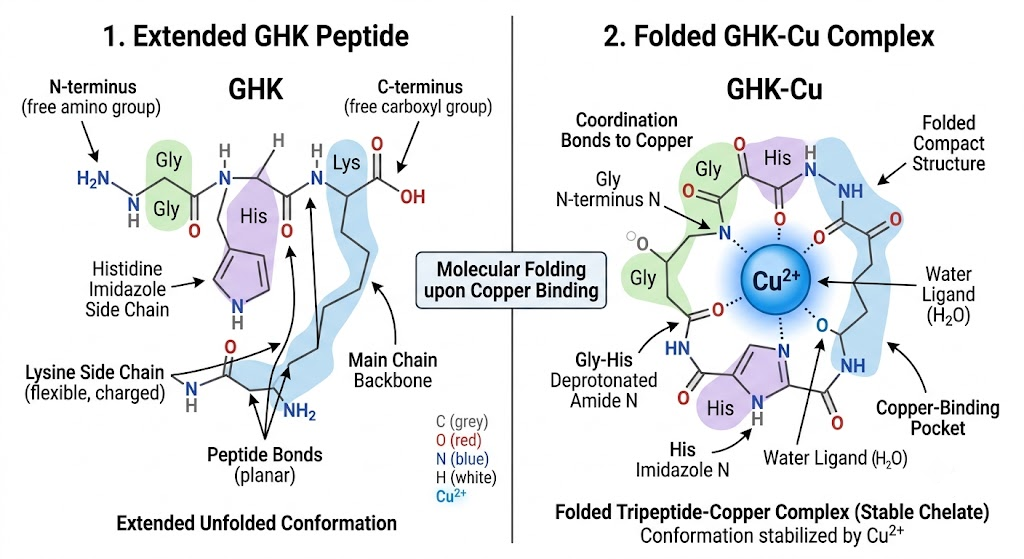
Copper (Cu²⁺) is not incidental — it is the switch. The GHK-Cu complex is the biologically active form, and the copper ion changes the peptide's conformation from an extended chain to a folded, bioactive structure. Without copper, GHK is a peptide sequence. With copper properly chelated, it becomes a signal.
Three core activities make GHK-Cu valuable for cosmetic and wound-healing formulations:
Collagen synthesis: GHK-Cu upregulates collagen types I, IV, and MMP inhibitors (TIMP-1, TIMP-2), shifting the ECM balance toward synthesis over degradation. Effective at 1–10nM in vitro — which is remarkably potent for a cosmetic peptide.
Wound healing: GHK-Cu attracts activated macrophages and increases their lifespan at the wound site, accelerating the inflammatory-to-remodeling transition. Clinical data on wound closure and scar remodeling is well-replicated. The same TGF-β1 suppression that supports wound healing also reduces hypertrophic scar formation — including atrophic acne scars, where GHK-Cu promotes collagen Type III deposition over the rigid Type I collagen typical of scar tissue.
Antioxidant metal chelation: Properly chelated GHK-Cu neutralizes lipid peroxidation byproducts, including 4-hydroxynonenal. The copper ion in the chelated state acts as a redox buffer, not a pro-oxidant.
GHK-Cu for Hair and Scalp: The Overlooked Application
Most formulators associate GHK-Cu with facial serums and wound healing. I spent a year testing GHK-Cu on scalp formulations before I realized how many of them should not have worked — and why the ones that did work shared the same mechanism.
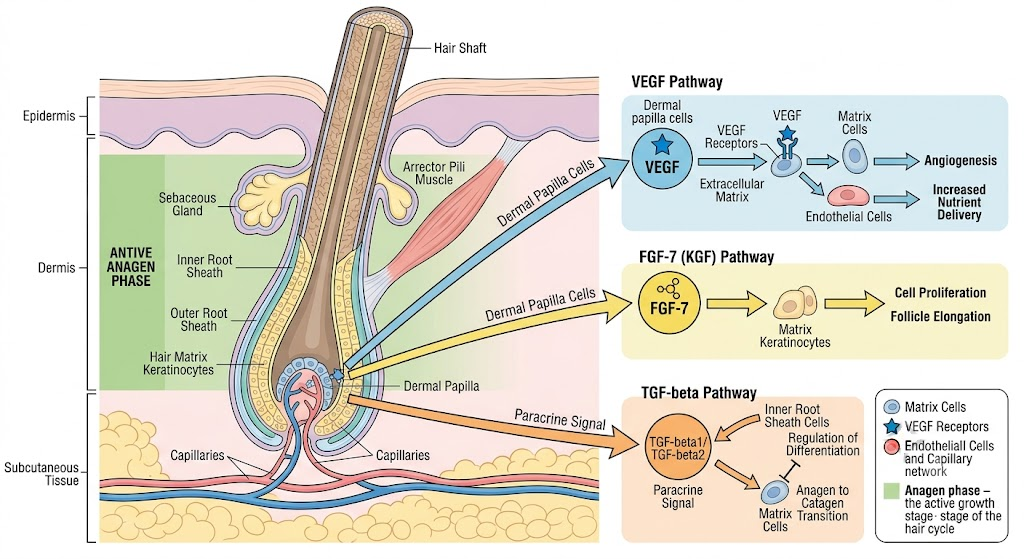
How GHK-Cu Acts on Hair Follicles
Four mechanisms make GHK-Cu relevant for hair and scalp formulation — and each one works through a pathway that minoxidil and finasteride do not touch.
Dermal papilla cell (DPC) activation: Pyo et al. (2007, Arch Pharm Res) demonstrated that GHK-Cu directly stimulates human DPC proliferation while suppressing DPC apoptosis. The number and metabolic activity of DPCs determine follicle size, hair shaft diameter, and anagen duration. More DPCs with higher activity → larger follicles with a longer growth phase. The effective in vitro concentration: low micromolar, corresponding to 0.1–0.3% in a finished topical product.
VEGF and FGF-7 (KGF) dual upregulation: GHK-Cu upregulates VEGF in DPCs and fibroblasts through SP1/AP-1 transcription factor activation — a different pathway from minoxidil's potassium channel → HIF-1α cascade. The critical distinction: GHK-Cu also stimulates FGF-7 (keratinocyte growth factor), which minoxidil and 5α-reductase inhibitors do not. FGF-7 signaling declines are directly linked to follicle miniaturization in androgenetic alopecia. This dual VEGF + FGF-7 mechanism is pharmacologically unique.
TGF-β1 suppression — extending anagen: TGF-β1 is the molecular signal that pushes hair follicles from anagen (growth) into catagen (regression). Pyo et al. demonstrated that GHK-Cu reduced TGF-β1 secretion from dermal fibroblasts. DHT increases TGF-β1 in the follicle microenvironment; by suppressing TGF-β1, GHK-Cu may partially counteract the DHT-driven catagen switch — through a mechanism entirely separate from 5α-reductase inhibition.
Wnt/β-catenin activation in vivo: Liu et al. (2024) applied a GHK-Cu microemulsion to mouse dorsal skin. Follicles in the GHK-Cu group entered anagen at day 6, compared to over 10 days for 5% minoxidil. At 28 days, the GHK-Cu group showed higher hair density than both control and minoxidil groups, with confirmed β-catenin nuclear accumulation in DPCs.
The Clinical Data
The most cited human study is Choi et al. (2016, Dermatol Surg): 45 males with androgenetic alopecia, 6-month topical application. The GHK peptide complex group gained 71.5 hairs/cm². The placebo group: 9.6. The difference was significant (p<0.05). The caveat: the formulation included 5-ALA as a co-active, so isolating GHK-Cu's contribution is not possible with certainty.
A 2017 mouse study (Pyo et al., C57BL/6J) using 2% GHK-Cu topically showed 70% of mice entering anagen by day 11 versus 20% in controls and 60% in the 5% minoxidil group. Histology confirmed larger DPC areas and follicle cross-sections in the GHK-Cu group.
The formulator's takeaway: GHK-Cu is not a replacement for minoxidil or finasteride — but as a complementary mechanism with a clean dermatological safety profile, it fills a genuine gap in hair product lines. The data supports it for androgenetic alopecia formulations, post-procedure scalp recovery products, and beard growth serums.
Scalp Formulation Notes
Hair and scalp formulations differ from facial serums in three practical ways:
- pH target: pH 6.0–7.0 works better for scalp products than the facial serum sweet spot (pH 5.0–5.5). At pH 6–7, copper dissociation from GHK is slow enough to be product-stable over 12 months, and the slightly higher pH improves compatibility with scalp-supportive ingredients like caffeine and niacinamide.
- Concentration range: 0.1–0.3% GHK-Cu. Below 0.05%, published effects do not replicate. The dose response is bell-shaped — above 1%, DPC proliferation actually declines in some models.
- Delivery formats: Leave-on scalp serums and sprays work best for GHK-Cu because the peptide needs sustained contact time. For rinse-off formats like shampoos, a higher concentration (0.3–0.5%) and/or extended contact time is necessary to compensate for the short residence on the scalp.
The Stability Problem: Why GHK-Cu Formulations Fail
GHK-Cu stability is controlled by three factors, and missing any one of them ruins the batch.
Factor 1: pH — The Narrow Window
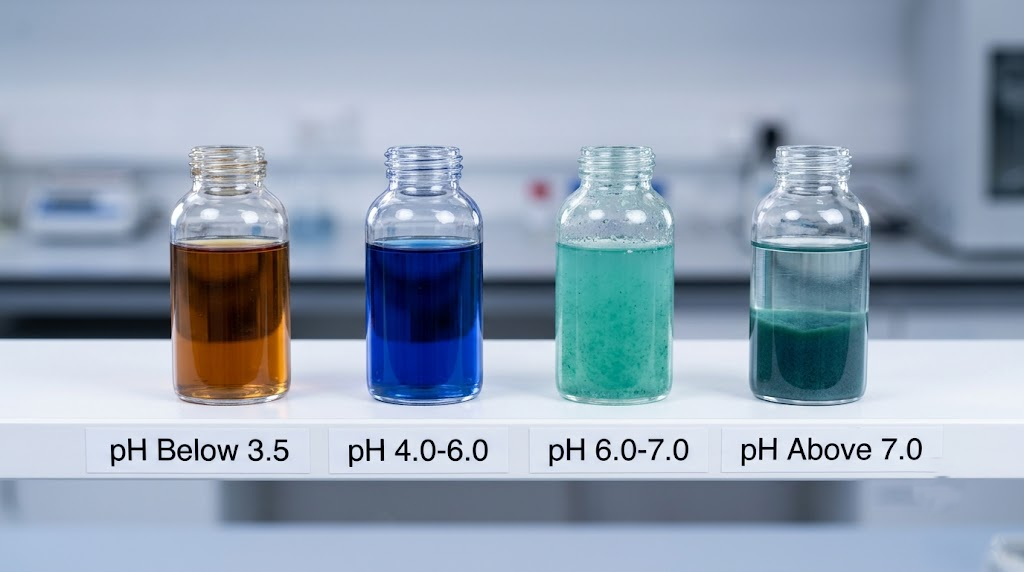
Every time I train a junior formulator on GHK-Cu, I start here:
| pH Range | Copper Chelation Status | Formulation Outcome |
|---|---|---|
| <3.5 | GHK loses Cu²⁺ chelation | Free Cu²⁺ released → pro-oxidant, formulation turns brown |
| 4.0–6.0 | Stable GHK-Cu complex | ✓ Optimal range, minimal copper dissociation |
| 6.0–7.0 | Gradual dissociation | Acceptable short-term, but copper release accelerates over 4 weeks |
| >7.0 | Cu(OH)₂ precipitation | Blue-green precipitate forms, active lost irreversibly |
The window is narrow, and cosmetic formulations are not pH-stable environments. Every ingredient you add — a preservative, a thickener, a fragrance — can shift pH. I buffer GHK-Cu formulations at pH 5.0-5.5 using a citrate-phosphate system. If your brand claims "skin-identical pH 5.5," GHK-Cu is one ingredient that actually justifies it.
Factor 2: Ionic Environment
GHK-Cu is sensitive to ionic strength and competing metal ions. Chelating agents — EDTA, citric acid, phytic acid — strip copper from GHK-Cu. This is counterintuitive because chelators are normally added to stabilize formulations.
When I see a formula with GHK-Cu and EDTA together, I know the formulator does not understand copper peptide chemistry. EDTA has a formation constant (log K) of 18.8 for Cu²⁺. GHK's log K is approximately 16-17 for copper. EDTA wins, copper leaves GHK, and both the peptide activity and the chelator's preservative-boosting function are lost.
The rule: no competing chelators in GHK-Cu formulations. Use phenoxyethanol + ethylhexylglycerin as a preservative system instead of EDTA-dependent systems.
Factor 3: Light and Temperature
GHK-Cu is light-sensitive through two mechanisms:
- Direct photolysis: UV exposure cleaves the peptide backbone, generating glycyl-histidine and free lysine fragments
- Copper-mediated photochemistry: Photoexcited Cu²⁺ generates singlet oxygen, which attacks the histidine imidazole ring
Accelerated stability testing in my lab shows:
| Storage Condition | GHK-Cu Retained (12 weeks) | Visual Observation |
|---|---|---|
| 25°C, dark, sealed | 97% | Clear, blue solution, intact |
| 25°C, ambient light | 78% | Slight blue fading, 3% free Cu²⁺ detected |
| 40°C, dark, sealed | 91% | Clear, slight viscosity change |
| 40°C, ambient light | 52% | Green-brown, precipitated, >15% free Cu²⁺ |
Light protection is non-negotiable for GHK-Cu. In finished product, an opaque or dark amber container adds 30-40% to the shelf life.
Ingredient Compatibility: What Works and What Does Not
This is the most common question I receive from formulators and brand owners. Here is a practical compatibility matrix:
| Ingredient Class | Compatible? | Notes |
|---|---|---|
| Niacinamide (Vitamin B3) | ✅ Yes | No interaction at pH 5-6, complementary ECM remodeling |
| Hyaluronic Acid | ✅ Yes | No reactive groups, compatible viscosity builder |
| Matrixyl 3000 (Pal-GHK + Pal-GQPR) | ✅ Yes | Synergistic, different ECM mechanisms |
| Retinol (Vitamin A) | ⚠️ Conditional | pH mismatch — retinol requires pH 6-7 for stability; sequential application preferred |
| Ascorbic Acid (Vitamin C) | ❌ No | Low pH strips copper, free Cu²⁺ catalyzes ascorbate oxidation |
| AHA/BHA | ❌ No | Low pH environment destroys GHK-Cu complex |
| EDTA/Phytic Acid | ❌ No | Chelators outcompete GHK for Cu²⁺ binding |
| Peptides with free thiols (Acetyl Hexapeptide-51) | ❌ No | Thiol groups form Cu-S bonds, disrupting GHK coordination |
Quality Control: Verifying Your GHK-Cu HCl Raw Material
As an R&D formulator, I do not trust certificates of analysis alone. I verify. Here is the QC protocol I use for incoming GHK-Cu HCl:
Step 1: HPLC Purity
Column: C18, 250mm × 4.6mm, 5μm Mobile phase: Acetonitrile/0.1% TFA in water (gradient) Detection: 215nm (peptide bond) and 280nm (histidine aromatic ring) Acceptance: Single symmetric peak, ≥98% area purity
Step 2: Copper Content Verification
Digest sample in concentrated HNO₃, then analyze by ICP-MS (or flame AAS if ICP-MS is unavailable). Calculate molar ratio: GHK (from HPLC integration) : Cu (from ICP-MS). Acceptance: 1:1 ±5%. If copper is low, the material is under-chelated. If copper is high, there is free Cu²⁺ contamination.
Step 3: Visual and Solubility Check
A properly synthesized GHK-Cu HCl is a deep blue, fine crystalline powder. It dissolves completely in water at 10mg/mL at pH 5.5 with gentle stirring. Any greenish tint, brown discoloration, or undissolved residue indicates degradation or manufacturing impurities.
Sourcing GHK-Cu: A Formulator's Checklist
Having rejected over a dozen GHK-Cu suppliers in the past three years, I keep a short checklist for what separates a usable lot from a problem waiting to happen:
CoA must include ICP-MS copper quantification — not just HPLC peptide purity. A supplier reporting 99% peptide purity with no copper data is either hiding something or does not understand the molecule. The GHK:Cu molar ratio must be 1:1 ±5%.
Appearance is diagnostic — a properly synthesized GHK-Cu HCl is a deep blue, fine crystalline powder. Green, brown, or clumpy material is degraded. Blue color is not a cosmetic additive — it is the actual copper chelation complex.
Solubility at pH 5.5 — 10mg/mL in purified water at pH 5.5 should dissolve completely with gentle stirring in under 5 minutes. Undissolved particulates after 10 minutes indicate polymerized or oxidized material.
Request the peptide synthesis route — GHK-Cu should be produced via solid-phase peptide synthesis (SPPS) followed by copper chelation under controlled pH, not via liquid-phase methods that leave residual organic solvents and incomplete chelation.
Batch-to-batch HPLC overlay — a supplier that cannot provide overlay chromatograms for three consecutive lots is not controlling their synthesis. GHK-Cu is not forgiving of process drift.
If you are evaluating GHK-Cu suppliers or placing a first purchase, use these five points as your screening tool. A supplier that passes all five is rare. A supplier that cannot answer three of them honestly should not be in your shortlist.
Formulation Starting Points by Product Type
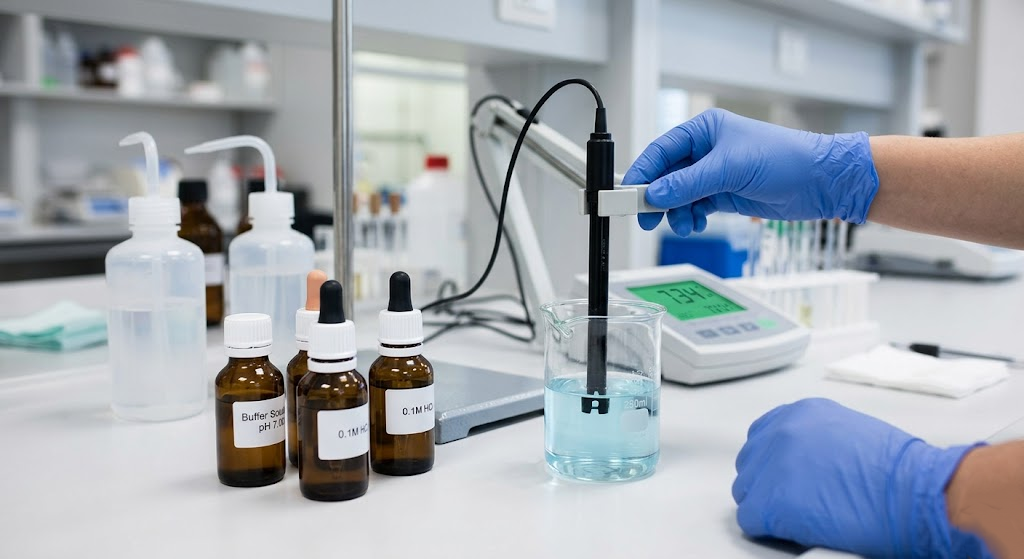
GHK-Cu works across product formats, but each format shifts the formulation priorities. Here are starting scaffolds for the five most common GHK-Cu product types.
Serum (Facial/Scalp)
| Component | Function | Range |
|---|---|---|
| GHK-Cu HCl | Active | 0.1-0.3% |
| Sodium hyaluronate | Viscosity, humectant | 0.1-0.5% |
| Citrate-phosphate buffer, pH 5.2 | pH stabilizer | 10mM |
| Phenoxyethanol + Ethylhexylglycerin | Preservative | 0.8% |
| Pentylene glycol | Humectant, booster | 3-5% |
| Purified water | Solvent | q.s. to 100% |
Process: Dissolve GHK-Cu in water first at room temperature — never heat. Add buffer, thickener, then preservative. Verify pH after each addition and adjust with dilute NaOH or citric acid.
Cream (Face)
| Component | Function | Range |
|---|---|---|
| GHK-Cu HCl | Active | 0.05-0.1% |
| Caprylic/Capric Triglyceride | Emollient | 5-8% |
| Cetearyl Olivate / Sorbitan Olivate | Emulsifier (O/W) | 3-4% |
| Glycerin | Humectant | 3-5% |
| Citrate-phosphate buffer, pH 5.2 | pH stabilizer | 10mM |
| Phenoxyethanol + Ethylhexylglycerin | Preservative | 0.8% |
| Xanthan gum | Stabilizer | 0.1-0.3% |
| Purified water | Solvent | q.s. to 100% |
Eye Cream
| Component | Function | Range |
|---|---|---|
| GHK-Cu HCl | Active | 0.03-0.05% |
| Caprylic/Capric Triglyceride | Light emollient | 3-5% |
| Cetearyl Olivate / Sorbitan Olivate | Emulsifier (O/W) | 2-3% |
| Glycerin | Humectant | 3-5% |
| Caffeine | Microcirculation | 0.5-1.0% |
| Citrate-phosphate buffer, pH 5.2 | pH stabilizer | 10mM |
| Phenoxyethanol + Ethylhexylglycerin | Preservative | 0.8% |
| Purified water | Solvent | q.s. to 100% |
Eye cream note: For periocular application, use the lower end of the concentration range (0.03-0.05%). Periocular skin is thinner and more permeable — lower concentrations achieve equivalent dermal delivery. GHK-Cu at these concentrations has no reported ocular irritation risk. Caffeine at 0.5-1.0% is a common complementary active for eye-area microcirculation and is compatible at pH 5.0-5.5.
Gel
| Component | Function | Range |
|---|---|---|
| GHK-Cu HCl | Active | 0.1-0.3% |
| Sodium hyaluronate | Humectant, gel base | 0.5-1.0% |
| Carbomer (Ultrez 10 or 20) | Gel matrix | 0.3-0.6% |
| Triethanolamine (to pH 5.5) | Neutralizer | q.s. |
| Citrate-phosphate buffer, pH 5.2 | pH stabilizer | 10mM |
| Phenoxyethanol + Ethylhexylglycerin | Preservative | 0.8% |
| Purified water | Solvent | q.s. to 100% |
Process: Hydrate carbomer completely before adding GHK-Cu. Neutralize carbomer after GHK-Cu addition (not before) to avoid transient copper dissociation at the acidic pre-neutralized carbomer pH.
Lotion (Scalp/Body)
| Component | Function | Range |
|---|---|---|
| GHK-Cu HCl | Active | 0.1-0.3% |
| C12-15 Alkyl Benzoate | Light emollient | 3-5% |
| Glyceryl Stearate (SE) | Emulsifier | 2-3% |
| Propanediol | Humectant, penetration | 3-5% |
| Citrate-phosphate buffer, pH 6.0 | pH stabilizer | 10mM |
| Phenoxyethanol + Ethylhexylglycerin | Preservative | 0.8% |
| Allantoin | Soothing | 0.1-0.3% |
| Purified water | Solvent | q.s. to 100% |
Scalp lotion note: pH 6.0 buffer instead of 5.2 for scalp-compatible pH. Allantoin provides mild soothing — useful for formulations where GHK-Cu's ECM remodeling activity may cause initial tingling on irritated scalps.
Stability expectation: 12 months at 25°C in opaque packaging, >90% GHK-Cu retention across all formats.
What I Would Change About How the Industry Uses GHK-Cu
GHK-Cu is effective. The problem is that too many brands add it at a token concentration (0.001%, sometimes less) and call it a GHK-Cu product. At those levels, you are not delivering a functional copper peptide signal — you are printing a label claim.
If a brand is serious about GHK-Cu, I recommend:
- Disclose the concentration — not just the presence. 0.1-0.3% is the functional window for serums; 0.05-0.1% for creams; 0.03-0.05% for eye creams.
- Publish a third-party copper content assay — prove the copper is there and chelated.
- Ship in opaque packaging — show that the formulation was designed for GHK-Cu stability, not just marketing.
The brands that do all three will own the GHK-Cu category in their market — across serums, creams, gels, eye creams, and hair growth products. The brands that do not get to print "copper peptide" on their label. Those are not the same game.
Source high-purity GHK-Cu Copper Peptide from GINKVORA — ≥98% HPLC purity, verified 1:1 GHK:Cu chelation ratio, deep blue crystalline powder, full CoA with ICP-MS copper content verification.
Related Articles
- Liposomal Delivery: Why It's Becoming the New Standard — How liposomal GHK-Cu improves dermal delivery and peptide stability
- EGCG Stability: What Green Tea Catechins Actually Need — Formulation stability protocols for oxidation-sensitive actives
- PQQ: The Market's Most Underrated Mitochondrial Molecule — Anti-aging actives with clinical backing and formulation strategy
Frequently Asked Questions
What is the optimal pH range for GHK-Cu formulations?
GHK-Cu is most stable at pH 4.0-6.0. Below pH 3.5, the GHK peptide loses copper chelation capacity and free Cu²⁺ ions release into solution — causing pro-oxidant activity instead of the intended antioxidant signal. Above pH 7.0, copper hydroxide precipitation occurs, turning the formulation blue-green and rendering the active unavailable. Scalp formulations can operate at pH 6.0-7.0 with acceptable stability over a 12-month shelf life.
Can I combine GHK-Cu with vitamin C in a single formula?
I strongly advise against it. Ascorbic acid at its active pH (~3.0-3.5) strips copper from the GHK-Cu complex. The result: free copper ions that catalyze ascorbic acid oxidation, inactivating both ingredients. If both need to appear in a product line, use a dual-chamber delivery system or separate AM/PM applications.
How do I verify GHK-Cu content and copper chelation status?
Two-step verification: (1) RP-HPLC at 215nm or 280nm to quantify total GHK tripeptide content; (2) ICP-MS or AAS to measure total copper content. Compare the molar ratio — GHK:Cu should be 1:1 ±5% for a properly chelated product. Excess free copper indicates degraded or poorly manufactured material.
What concentration range is effective for GHK-Cu in finished products?
In vitro: GHK-Cu activates collagen synthesis at 1-10nM, which is exceptionally potent. In finished cosmetic products: facial serums 0.1-0.3%, creams 0.05-0.1%, eye creams 0.03-0.05%, scalp products 0.1-0.3%. Above 1%, copper staining risk increases without measurable efficacy gain. For wound healing applications, 0.1-0.3% is the clinical sweet spot.
How should I store bulk GHK-Cu HCl raw material?
Store at -20°C under argon or nitrogen for long-term (>6 months). For short-term (0-3 months), 2-8°C in a sealed, light-protected container with desiccant is acceptable. Never store GHK-Cu in solution for more than 24 hours before formulation — the copper complex begins dissociating in aqueous environments even at optimal pH.
Can GHK-Cu be used in hair and scalp products?
Yes. GHK-Cu stimulates dermal papilla cell proliferation, upregulates VEGF and FGF-7 (KGF), and suppresses TGF-β1 — mechanisms that extend the hair follicle anagen phase. Clinical data (Choi et al., 2016) showed 71.5 hairs/cm² gain with a GHK peptide topical versus 9.6 in placebo over 6 months. Effective concentration: 0.1-0.3%, pH 6.0-7.0 for scalp formulations. Leave-on formats (serums, sprays) perform better than rinse-off due to contact time requirements.
What is the difference between a GHK-Cu serum, cream, gel, and eye cream?
The active (GHK-Cu) is the same, but the delivery vehicle changes how it reaches the skin. Serums use water-based, low-viscosity systems for fast penetration and maximal active loading (0.1-0.3%). Creams add oil-phase emollients for barrier support — useful for face creams (0.05-0.1%) and eye creams (0.03-0.05%, lower due to thinner periocular skin). Gels use carbomer or hyaluronate matrices for a cooling, residue-free finish. Lotions are lighter than creams and better for scalp or body coverage. All formats require pH 4.0-6.0 and opaque packaging for GHK-Cu stability.
Hui is an R&D Formulation Scientist at GINKVORA specializing in the stability and bioavailability of high-purity bioactive ingredients. This guide reflects formulation protocols developed and validated in the GINKVORA applications laboratory.