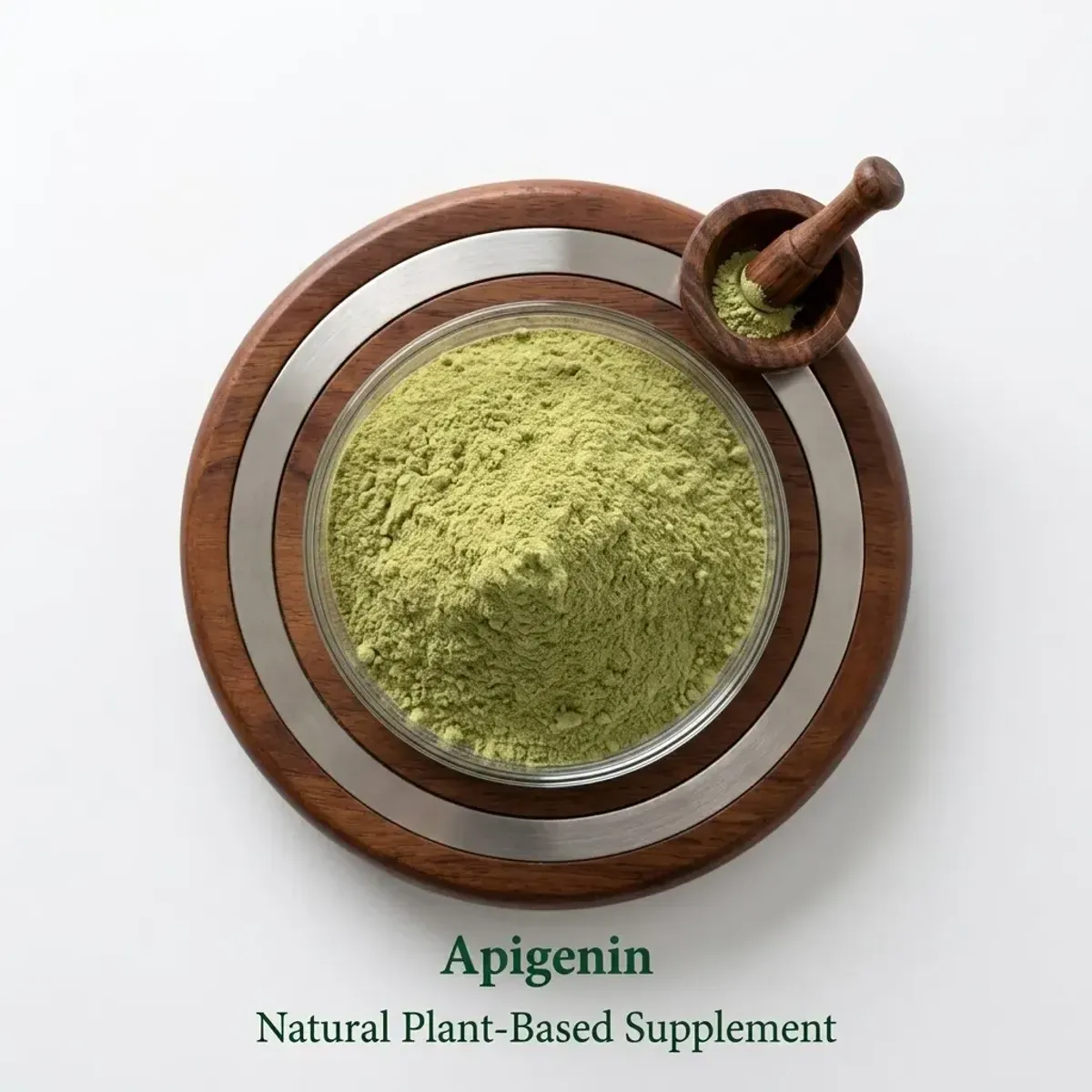
Apigenin
Matricaria chamomilla (Chamomile), Petroselinum crispum (Parsley)
Apigenin bulk powder (≥98% HPLC) directly from manufacturer — a naturally occurring flavonoid from chamomile and parsley. Clinically validated CD38 inhibitor that elevates cellular NAD+ levels by 50-100%. Multi-target anti-aging, anti-inflammatory, sleep-supporting, and UV-protective benefits.
Is Apigenin Effective for Anti-Aging and Sleep? Benefits, Dosage, Side Effects & Comparison
Yes, Apigenin is a clinically studied natural flavonoid that inhibits CD38 — the primary NAD+-consuming enzyme — boosting cellular NAD+ levels by 50–100% while delivering anti-inflammatory, neuroprotective, sleep-enhancing, and dermatological benefits for both nutraceutical and cosmetic applications.
What Is Apigenin?
Apigenin (5,7-Dihydroxy-2-(4-hydroxyphenyl)-4H-chromen-4-one) is a naturally occurring flavone found abundantly in chamomile (Matricaria chamomilla, ~0.8–1.2% content), parsley, celery, and citrus fruits. Unlike many other flavonoids, apigenin possesses a unique dual mechanism:
- CD38 Inhibition: Apigenin directly binds and inhibits CD38, a membrane-bound NAD+ glycohydrolase responsible for degrading NAD+ — the master coenzyme for cellular energy metabolism and DNA repair. CD38 expression increases with age, and its inhibition by apigenin preserves the declining NAD+ pool (Frontiers in Nutrition, 2024, doi:10.3389/fnut.2024.1359176).
- Multi-Target Pharmacology: Beyond CD38, apigenin modulates GABA receptors (non-benzodiazepine pathway), suppresses NF-κB nuclear translocation, downregulates COX-2/TNF-α/IL-6/IL-1β, and acts as a broad-spectrum kinase inhibitor.
GINKVORA supplies ≥98% HPLC-purity Apigenin as a yellow crystalline bulk powder for nutraceutical formulators, cosmetic brands, and CDMOs.
Key Benefits & Mechanisms
- CD38 Inhibition & NAD+ Restoration: Apigenin inhibits CD38 NADase activity, the primary age-related NAD+ consumer. In mice, 100 mg/kg apigenin (i.p., 7 days) nearly doubled hepatic NAD+ levels. This mechanism is distinct from NAD+ precursors (NR, NMN) which supply raw material — apigenin preserves what the body already produces (Frontiers in Nutrition, 2024).
- Sleep Enhancement & Anxiety Relief: Apigenin binds GABA_A receptors through a non-benzodiazepine pathway, producing calming effects without sedation or dependency risk. Epidemiological data from large adult cohorts show dietary apigenin intake is significantly and positively correlated with sleep quality. Clinical trials using chamomile extract (1500 mg/day, 8 weeks) demonstrated significant reductions in Generalized Anxiety Disorder (GAD) symptoms with sustained benefits through 38-week follow-up.
- Anti-Inflammatory & Immune Modulation: Suppresses NF-κB pathway, reducing TNF-α, IL-6, IL-1β, COX-2, and iNOS. In aged mice, oral apigenin (0.5 mg/mL, 42 days) downregulated inflammatory gene expression and reduced astrocyte senescence — a hallmark of neuroinflammation and brain aging.
- Neuroprotection & Cognitive Support: Increases BDNF, TrkB, and phospho-CREB levels; reduces β-amyloid aggregation and tau hyperphosphorylation. In Alzheimer's disease models, apigenin (10–20 mg/kg/day oral, 8 days) protected neurovascular coupling and improved learning/memory performance.
- Skin Anti-Aging & UV Protection: Demonstrates significant UVB absorption and functions as a natural photoprotective agent. Preclinical studies confirm apigenin reduces UV-induced skin damage, supports wound healing, and alleviates dermatitis and keratinocyte inflammation (Phytochemistry, 2022). A 2024 study combining apigenin with phloretin showed synergistic anti-aging effects in human dermal fibroblasts.
- Anti-Cancer Potential: Broad-spectrum anti-proliferative activity across multiple cancer cell lines including breast, prostate, colorectal, and lung. Apigenin induces apoptosis via caspase activation and acts as a chemosensitizer. A 2025 MDPI study (IJMS, 26:6, 2548) found apigenin's DNMT inhibitory potency exceeded that of azacytidine, an FDA-approved demethylating agent.
- Metabolic Health: In obese mice, apigenin improved glucose tolerance and lipid profiles by reducing global protein acetylation downstream of NAD+ restoration. Human data from chamomile trials showed significant reductions in body weight and mean arterial blood pressure.
Apigenin vs Quercetin vs Fisetin vs Luteolin: Which Flavonoid Is Best?
| Dimension | Apigenin | Quercetin | Fisetin | Luteolin |
|---|---|---|---|---|
| Flavonoid Class | Flavone | Flavonol | Flavonol | Flavone |
| Key Mechanism | CD38 inhibitor → NAD+ booster; GABA modulator | Senolytic (with dasatinib); antioxidant; antihistamine | Senolytic (strongest); mTOR inhibitor | PDE4 inhibitor; anti-inflammatory; neuroprotective |
| NAD+ Impact | ↑ 50–100% (mice, 100 mg/kg, 7d) | Indirect (via senolytic clearance) | Indirect (via senolytic clearance) | Indirect |
| CD38 Inhibition | ✅ Direct inhibitor (unique among major flavonoids) | ❌ No | ❌ No | ❌ No |
| Sleep/Anxiety | ✅ Clinically validated (GAD, sleep quality) | ❌ No significant GABA activity | ❌ No | ❌ Weak |
| Anti-Inflammatory | Strong (NF-κB, JNK, ERK) | Strong (NF-κB, COX-2, LOX) | Strong (NF-κB, COX-2) | Strongest (NF-κB, JNK, ERK, AP-1) |
| Senolytic Activity | Moderate (senomorphic) | Strong (with dasatinib) | Strongest (alone) | Moderate |
| Oral Bioavailability | Low (~5–10%) | Low (~2–10%) | Low (~2–5%) | Low (~5–10%) |
| Half-Life | ~2–4 hours | ~2–3 hours | ~3–5 hours | ~2–3 hours |
| Human Clinical Data | GAD, sleep, mood (chamomile trials) | Cardiovascular, allergy, exercise | Limited human data | Limited human data |
| Best For | Sleep/anxiety + NAD+ longevity + anti-inflammatory | Senolytic combo + allergy + cardiovascular | Senolytic monotherapy + brain aging | Neuroinflammation + PDE4-driven conditions |
| Typical Supplement Dose | 10–50 mg/day | 250–500 mg/day | 100–500 mg/day (intermittent) | 50–100 mg/day |
Verdict: Apigenin is uniquely positioned as the only major flavonoid with direct CD38 inhibitory activity, making it the most targeted option for NAD+ preservation via the consumer-side pathway. For combined senolytic + NAD+ strategies, apigenin pairs synergistically with quercetin or fisetin. For sleep and anxiety applications, apigenin has the strongest clinical evidence base among flavonoids. For maximum anti-inflammatory effect in a single agent, luteolin shows the highest potency.
How to Use Apigenin — Recommended Usage
Oral (Nutraceutical/Dietary Supplements):
- Typical dose: 10–50 mg/day for general wellness, sleep support, and mild anxiety
- Therapeutic dose: 50–100 mg/day for significant anti-inflammatory or chronic conditions (under medical supervision)
- Research dose: 100+ mg/day in preclinical/clinical study contexts
- First-time users should start at the low end (10 mg) and titrate upward
- Liposomal encapsulation or nanoparticle delivery can improve bioavailability beyond the baseline 5–10%
- Common synergistic stack: Apigenin + Magnesium L-Threonate + L-Theanine for sleep and relaxation
Topical (Cosmetic Formulations):
- Recommended concentration: 0.05%–0.5% in serums, creams, and sunscreens
- Add to oil phase or use pre-dissolved in DMSO/glycol for water-based formulas
- Pair with Vitamin C (L-Ascorbic Acid) and Niacinamide for comprehensive anti-aging
- Combine with Phloretin for synergistic fibroblast anti-aging effects (validated in 2024 study)
- Stable at pH 4.0–7.0; avoid strongly alkaline environments
Storage:
- Store at 2–8°C in airtight, light-protected containers
- Keep away from heat, humidity, and oxidizing agents
- DMSO stock solutions stable for 1 month at -20°C
Medical Disclaimer: Always consult with a healthcare provider before starting any new supplement regimen containing Apigenin. Apigenin may interact with antihypertensive drugs, antidiabetic medications, statins, blood thinners, and drugs metabolized by CYP450 enzymes. Not recommended for pregnant or nursing women, children, or individuals scheduled for surgery without medical supervision. High doses may cause mild gastrointestinal discomfort, sedation, or allergic reactions. Individual results may vary.
Source pharmaceutical-grade Apigenin from GINKVORA — your partner in high-purity botanical actives for longevity and skin health.
Preguntas frecuentes
Solicitar cotización o muestra
Envíe su consulta y nuestro representante comercial se pondrá en contacto con usted en un plazo de 24 horas.
Ir al formulario de consulta →