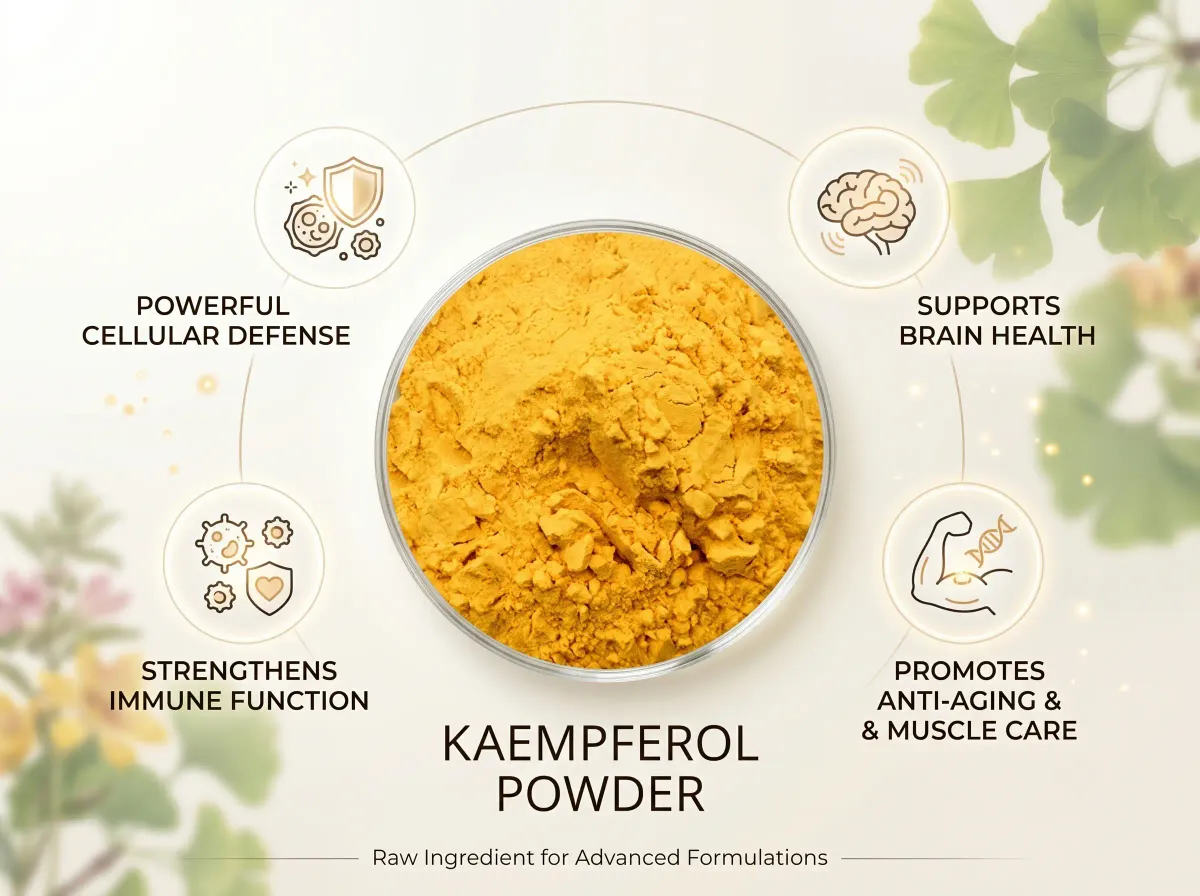
Kaempferol — ECM-Protective Flavonol for Skin, Longevity & Anti-Aging
Sophora japonica
Kaempferol: a natural tetrahydroxyflavone found abundantly in capers, kale, and green tea. Inhibits collagen-degrading MMP enzymes, activates senolytic pathways to clear senescent cells, and delivers broad-spectrum antioxidant protection across the extracellular matrix. Bulk powder, ≥98.0% HPLC.
What Is Kaempferol
Kaempferol is a naturally occurring tetrahydroxyflavone belonging to the flavonol subclass of flavonoids — one of the most studied polyphenol categories in biomedical research. Its core structure is defined by the 3,5,7-trihydroxyflavone skeleton (also written as 3,4′,5,7-tetrahydroxyflavone), with hydroxyl groups at positions 3, 5, 7, and 4′ of the flavone backbone. This specific hydroxylation pattern is what distinguishes kaempferol from structurally related flavonols like quercetin (which carries an additional hydroxyl at the 3′ position) and myricetin (which carries additional hydroxyls at both 3′ and 5′).
| Chemical Identity | |
|---|---|
| INCI Name | Kaempferol |
| IUPAC Name | 3,5,7-Trihydroxy-2-(4-hydroxyphenyl)-4H-chromen-4-one |
| CAS Number | 520-18-3 |
| Molecular Formula | C₁₅H₁₀O₆ |
| Molecular Weight | 286.24 g/mol |
| Flavonoid Class | Flavonol (3-hydroxyflavone backbone) |
| Natural Sources | Capers, saffron, kale, spinach, green tea, broccoli, Sophora japonica |
| PubChem CID | 5280863 |
Natural Forms: Aglycone vs. Glycosides
Kaempferol exists in nature primarily as glycoside conjugates — the flavonol core bound to one or more sugar moieties — rather than as the free aglycone. The most common glycosidic forms include:
- Kaempferol-3-O-glucoside (astragalin): glucose bound at the 3-OH position
- Kaempferol-3-O-rutinoside (nicotiflorin): rutinose disaccharide at the 3-OH position
- Kaempferol-3-O-rhamnoside (afzelin): rhamnose at the 3-OH position
- Kaempferol-7-O-glucoside and kaempferol-7-O-rhamnoside: sugar bound at the 7-OH position
These glycosides are the storage and transport forms found in plant tissues. Upon ingestion, intestinal microbiota and brush-border enzymes (lactase-phlorizin hydrolase) hydrolyze the glycosidic bonds, releasing the free aglycone — kaempferol — for absorption through the intestinal epithelium. For cosmetic and supplement formulations, the free aglycone form is preferred because it is more lipophilic, membrane-permeable, and directly bioactive at target tissues.
Kaempferol vs. Quercetin: The Structural Relationship
Quercetin and kaempferol are the two most abundant dietary flavonols, and they share the same 3,5,7,3′,4′-hydroxylation pattern with one key difference: quercetin has an additional hydroxyl group at the 3′ position (catechol B-ring), while kaempferol has a single 4′-hydroxyl (monophenol B-ring). This structural difference affects:
- Antioxidant potency: The catechol B-ring gives quercetin slightly higher direct radical-scavenging capacity
- Lipophilicity: Kaempferol's monophenol B-ring makes it marginally more lipophilic, potentially enhancing membrane penetration
- Signaling specificity: The two flavonols interact with different subsets of kinase targets and transcription factors, making them complementary rather than redundant
This complementarity is why quercetin and kaempferol are frequently researched and formulated together — a synergy discussed in detail in the Applications section below.
ECM Protection & Anti-Aging Mechanisms
Kaempferol protects the extracellular matrix (ECM) — the structural scaffolding of collagen, elastin, hyaluronic acid, and proteoglycans that maintains skin firmness, elasticity, and hydration — through a multi-layered mechanism profile that distinguishes it from generic antioxidants. Three interconnected pathways form the core of kaempferol's ECM-protective activity.
Mechanism 1: MMP Inhibition — Collagen & Elastin Preservation
Matrix metalloproteinases (MMPs) are zinc-dependent endopeptidases that degrade ECM structural proteins. MMP-1 (collagenase-1) cleaves collagen types I, II, and III; MMP-3 (stromelysin-1) degrades proteoglycans, laminin, and fibronectin; MMP-9 (gelatinase B) further breaks down denatured collagen fragments. UV radiation, pollution, and chronological aging all upregulate MMP expression in dermal fibroblasts and keratinocytes through ROS-mediated MAP kinase and NF-κB signaling.
Kaempferol suppresses MMP expression at multiple levels:
- Transcriptional downregulation: Kaempferol reduces MMP-1, MMP-3, and MMP-9 mRNA expression in UV-exposed human dermal fibroblasts by inhibiting the AP-1 and NF-κB transcription factor pathways that drive MMP gene transcription
- ROS scavenging upstream: By neutralizing the reactive oxygen species that activate MMP-regulating kinase cascades (ERK, JNK, p38 MAPK), kaempferol blocks the signal before it reaches the nucleus
- Direct enzyme inhibition: Kaempferol has demonstrated direct inhibitory activity against purified collagenase and gelatinase in vitro
In a 2025 study published in PMC, kaempferol-loaded hydrogels reduced MMP-9 expression and promoted M2 macrophage polarization, accelerating wound healing by balancing inflammatory and reparative processes — confirming that MMP modulation is not merely theoretical but functionally relevant in tissue-level models.
By preserving existing collagen and elastin networks from enzymatic degradation, kaempferol provides a "protect what you have" function that complements collagen-stimulating ingredients (retinoids, peptides, vitamin C) — making it a foundational ECM-protective active rather than a redundant antioxidant.
Mechanism 2: Senolytic Activity — Clearing Senescent Cells
This is kaempferol's most scientifically distinctive anti-aging mechanism and the one least covered by competing ingredient suppliers. Cellular senescence is a state of irreversible cell-cycle arrest in which damaged or aged cells do not die but instead persist in tissues, secreting a toxic cocktail of pro-inflammatory cytokines, chemokines, growth factors, and matrix-degrading proteases — collectively known as the senescence-associated secretory phenotype (SASP).
SASP factors — including IL-6, IL-8, TNF-α, MMP-3, and MMP-9 — directly degrade the ECM and inflame surrounding healthy tissue, creating a self-reinforcing cycle of aging. The accumulation of senescent cells in aged skin is now recognized as a fundamental driver of visible skin aging: wrinkle formation, loss of elasticity, uneven pigmentation, and impaired wound healing.
Kaempferol acts as a senolytic — an agent that selectively eliminates senescent cells while sparing healthy proliferating cells:
- BCL-2 family inhibition: Kaempferol downregulates anti-apoptotic BCL-2 family proteins (BCL-2, BCL-xL) that senescent cells upregulate to evade programmed cell death. By removing this survival signal, kaempferol restores the apoptotic vulnerability of senescent cells
- PI3K/AKT pathway suppression: The PI3K/AKT signaling axis is hyperactivated in many senescent cell types. Kaempferol inhibits this pathway, reducing the pro-survival signaling that maintains senescent cell persistence
- SASP reduction: Even at sub-senolytic concentrations, kaempferol suppresses the expression of SASP factors (IL-6, TNF-α, MMPs), exerting a dual senolytic + senomorphic effect — it both removes senescent cells and reduces the inflammatory output of those that remain
In a 2026 study published in Springer, kaempferol was shown to alleviate T-cell immunosenescence and chronic inflammaging by reducing proinflammatory cytokine production, confirming its senolytic relevance to systemic immune aging. The combination of pro-apoptotic selectivity toward senescent cells with SASP suppression makes kaempferol one of the most mechanistically well-supported natural senolytics available as a bulk raw material.
Why this matters for ECM aging: Senescent fibroblasts in the dermis are a major source of MMPs and inflammatory cytokines that directly degrade the ECM. By clearing these cells and reducing SASP, kaempferol attacks ECM aging at its root cause — the cellular source of degradative enzymes — rather than merely neutralizing the enzymes after they are secreted. This is a fundamentally deeper intervention than antioxidant-only approaches.
Mechanism 3: Broad-Spectrum Antioxidant Protection
Kaempferol's four phenolic hydroxyl groups (at positions 3, 5, 7, and 4′) enable direct radical-scavenging activity across multiple reactive species:
- Superoxide anion (O₂⁻·): Neutralized via hydrogen atom transfer from the 4′-OH group
- Hydroxyl radical (·OH): Quenched through both direct hydrogen donation and transition metal chelation (Fe²⁺, Cu²⁺)
- Peroxyl radical (ROO·): The 3-OH group on the C-ring is the primary site for peroxyl radical neutralization
- Lipid peroxidation chain-breaking: Kaempferol intercalates into lipid bilayers and terminates lipid peroxidation chain reactions — relevant for protecting cell membrane integrity in dermal fibroblasts and keratinocytes
Additionally, kaempferol upregulates endogenous antioxidant enzyme systems — including superoxide dismutase (SOD), catalase, and glutathione peroxidase — through Nrf2/ARE pathway activation. This indirect antioxidant effect extends protection beyond the half-life of the kaempferol molecule itself, providing sustained cellular defense against oxidative stress.
The ECM Narrative: A Unified Protective System
Taken together, kaempferol's three mechanisms form a comprehensive ECM protection system that operates at multiple levels:
| ECM Threat | Kaempferol's Action |
|---|---|
| Collagen & elastin degradation (MMP activity) | Transcriptional + direct MMP-1/3/9 inhibition |
| Senescent cell accumulation (SASP-driven ECM damage) | Senolytic clearance of senescent fibroblasts + SASP suppression |
| Oxidative damage (free radicals) | Direct radical scavenging + metal chelation + Nrf2 antioxidant enzyme induction |
This integrated mechanism profile — MMP inhibition, senolytic activity, and antioxidant protection — is the scientific foundation for positioning kaempferol as an ECM-protective flavonol, a designation that communicates its multi-level role in preserving the skin's extracellular scaffolding.
Natural Sources & Dietary Distribution
Kaempferol is one of the most widely distributed flavonols in the plant kingdom, present in fruits, vegetables, herbs, tea, and medicinal plants. Understanding its natural distribution helps formulators and consumers contextualize supplementation strategies.
Richest Dietary Sources (Ranked by Kaempferol Content)
| Food | Kaempferol Content (mg/100g fresh weight) |
|---|---|
| Capers (Capparis spinosa) | 259 |
| Saffron (Crocus sativus) | 205 |
| Green onions / Scallions | 83.2 |
| Arugula (Eruca sativa) | 59 |
| Spinach (Spinacia oleracea) | 55 |
| Kale (Brassica oleracea var. sabellica) | 47 |
| Dill (Anethum graveolens) | 40 |
| Brown mustard | 38 |
| Pumpkin | 37.1 |
| Ginger (Zingiber officinale) | 34 |
| Broccoli (Brassica oleracea var. italica) | ~7–13 |
| Green tea (Camellia sinensis, brewed) | ~1–3 (per 100mL brewed) |
Capers stand out dramatically — at 259 mg/100g, they contain approximately 5× more kaempferol than the next richest common food source (spinach at 55 mg/100g). This extreme concentration is why capers are frequently cited as the benchmark dietary source in research literature. Saffron's high concentration (205 mg/100g) is notable but practically limited by the tiny quantities in which saffron is consumed.
Cooking & Processing Effects
Kaempferol, like most flavonols, is partially heat-labile. Cooking methods significantly affect retention:
- Boiling: Substantial leaching into cooking water; up to 50–75% loss depending on time and water volume
- Steaming & microwaving: Better retention (70–90%), as less direct water contact minimizes leaching
- Stir-frying: Moderate retention (60–80%); short cooking time and oil medium help preserve lipid-soluble aglycone
- Raw consumption: Maximum intake, but glycoside forms in raw vegetables require gut microbiota hydrolysis for absorption — absorption efficiency varies significantly between individuals
Dietary Intake vs. Supplementation
Typical dietary kaempferol intake in Western populations is estimated at 2–10 mg/day, primarily from vegetables and tea. In East Asian populations with higher tea and vegetable consumption, intake may reach 15–25 mg/day. These dietary levels are nutritionally meaningful for long-term health but are far below the concentrations used in targeted supplementation (typically 20–100 mg/day) or cosmetic formulations (0.01–0.5% topical).
This dosage gap between diet and supplementation is important context for formulators and consumers: dietary kaempferol contributes to baseline flavonoid intake, but achieving the plasma concentrations associated with senolytic activity, MMP inhibition, or therapeutic anti-inflammatory effects requires concentrated supplemental dosing or topical delivery.
Product Specifications & Formulation Parameters
Bulk Raw Material Profile
| Parameter | Specification |
|---|---|
| Appearance | Yellow to yellow-green crystalline powder |
| Purity (HPLC) | ≥98.0% |
| CAS Number | 520-18-3 |
| Molecular Formula | C₁₅H₁₀O₆ |
| Molecular Weight | 286.24 g/mol |
| Solubility | Poorly soluble in water (~0.03 mg/mL at 25°C); soluble in ethanol (~5 mg/mL), DMSO (~30 mg/mL), and propylene glycol; practically insoluble in non-polar oils |
| pH Stability | Stable in acidic to neutral pH (3–7); degrades under strongly alkaline conditions due to flavonol ring opening |
| Thermal Stability | Stable up to ~180°C; gradual decomposition above 200°C |
| Shelf Life | 24 months (sealed, cool, dry, protected from light) |
| Storage | 2–8°C recommended; protect from light, heat, and moisture |
| Mesh Size | 80–100 mesh (fine powder) |
| Testing Method | HPLC (high-performance liquid chromatography) |
| Botanical Source | Sophora japonica (pagoda tree) flower bud extraction; also obtainable from tea (Camellia sinensis) leaves |
Solubility & Formulation Guidance
Kaempferol's poor aqueous solubility (~0.03 mg/mL) is the primary formulation challenge:
For topical formulations:
- Pre-dissolve in ethanol, propanediol, or ethoxydiglycol before incorporation into water-phase systems
- Propylene glycol and butylene glycol are effective co-solvents at 10–30% of the formula
- Liposomal encapsulation significantly improves aqueous dispersibility and dermal penetration
- Microemulsion and nanoemulsion systems can achieve transparent or translucent formulations without high alcohol content
- Monitor pH: Kaempferol is most stable at pH 4–6; avoid alkaline formulations (>pH 8) where the flavonol nucleus undergoes oxidative ring opening
For oral supplement formulations:
- Liposomal kaempferol addresses the primary bioavailability limitation (see below)
- Co-formulation with piperine (black pepper extract, 5–10 mg) can inhibit glucuronidation and increase systemic exposure
- Phospholipid complexation (phytosome technology) enhances gastrointestinal absorption
- Micronization to <10 μm particle size increases dissolution rate
Bioavailability: The Central Formulation Challenge
Kaempferol, like most flavonols, has inherently low oral bioavailability due to:
- Poor aqueous solubility — limits dissolution in gastrointestinal fluids
- Extensive first-pass metabolism — rapid glucuronidation and sulfation in enterocytes and hepatocytes convert kaempferol to conjugated metabolites before it reaches systemic circulation
- Efflux transporter activity — P-glycoprotein (P-gp) and MRP2 actively pump kaempferol back into the intestinal lumen
- Microbiota variation — inter-individual differences in gut microbiota composition affect the efficiency of glycoside hydrolysis, creating 5–10× variability in absorption between individuals
Liposomal encapsulation is the most clinically validated strategy for overcoming these limitations. By enveloping kaempferol in phospholipid bilayers (typically 100–200 nm vesicles), liposomal delivery:
- Bypasses dissolution-rate limitation
- Protects kaempferol from intestinal first-pass metabolism
- Enhances lymphatic uptake, partially circumventing hepatic first-pass
- Increases peak plasma concentration (Cmax) and area under the curve (AUC) by 3–10× compared to unformulated kaempferol
For supplement brands, liposomal kaempferol represents the highest-bioavailability option and commands premium positioning. For B2B customers, bulk kaempferol powder can be formulated into liposomal delivery systems by the buyer or sourced as a pre-encapsulated ingredient.
Recommended Usage Levels
| Product Type | Recommended Concentration / Dose |
|---|---|
| Anti-aging serum (topical) | 0.01–0.5% |
| Eye cream (topical) | 0.01–0.1% |
| Anti-pigmentation serum (topical) | 0.05–0.5% |
| Face mask (topical) | 0.05–0.3% |
| Dietary supplement (oral) | 20–100 mg/day |
| Liposomal supplement (oral) | 10–50 mg/day (enhanced bioavailability) |
| Senolytic protocol (oral) | 50–100 mg/day (research context) |
| DIY formulations | Start at 0.01% topical or 20 mg oral; titrate as tolerated |
Synergistic Combinations
Kaempferol + Quercetin: The most researched flavonol pair. Both inhibit similar kinase targets but with different affinities; together they provide broader coverage of the inflammatory signaling network. Quercetin enhances kaempferol's bioavailability by competing for glucuronidation enzymes — effectively "sparing" kaempferol from first-pass metabolism.
Kaempferol + Fisetin: Another senolytic flavonol. Fisetin has stronger direct senolytic potency in some cell types; kaempferol contributes broader anti-inflammatory and MMP-inhibitory coverage. Combined, they address a wider range of senescent cell subpopulations.
Kaempferol + Myricetin: Myricetin (3,3′,4′,5,5′,7-hexahydroxyflavone) adds additional hydroxyl-mediated antioxidant capacity and distinct kinase inhibition targets. The three flavonols together — kaempferol, quercetin, myricetin — represent a "full-spectrum flavonol" approach.
Kaempferol + Vitamin C (L-ascorbic acid): Vitamin C regenerates oxidized kaempferol back to its active reduced form, extending the functional antioxidant lifespan of both molecules. This is analogous to the established vitamin C + vitamin E + ferulic acid synergy, with kaempferol substituting for vitamin E as the lipid-phase antioxidant partner.
Safety & Usage Considerations
General Safety Profile
Kaempferol has an extensive safety record from both dietary exposure (millennia of human consumption through fruits and vegetables) and concentrated supplementation research:
- Acute toxicity (rodent models): Oral LD₅₀ > 2,000 mg/kg in mice — classified as low acute toxicity
- CIR (Cosmetic Ingredient Review): No specific restrictions at cosmetic-use concentrations
- EWG (Environmental Working Group): Not rated as a standalone ingredient, but structurally related flavonols (quercetin) rate 2 (low hazard)
- Genotoxicity: Negative in standard Ames test and in vitro chromosomal aberration assays
At recommended doses (20–100 mg/day oral; ≤0.5% topical), kaempferol is generally well-tolerated with a low incidence of adverse effects.
Thyroid Function & Endocrine Considerations
One of the most frequently Googled safety concerns about kaempferol involves its potential effects on thyroid function — evidenced by search queries including "kaempferol TSH levels," "kaempferol Schilddrüse" (German: thyroid), and related keywords in the kaempferol search dataset. These concerns warrant a transparent, evidence-based response.
What the evidence shows:
Kaempferol is a phytoestrogen — it binds to estrogen receptors (ERα and ERβ) with weak to moderate affinity and has been shown to exert both estrogenic and anti-estrogenic effects depending on tissue context, concentration, and the presence of endogenous estrogens. Crucially, kaempferol has also demonstrated phytoprogestin activity in a 2023 PMC study, indicating that it interacts with progesterone receptors in addition to estrogen receptors.
The thyroid connection arises because:
- Estrogen and thyroid hormone axes are interconnected — estrogen increases thyroxine-binding globulin (TBG) production in the liver, which can alter free T4/T3 levels
- The hypothalamic-pituitary-thyroid (HPT) axis shares regulatory feedback with the hypothalamic-pituitary-gonadal (HPG) axis
- Phytoestrogens at high doses can theoretically compete with endogenous estrogen for receptor binding, indirectly influencing TBG levels
What the evidence does NOT show:
- There are no published clinical studies demonstrating that kaempferol supplementation at standard doses (20–100 mg/day) causes clinically significant alterations in TSH, free T4, or free T3 in healthy adults
- The phytoestrogenic potency of kaempferol is orders of magnitude weaker than pharmaceutical estrogen (estradiol), making functional thyroid disruption at dietary or supplemental doses unlikely
- Kaempferol's effects observed in cell culture and animal studies typically involve concentrations far exceeding those achievable through oral supplementation
Practical guidance:
- Individuals with diagnosed thyroid conditions (hypothyroidism, hyperthyroidism, autoimmune thyroiditis) who are considering kaempferol supplementation should consult their endocrinologist — this is standard precautionary guidance for any bioactive supplement, not a kaempferol-specific warning
- Those taking levothyroxine (T4) should separate kaempferol supplementation from their thyroid medication by at least 4 hours, as a general precaution against any potential absorption interference (a recommendation that applies to all flavonoid supplements taken with thyroid medication)
- Routine monitoring of thyroid function is not considered necessary for healthy individuals using kaempferol at standard doses
Pregnancy, Lactation & Prolactin
Search data indicates that users are actively researching the relationship between kaempferol and lactation ("kaempferol and lactation," "kaempferol and prolactin"). Here is the current evidence:
- Kaempferol's interaction with prolactin has been studied in the context of its estrogen receptor activity — since estrogen stimulates prolactin secretion from the anterior pituitary, phytoestrogens could theoretically influence prolactin levels
- No human studies have directly assessed the effect of kaempferol supplementation on serum prolactin levels in lactating women
- The 2023 PMC phytoprogestin study specifically noted that kaempferol "was without effect on female reproductive organs" in the model system used, suggesting that its endocrine activity in reproductive tissues is nuanced and not broadly disruptive
Practical guidance:
- Pregnancy: Topical kaempferol at cosmetic concentrations (≤0.5%) is unlikely to pose risk. Oral kaempferol supplements should be avoided during pregnancy unless specifically recommended by a healthcare provider — this is a standard precaution for all concentrated botanical supplements during pregnancy, not a kaempferol-specific contraindication
- Lactation: The precautionary principle applies — insufficient data exist to confirm safety during breastfeeding. Nursing individuals should consult their healthcare provider before using concentrated kaempferol supplements
- Fertility: No evidence suggests kaempferol negatively affects fertility at dietary or supplemental doses
Important: This information is provided for general educational purposes and does not constitute medical advice.
Drug Interactions
Kaempferol interacts with several drug metabolism pathways that are relevant for users taking prescription medications:
| Interaction Type | Mechanism | Clinical Relevance |
|---|---|---|
| CYP3A4 inhibition | Kaempferol moderately inhibits CYP3A4 in vitro | May increase plasma levels of CYP3A4 substrates (statins, calcium channel blockers, certain benzodiazepines) |
| CYP1A1/1A2 modulation | Kaempferol can both inhibit and induce CYP1A enzymes depending on concentration and duration | Potential interaction with drugs metabolized by CYP1A2 (theophylline, clozapine, tacrine) |
| P-glycoprotein (P-gp) inhibition | Kaempferol inhibits P-gp efflux transporter | May increase absorption of P-gp substrate drugs (digoxin, dabigatran, certain chemotherapeutics) |
| UGT (glucuronidation) competition | Kaempferol is extensively glucuronidated by UGT1A1 and UGT1A9 | Potential competition with other UGT-substrate drugs for clearance pathways |
| Anticoagulant/antiplatelet agents | Theoretical additive effect through COX inhibition | Monitor if using with warfarin, aspirin, or clopidogrel — though clinical significance at standard kaempferol doses is unclear |
These interactions are primarily theoretical or based on in vitro data. Clinically significant drug interactions at typical supplemental doses (20–100 mg/day) have not been reported in published literature. However, individuals taking medications with narrow therapeutic indices (warfarin, digoxin, certain anticonvulsants) should consult their prescribing physician before adding kaempferol supplements.
Known Side Effects
| Reaction Type | Likelihood | Notes |
|---|---|---|
| Gastrointestinal discomfort | Low–Moderate | Mild nausea or stomach upset at oral doses >100 mg; taking with food mitigates |
| Skin irritation (topical) | Low | Mild tingling possible at concentrations >0.5%; standard usage (0.01–0.5%) is well-tolerated |
| Headache | Very Low | Isolated reports at high oral doses; mechanism unclear |
| Allergic reaction | Very Low | Theoretically possible in individuals with known hypersensitivity to flavonols; no published case reports specific to kaempferol |
| Yellow discoloration | Cosmetic only | Kaempferol's yellow color may impart a slight tint to topical formulations at higher concentrations (>0.3%); this is a formulation aesthetic consideration, not a safety issue |
Best Practices for Safe Use
- Start low, titrate up: Begin with 20 mg/day oral or 0.01% topical, increase gradually as tolerated
- Take with food: Oral kaempferol absorption is enhanced by dietary fat; gastrointestinal tolerance is improved when taken with a meal
- Separate from thyroid medication: If taking levothyroxine, allow ≥4 hours between kaempferol supplementation and thyroid medication
- Monitor at high doses: Individuals using kaempferol at doses ≥100 mg/day for extended periods should consider periodic liver function testing (standard precaution for any concentrated botanical extract)
- Discontinue before surgery: Due to theoretical COX inhibition and platelet effects, discontinue kaempferol supplementation 2 weeks before scheduled surgery
Supplement Guide: Choosing the Best Kaempferol
Why Supplement When Kaempferol Is in Food?
Dietary kaempferol intake averages 2–10 mg/day in Western populations. While nutritionally beneficial, this is far below the 20–100 mg/day range used in most published research on kaempferol's pharmacological effects — including MMP inhibition, senolytic activity, and anti-inflammatory outcomes. Supplementation bridges this dosage gap.
Key Decision Factors
1. Liposomal vs. Standard Powder
| Standard Kaempferol Powder | Liposomal Kaempferol | |
|---|---|---|
| Bioavailability | Low (~2–5% absolute oral bioavailability) | 3–10× higher than standard powder |
| Cmax (peak plasma) | Low and variable | Significantly higher and more consistent |
| First-pass metabolism | Extensive glucuronidation in gut/liver | Partially bypassed via lymphatic uptake |
| Cost | Lower per gram | Higher per gram (premium positioning) |
| Best for | Topical formulations, budget supplements, DIY | High-bioavailability oral supplements, senolytic protocols |
| Formulation complexity | Simple (direct powder) | Requires phospholipid encapsulation equipment |
Recommendation: For systemic anti-aging and senolytic applications, liposomal kaempferol is the superior choice. For topical formulations where bioavailability limitation does not apply, standard high-purity powder (≥98%) is appropriate and cost-effective.
2. Purity Grade
- ≥98% (HPLC) — pharmaceutical/research grade; suitable for all applications
- ≥95% — standard cosmetic grade; adequate for most topical formulations
- <95% — not recommended for precision formulation; unknown contaminants may affect stability and safety
3. Dosage Guidance
- General wellness & antioxidant support: 20–50 mg/day
- Targeted anti-aging / ECM protection: 50–100 mg/day
- Senolytic protocol (research context): 50–100 mg/day, typically cycled (e.g., 2 days on, 5 days off, or 5 days/month)
- Topical: 0.01–0.5% in finished product
How to Evaluate a Kaempferol Supplement
- Request the Certificate of Analysis (COA): Verify purity (≥98% by HPLC), heavy metals below limits, and absence of microbial contamination
- Confirm the form: Free aglycone (not glycoside) for maximum bioavailability
- Check for liposomal delivery: If the product claims liposomal, verify particle size (should be 100–200 nm for optimal absorption) and phospholipid composition
- Look for synergistic co-formulants: Piperine (5–10 mg) to enhance absorption; quercetin for complementary senolytic activity
- Verify manufacturing standards: GMP certification, third-party testing, and transparent labeling of excipients
For B2B buyers sourcing bulk powder for their own supplement or cosmetic brands, GINKVORA provides kaempferol at ≥98% HPLC purity with full documentation (COA, MSDS/SDS) and flexible order quantities from 25g samples to bulk commercial volumes.
Related Articles
- Phloretin — Apple Antioxidant & ECM-Protective Polyphenol — Another ECM-protective polyphenol with a distinct GLUT1-inhibitory anti-glycation mechanism
- EGCG 98% Purity vs Green Tea Extract — The purity-comparison framework for polyphenol ingredients
- Palmitoyl Tripeptide-38 (Matrixyl Synthe'6) — A peptide-based ECM-targeting ingredient for comparison with polyphenol approaches
Disclaimer: This product page describes kaempferol as a bulk raw material ingredient for cosmetic and dietary supplement formulation. The information provided is for educational and formulation reference purposes. References to specific biological mechanisms (senolytic activity, MMP inhibition) are based on published peer-reviewed research and do not constitute claims about any finished product. This ingredient is not intended to diagnose, treat, cure, or prevent any disease. Always conduct independent formulation stability, safety, and efficacy testing. Statements about dietary supplements have not been evaluated by the FDA or other regulatory authorities.
Frequently Asked Questions
Request a Quote for Kaempferol — ECM-Protective Flavonol for Skin, Longevity & Anti-Aging
Complete the form below to receive pricing, specifications, and a free sample. Our sales team will contact you within 12 hours.