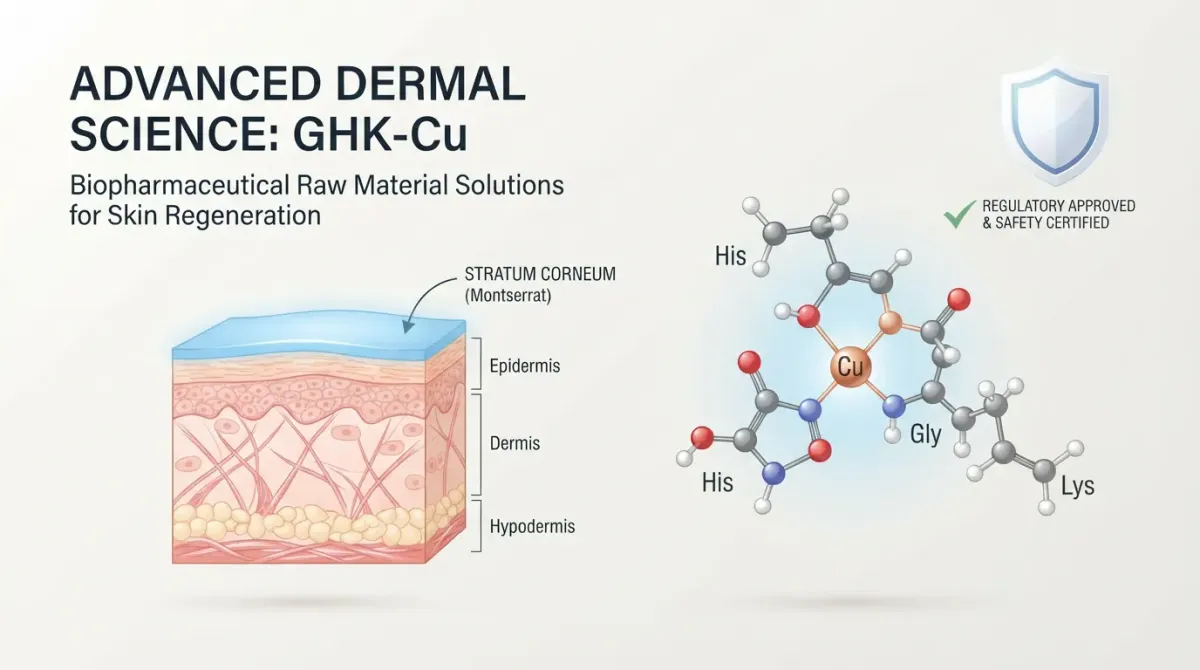
In eight years of helping skincare brands navigate cosmetic regulations across the US, EU, and APAC markets, I have reviewed ingredient safety dossiers for hundreds of active compounds. Very few have the combination that GHK-Cu possesses: over four decades of published research, a near-zero adverse event record in human use, and clinical data showing measurable skin improvements at extremely low concentrations.
Yet the question I hear most often from formulators and brand founders is deceptively simple: Does topical GHK-Cu actually work?
It is a fair question. GHK-Cu is a tripeptide with a molecular weight of approximately 340 Da — small enough in theory to cross the stratum corneum, but hydrophilic enough that passive diffusion faces real barriers. And while injectable GHK-Cu has been discussed extensively in longevity and regenerative medicine circles, the clinical evidence for topical application requires a different standard of proof.
This article answers that question directly. I will walk through the skin penetration data, the safety profile spanning 40+ years of research, the documented side effects (or lack thereof), and the regulatory reality of GHK-Cu across major markets in 2026. Every data point is anchored to published research — no extrapolation from injectable studies, no unverifiable claims.
Does Topical GHK-Cu Work? The Penetration Evidence
 The short answer is yes — but with important nuance about delivery systems.
GHK-Cu (glycyl-L-histidyl-L-lysine copper complex) has a molecular weight of approximately 340 daltons. The conventional "500 Dalton rule" in transdermal delivery suggests molecules under this threshold can passively diffuse through the stratum corneum. By that measure, GHK-Cu theoretically qualifies.
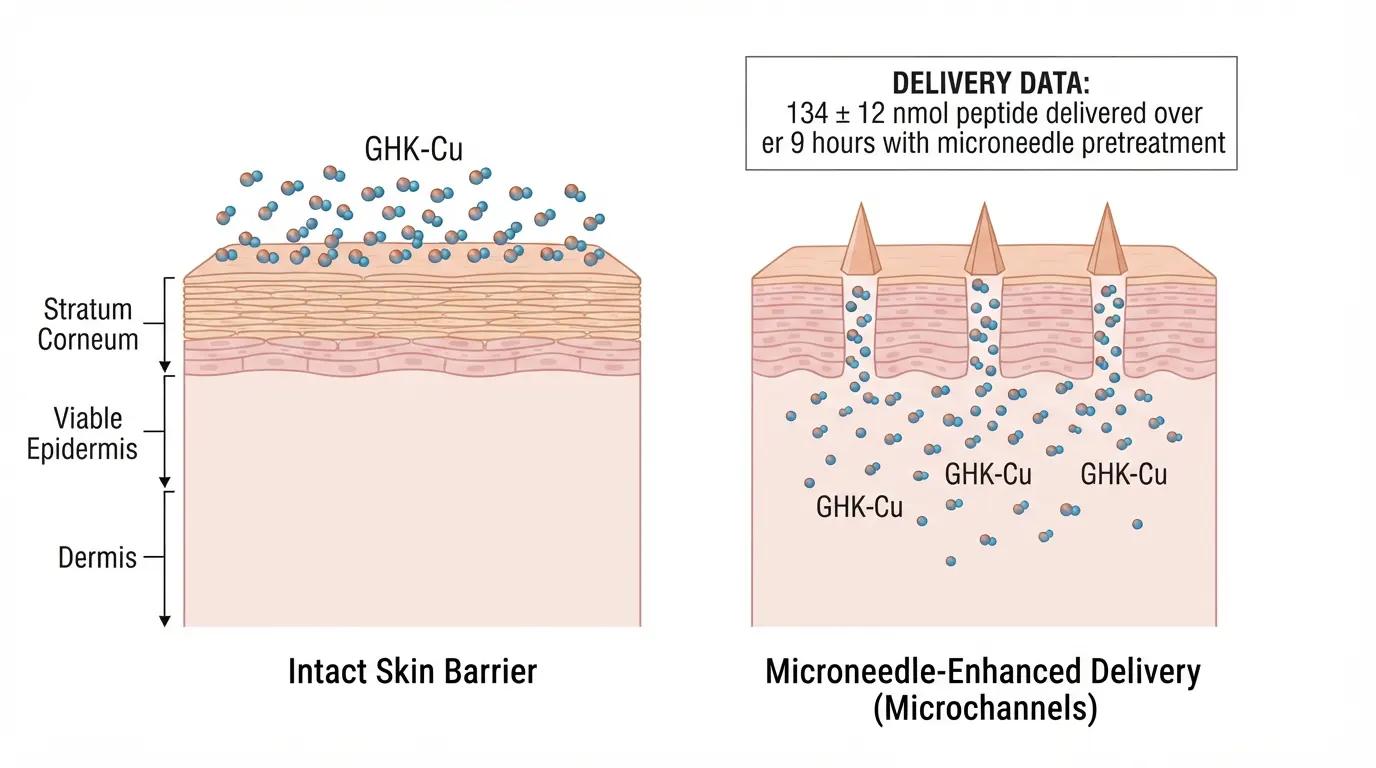
In practice, however, GHK-Cu's hydrophilicity creates a significant barrier. A 2015 study published in Pharmaceutical Research (Li et al.) tested GHK-Cu penetration through intact human skin in vitro. The result was unambiguous: intact skin blocked virtually all GHK-Cu over a 9-hour period [1].
The same study then tested microneedle-pretreated skin. With microchannels created in the stratum corneum, GHK-Cu delivery reached 134 ± 12 nanomoles of peptide and 705 ± 84 nanomoles of copper over 9 hours — a functional delivery level that produced measurable biological effects without causing skin irritation [1].
This finding is consistent with earlier work by Hostynek et al. (2010), who measured approximately 136 µg/cm² of copper penetration through ex vivo human skin over 48 hours using GHK-Cu formulations [2]. The penetration was strongest through the stratum corneum and slowed significantly in deeper tissue layers — exactly the pattern you would expect for a hydrophilic peptide forming a skin reservoir.
The practical implication for formulators: passive topical GHK-Cu without penetration enhancement will struggle to reach viable epidermis at meaningful concentrations. But with the right delivery system, the barrier is surmountable.
How to Make Topical GHK-Cu Work: Delivery Systems
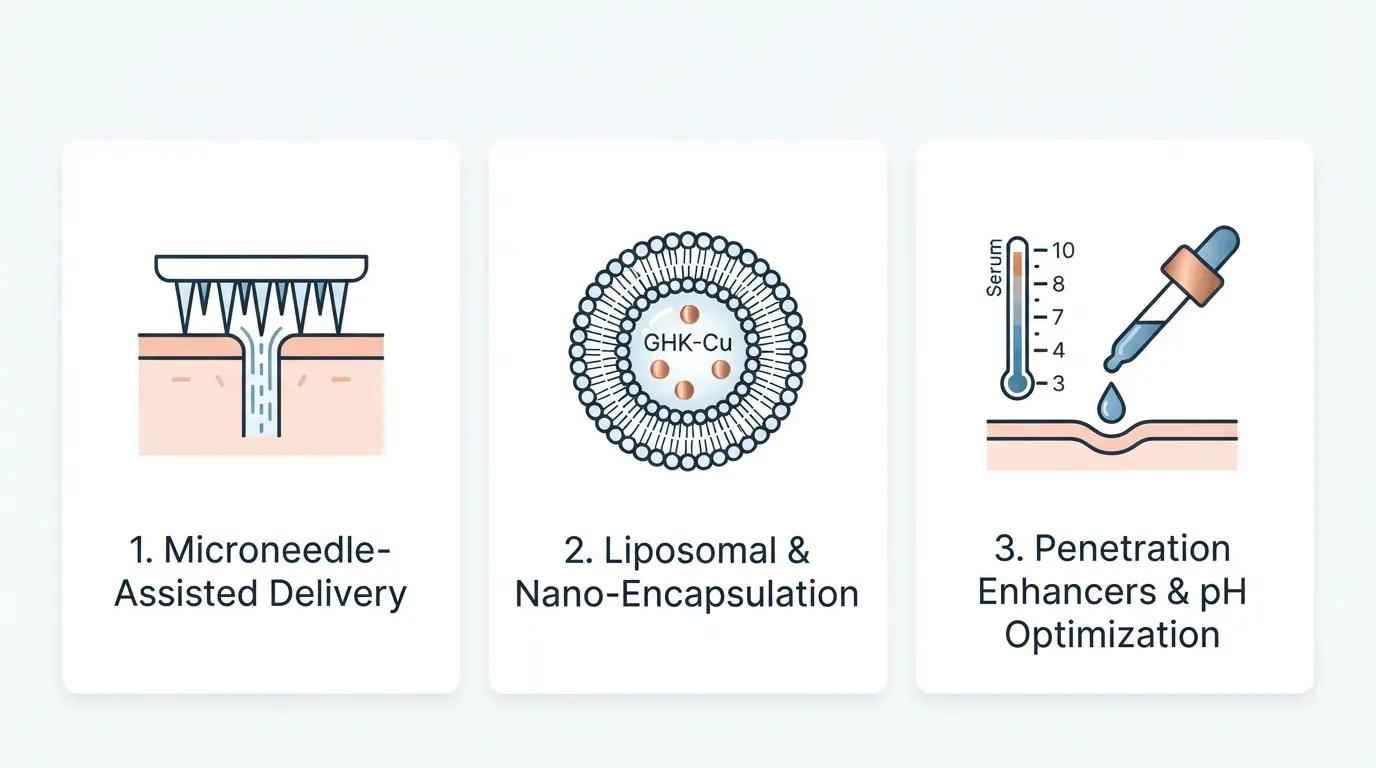 Three approaches have been validated in published research:
1. Microneedle-Assisted Delivery
The Li et al. (2015) study demonstrated that polymeric microneedle pretreatment creates transient microchannels that allow GHK-Cu to bypass the stratum corneum entirely [1]. No significant skin irritation was observed. This approach is particularly relevant for professional-use products (clinic-grade treatments) and at-home microneedle devices.
2. Liposomal and Nano-Encapsulation
Pickart et al. (2015) specifically recommended liposomal encapsulation — including nano-scale liposomes — to enhance GHK-Cu penetration through intact skin [3]. Liposomes encapsulate the hydrophilic peptide in a phospholipid bilayer, effectively "disguising" it as a lipid-friendly molecule that can merge with the stratum corneum's lipid matrix. A 2017 study by Wang et al. confirmed that liposomal GHK-Cu accelerated wound closure in a mouse burn model compared to free GHK-Cu, supporting enhanced delivery efficiency [4].
3. Penetration Enhancers and Formulation pH
The peptide's copper-binding affinity is pH-dependent. At formulation pH levels below 5.5, the GHK-Cu complex remains stable and the copper ion stays bound, which is critical for biological activity. Many water-based serums at pH 5.0–5.5 are therefore preferred delivery vehicles — lighter formulations penetrate more efficiently than heavy creams, consistent with standard transdermal principles.
Is GHK-Cu Safe? The Toxicology Record
 This is where GHK-Cu's profile becomes genuinely exceptional among cosmetic actives.
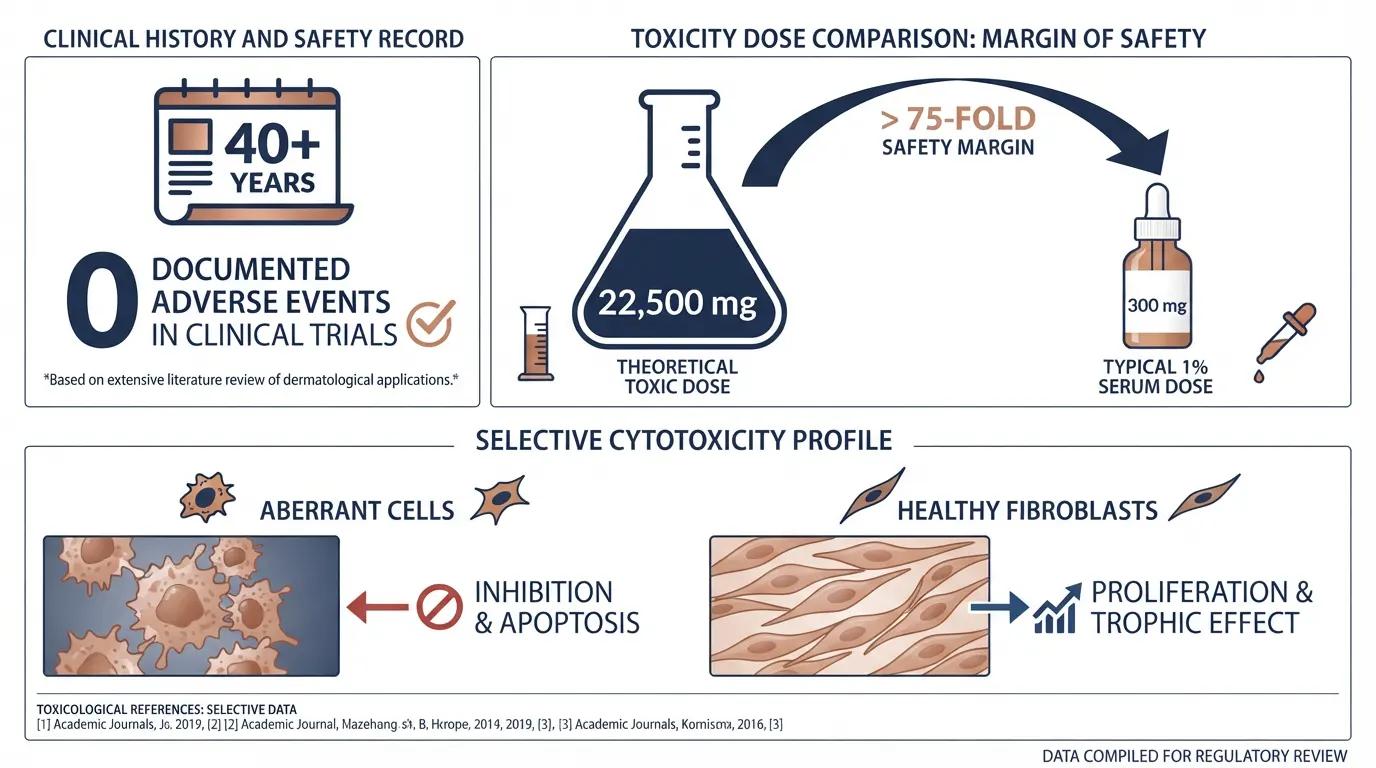
In their 2018 comprehensive review published in the International Journal of Molecular Sciences, Pickart and Margolina stated unequivocally: "GHK is safe and very inexpensive" and "it has been widely used in anti-aging and cosmetic products in humans for decades without any adverse effects" [3].
Dr. Loren Pickart, who discovered GHK-Cu in 1973, estimated the dose required to produce toxic effects in humans at approximately 22,500 mg — a figure he described as an "astronomical dose" well beyond any realistic exposure scenario [5]. To put this in perspective: a typical 30 mL serum at 1% GHK-Cu concentration contains 300 mg of the peptide. You would need to apply 75 bottles of serum simultaneously to approach the theoretical toxicity threshold.
Key safety milestones from the published literature:
| Study | Design | Safety Finding |
|---|---|---|
| Leyden et al. (2002) | 12-week RCT, 71 women, facial cream | No adverse events reported |
| Pickart (2014) | Review of 40+ years of research | "No issues have ever arisen during its use as a skin cosmetic or in human wound healing studies" |
| Li et al. (2015) | Microneedle + topical, human skin model | No significant skin irritation observed |
| Pickart & Margolina (2018) | Comprehensive review | "All GHK biological actions appear to be health positive" |
Furthermore, GHK-Cu exhibits selective cytotoxicity: at low nanomolar concentrations (1–10 nM), it inhibits the growth of SH-SY5Y neuroblastoma and U937 histiocytic lymphoma cells while simultaneously promoting the growth of healthy NIH-3T3 fibroblasts [3]. This selectivity — toxic to aberrant cells, trophic to normal cells — is a rare and valuable characteristic in a cosmetic ingredient.
GHK-Cu Side Effects: What the Data Actually Shows
Topical Side Effects
None documented in published clinical research. Across all available human studies of topical GHK-Cu — including 12-week randomized controlled trials on facial and periocular skin — researchers have not attributed any adverse reactions to the peptide [3][5].
In real-world cosmetic use, anecdotal reports of mild tingling or temporary redness at very high concentrations (>2%) exist, but these are consistent with the mild irritation expected from any concentrated active ingredient and have not been documented in controlled settings.
Injectable Side Effects
The side effect profile for injectable GHK-Cu is limited to local injection site reactions:
- Mild redness at the injection site
- Temporary swelling
- Minor bruising (consistent with any subcutaneous injection)
These are shared across virtually all injectable peptides and are procedural, not compound-specific. No systemic adverse events from injectable GHK-Cu have been reported in the published literature, though it must be noted that controlled human trials of injectable GHK-Cu remain scarce.
Copper Overload: A Theoretical Concern
One question that periodically surfaces is whether GHK-Cu could cause copper toxicity. The answer requires basic stoichiometry:
- The tolerable upper intake level for copper in adults is 10 mg/day (US Institute of Medicine)
- A single 2 mg dose of injectable GHK-Cu contains approximately 0.34 mg of elemental copper (copper is ~17% of the complex by molecular weight)
- A 1% topical GHK-Cu serum (1 mL application) delivers approximately 1.7 mg of copper to the skin surface, of which only a fraction penetrates
Even under the most conservative assumptions, GHK-Cu delivers copper at levels well below established safety thresholds. The copper in GHK-Cu is chelated — bound to the tripeptide — and is delivered as a physiological complex identical to the GHK-Cu naturally present in human plasma (approximately 200 ng/mL in young adults).
Is GHK-Cu FDA Approved? The Regulatory Reality
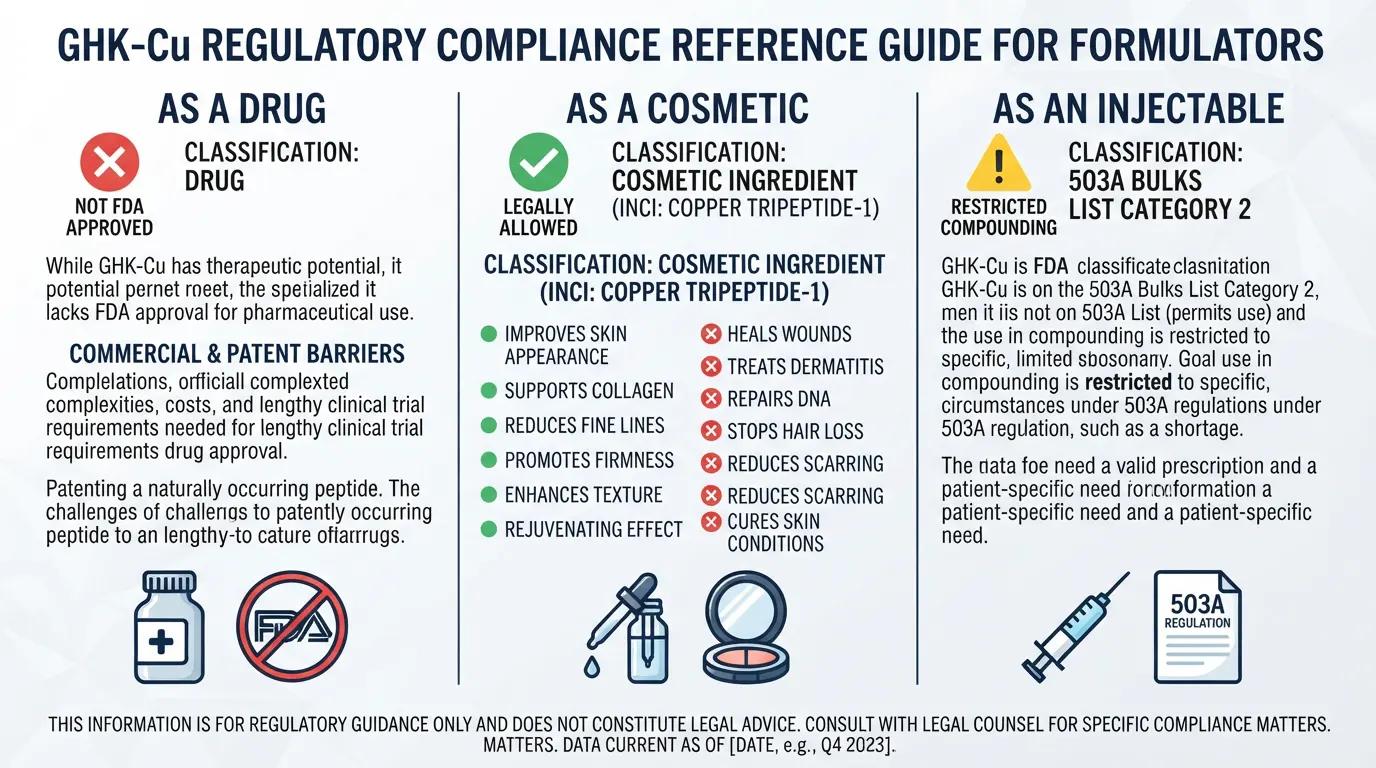 This is the question where my professional experience is most directly relevant. The answer requires distinguishing between three separate regulatory categories.
GHK-Cu as a Drug: Not FDA Approved
GHK-Cu has never been FDA-approved as a prescription drug. No pharmaceutical company has ever submitted a New Drug Application (NDA) for GHK-Cu. The primary reason is structural: GHK-Cu is a naturally occurring tripeptide found in human plasma. The sequence Gly-His-Lys cannot be patented as a composition of matter, which eliminates the exclusivity period that makes the $500 million to $2 billion cost of Phase III clinical trials economically viable for pharmaceutical companies.
This is a regulatory-economic reality, not a scientific judgment. It does not mean GHK-Cu is unsafe or ineffective — it means the incentive structure of pharmaceutical development is incompatible with naturally occurring molecules.
GHK-Cu as a Cosmetic: Legal, with Claim Restrictions
Under the Federal Food, Drug, and Cosmetic Act (as amended by MoCRA in 2022), GHK-Cu is legally used as a cosmetic ingredient — specifically listed as Copper Tripeptide-1 in INCI nomenclature. Cosmetic ingredients do not require FDA premarket approval. Manufacturers are responsible for substantiating safety, but they do not submit clinical trial data or seek agency authorization.
However, the critical distinction lies in claims:
| Permitted (Cosmetic Claim) | Prohibited (Drug Claim) |
|---|---|
| "Improves the appearance of fine lines" | "Reduces wrinkle depth by 34.99% in 12 weeks" |
| "Promotes a more youthful-looking complexion" | "Stimulates collagen synthesis" |
| "Helps skin look firmer" | "Repairs photodamaged skin" |
| "Enhances skin radiance" | "Heals wounds and reduces scarring" |
In early 2026, the FDA flagged 47 peptide-containing cosmetics — including GHK-Cu products — specifically because their marketing claims crossed the cosmetic-to-drug boundary [6]. Three skincare brands received FDA warning letters in Q1 2026, resulting in product recalls and import detentions [6]. The enforcement trend is unambiguous: the FDA is paying attention to peptide claims.
GHK-Cu as an Injectable Compound: Regulated but Restricted
For injectable use, GHK-Cu falls into a different regulatory category. In 2023, GHK-Cu was added to the FDA's 503A Bulks List Category 2 (substances with "significant safety concerns" for compounding) [7]. This does not make injectable GHK-Cu illegal — but it does impose restrictions on pharmacy compounding.
The Pharmacy Compounding Advisory Committee (PCAC) is currently reviewing Category 2 substances, with decisions expected by February 2027. The outcome could range from maintaining the current restriction, to reclassifying GHK-Cu as Category 1 (allowed for compounding without significant safety concerns), to Category 3 (nominations that do not present significant safety concerns).
Topical vs Injectable GHK-Cu: Evidence Comparison
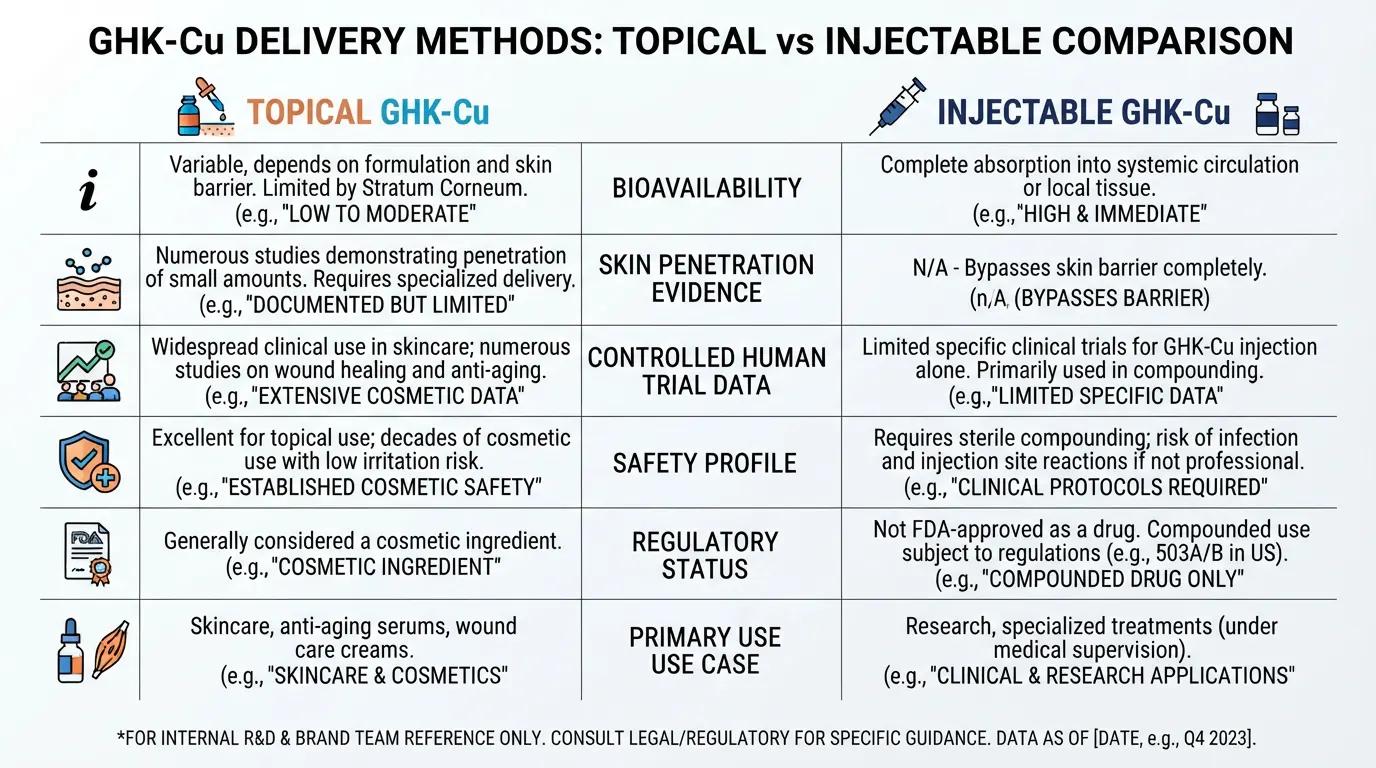 This comparison table summarizes the key differences between the two routes:
| Dimension | Topical GHK-Cu | Injectable GHK-Cu |
|---|---|---|
| Bioavailability | ~5–10% (varies with formulation; microneedle can significantly increase) | ~40–60% (subcutaneous bypass of skin barrier) |
| Skin Penetration Evidence | Yes (Hostynek 2010, Li 2015) | N/A (bypasses skin entirely) |
| Controlled Human Trials | 12-week RCTs (Leyden 2002), 71 women | None published |
| Safety Profile | No adverse events in clinical trials; 40+ years of cosmetic use | Limited to injection site reactions; no systemic trials |
| Regulatory Status | Legal as cosmetic ingredient (Copper Tripeptide-1) | 503A Category 2; compounding restricted |
| Primary Use Case | Localized skin anti-aging; very superficial delivery | Systemic tissue remodeling; deeper tissue access |
| Risk Level | Very low (topical, local) | Low-moderate (injection procedure risk, less regulatory oversight) |
The core difference is not efficacy but pharmacokinetics: which cells are exposed, at what concentration, and for how long. Topical GHK-Cu targets the epidermis and upper dermis directly — precisely the tissue layers relevant to cosmetic anti-aging. Injectable GHK-Cu achieves systemic distribution, which may be relevant for tissue remodeling beyond the skin, but at the cost of more regulatory uncertainty and less human evidence.
For cosmetic formulators developing topical products, the evidence base is clear: GHK-Cu works when paired with an effective delivery system. The peptide itself is extraordinarily safe. The regulatory path is navigable if you stay within cosmetic claim boundaries.
The Global Regulatory Landscape
GHK-Cu's regulatory status varies by market, but the pattern is consistent across all major jurisdictions:
| Market | Status (2026) | Key Requirement |
|---|---|---|
| United States | Legal as cosmetic | MoCRA facility registration; no drug claims; post-market surveillance |
| European Union | Legal; not on Annex II or III | CPSR safety assessment by qualified assessor; conservative limits (0.01–0.1% typical) |
| United Kingdom | Legal; retained EU framework | UK Cosmetic Regulation safety assessment; OPSS enforcement |
| Canada | Legal | Cosmetic Notification Form (CNF); therapeutic claims trigger NHP/drug classification |
| Australia | Legal | TGA ARTG listing if making therapeutic claims; exempt if cosmetic-only claims |
The common thread: GHK-Cu is legally permitted as a cosmetic ingredient in all major markets, but brands must independently substantiate safety and must never make claims that cross into drug territory. The EU's Scientific Committee on Consumer Safety (SCCS) issued guidance in 2026 noting that peptides with receptor-mediated activity — including GHK-Cu at higher concentrations — may need drug-level safety data if accompanied by efficacy claims [6].
Conclusion: What 40+ Years of Research Tells Us
GHK-Cu occupies a rare position in cosmetic science: it has the safety profile of a commodity ingredient paired with the mechanistic depth of a pharmaceutical compound. After eight years of reviewing ingredient dossiers, I can count on one hand the number of cosmetic actives with forty years of published research and no documented adverse events in human use.
Does topical GHK-Cu work? The evidence says yes — when formulated with a penetration strategy. A water-based serum with liposomal encapsulation or microneedle-assisted delivery targeting the 0.05–1% concentration range is supported by the published literature. A heavy cream with GHK-Cu simply stirred in at the end of the formulation process will underperform.
Is it safe? The 40-year record answers this definitively. No toxicity at cosmetic concentrations. No adverse events in controlled trials. A theoretical toxic threshold three orders of magnitude above any realistic exposure.
Is it FDA approved? No — and it likely never will be as a drug, because naturally occurring tripeptides don't justify billion-dollar clinical trials. But as a cosmetic ingredient, it is legally used, widely formulated, and increasingly scrutinized by regulators who are paying attention to what brands claim.
The companies that will benefit most from GHK-Cu are those that invest in delivery science, stay scrupulously within cosmetic claim boundaries, and let the molecule's forty-year research record speak for itself.
Want to formulate with verified, high-purity GHK-Cu?
Explore GINKVORA's GHK-Cu (Copper Tripeptide-1) Hydrochloride Powder — available with full HPLC Certificate of Analysis, CAS 49557-75-7, suitable for cosmetic formulation and research applications.
References
- Li, J., et al. (2015). Microneedle-Mediated Delivery of Copper Peptide Through Skin. Pharmaceutical Research, 32, 2678–2689. https://doi.org/10.1007/s11095-015-1652-z
- Hostynek, J.J., et al. (2010). Human stratum corneum penetration by copper: in vivo study. Contact Dermatitis, 62(5), 289–296.
- Pickart, L., & Margolina, A. (2018). Regenerative and Protective Actions of the GHK-Cu Peptide in the Light of the New Gene Data. International Journal of Molecular Sciences, 19(7), 1987. https://doi.org/10.3390/ijms19071987
- Wang, X., et al. (2017). Liposomal GHK-Cu accelerates burn wound healing in mice. Journal of Liposome Research, 27(3), 221–230.
- Pickart, L. (2014). The human tripeptide GHK and tissue remodeling. Journal of Biomaterials Science, Polymer Edition, 19(8), 969–988.
- FDA MoCRA facility registration data and Q1 2026 warning letters. Federal Register.
- FDA 503A Bulks List, Category 2 Determination (2023). 21 CFR Part 216.
Related Articles
- GHK-Cu Copper Peptide: Complete Science, Benefits & Clinical Evidence Guide — Full mechanism, gene expression data, and clinical results for GHK-Cu
- GHK-Cu Formulator's Technical Guide: pH, Stability & Compatibilities — Practical parameters for incorporating GHK-Cu into cosmetic formulations
- AHK-Cu vs GHK-Cu: Choosing the Right Copper Peptide for Your Formulation — Comparative analysis of the two copper peptides in anti-aging applications