
TL;DR — Every day, your body produces thousands of senescent cells: damaged cells that stop dividing but refuse to die. These "zombie cells" secrete inflammatory signals that poison neighboring healthy tissue, accelerating aging. Quercetin is one of the few natural compounds proven to act as a senolytic — an agent that selectively eliminates these harmful cells. The key mechanism: quercetin disables the PI3K/AKT pro-survival pathway that senescent cells hijack to stay alive, effectively pulling their emergency brake and triggering apoptosis. Clinical trials from the Mayo Clinic demonstrate that quercetin-containing senolytic regimens improve physical function and reduce frailty markers in aging adults. For formulators, this opens the door to the rapidly growing longevity supplement market ($33.3B in 2024, projected to reach $58.4B by 2030).
What Are Senescent Cells, and Why Do They Matter?
Every cell in your body follows a lifecycle: birth, function, controlled death (apoptosis). But under stress — oxidative damage, DNA breaks, oncogene activation, telomere shortening — some cells enter a third state: cellular senescence. They stop dividing but do not die.
These senescent cells are not passive. They secrete a toxic cocktail of inflammatory cytokines, chemokines, growth factors, and proteases collectively called the SASP (Senescence-Associated Secretory Phenotype). The SASP includes:
| SASP Component | Effect on Tissue |
|---|---|
| IL-6, IL-8, TNF-α | Chronic inflammation, tissue damage |
| MMP-1, MMP-3, MMP-9 | Extracellular matrix degradation |
| TGF-β, VEGF | Fibrosis, abnormal angiogenesis |
| CCL2, CXCL1 | Immune cell recruitment → bystander damage |
| PAI-1 | Impaired tissue repair |
A single senescent cell can secrete SASP factors that damage dozens of neighboring healthy cells. In young tissue, the immune system efficiently clears these cells. But with age, clearance efficiency drops, and senescent cells accumulate — reaching up to 15–20% of cells in aged tissues (versus 2–3% in young tissue).
The accumulation is causal, not merely correlative. In a landmark 2018 study, researchers at the Mayo Clinic transplanted senescent cells into young mice and observed accelerated physical dysfunction, reduced survival, and tissue deterioration — directly demonstrating that senescent cells cause aging phenotypes. Removing them with senolytics reversed these effects.
Senolytic Mechanism: How Quercetin Selectively Kills Senescent Cells
Not all compounds that kill cells are senolytics. A true senolytic must be selective — eliminating senescent cells while sparing healthy proliferating cells. Quercetin achieves this selectivity through a clever exploitation of senescent cell biology.
The PI3K/AKT Survival Pathway: Senescent Cells' Achilles' Heel
Senescent cells survive by upregulating pro-survival networks — antiapoptotic pathways that prevent them from self-destructing. The most critical of these is the PI3K/AKT pathway.
Here's the mechanism in five steps:
Senescent cells hijack PI3K/AKT. In healthy cells, PI3K/AKT signaling is tightly regulated, activated transiently in response to growth signals. Senescent cells maintain constitutive PI3K/AKT activation, producing a constant "survive" signal.
AKT phosphorylates and inactivates pro-apoptotic proteins. Activated AKT adds phosphate groups to BAD, BAX, and FOXO transcription factors, disabling their cell-death functions.
Downstream BCL-2 family upregulation. AKT activation drives expression of BCL-2, BCL-xL, and MCL-1 — the anti-apoptotic guardians that block mitochondrial outer membrane permeabilization (MOMP), the point of no return for apoptosis.
Quercetin enters and inverts the equation. As a flavonoid polyphenol, quercetin crosses cell membranes freely and directly inhibits PI3K. Molecular docking studies show quercetin binds to the ATP-binding pocket of PI3K with a docking score of −8.2 kcal/mol, competitively blocking its kinase activity (Weng et al., 2017; Oncotarget).
Without PI3K/AKT, the pro-survival scaffold collapses. AKT dephosphorylation relieves inhibition on BAX and BAK. These proteins oligomerize, form pores in the mitochondrial outer membrane, release cytochrome c, and activate caspase-9 → caspase-3, executing apoptosis.
The selectivity logic: Healthy cells don't depend on PI3K/AKT for baseline survival — they have redundant survival signaling. Senescent cells, burdened by DNA damage and metabolic stress, become addicted to PI3K/AKT activation. Quercetin withdraws that addiction, and the cells cannot compensate.
BCL-2/BCL-xL Direct Antagonism
Beyond PI3K/AKT inhibition, quercetin directly antagonizes anti-apoptotic BCL-2 family proteins. Research demonstrates quercetin:
- Downregulates BCL-2 expression by 40–60% in senescent fibroblasts (Zhu et al., 2015, Aging Cell)
- Decreases BCL-xL protein levels through ubiquitin-proteasomal degradation, not just transcriptional repression
- Upregulates NOXA and PUMA — BH3-only proteins that neutralize MCL-1 and BCL-2, respectively
This dual mechanism — upstream pathway shutdown (PI3K/AKT) plus downstream effector neutralization (BCL-2/BCL-xL) — makes quercetin particularly effective against senescent cells that have accumulated multiple survival adaptations over time.
| Senolytic Target | Quercetin Action | Selectivity Mechanism |
|---|---|---|
| PI3K | Competitive ATP-site inhibition (docking −8.2 kcal/mol) | Senescent cells depend on constitutive PI3K/AKT; healthy cells use transient signaling |
| AKT | Reduced phosphorylation → BAD/BAX reactivation | Senescent cells cannot compensate for AKT loss |
| BCL-2 | 40–60% downregulation + proteasomal degradation | Healthy cells express lower BCL-2, less affected |
| BCL-xL | Ubiquitin-proteasome degradation | Senescent cells upregulate BCL-xL as survival crutch |
| SASP | NF-κB suppression → reduced IL-6, IL-8, MMPs | Prevents "bystander senescence" in surrounding cells |
The D+Q Protocol: Where Quercetin Entered Longevity Science
Quercetin's senolytic reputation was built on the D+Q protocol — the combination of dasatinib (a tyrosine kinase inhibitor/chemotherapy drug) with quercetin, developed by James Kirkland's lab at the Mayo Clinic.
| Study | Model | Senolytic Protocol | Key Result |
|---|---|---|---|
| Zhu et al., 2015 (Aging Cell) | Aged mice (20–24 months) | D+Q, single dose | 36% reduction in senescent cell burden, improved cardiac ejection fraction, enhanced carotid artery relaxation |
| Xu et al., 2018 (Nature Medicine) | Senescent cell transplantation model | D+Q, biweekly | Reversed physical dysfunction: treadmill endurance +73%, grip strength +41%, extended remaining lifespan |
| Justice et al., 2019 (EBioMedicine) | Humans (idiopathic pulmonary fibrosis, n=14) | D+Q, 3 doses/week × 3 weeks | Improved 6-minute walk distance (+21.5 m vs decline in placebo), reduced frailty markers |
| Hickson et al., 2019 (EBioMedicine) | Humans (diabetic kidney disease, n=9) | D+Q, 3 days | Reduced adipose senescent cells by 33%, decreased circulating SASP cytokines (IL-6 −26%) |
The D+Q senolytic logic: dasatinib targets senescent adipocyte progenitors (mesenchymal lineage), while quercetin targets senescent endothelial cells and fibroblasts (epithelial lineage). Together, they provide broad senescent cell coverage across tissue types.
Crucially, subsequent research has validated that quercetin has independent senolytic activity — it is not merely a cofactor to dasatinib. In endothelial senescence models, quercetin alone reduced senescent cells by 28–35%, while dasatinib alone had no significant effect.
SASP Suppression: Quercetin's Second Anti-Aging Mechanism
Senolytic clearance removes the source of the SASP. But quercetin also suppresses ongoing SASP production from senescent cells that have not yet been cleared.
Quercetin's SASP inhibition works through NF-κB pathway antagonism:
- IκBα stabilization: Quercetin prevents IκBα phosphorylation and degradation, keeping NF-κB p65 sequestered in the cytoplasm
- IKKβ inhibition: Direct binding and catalytic inhibition of IKKβ, the kinase that phosphorylates IκBα
- p65 acetylation reduction: By inhibiting p300/CBP acetyltransferase activity, quercetin reduces p65 acetylation — a modification required for full transcriptional activation
A 2019 study by Li et al. (Frontiers in Pharmacology) demonstrated that quercetin reduced SASP secretion by nearly 60% in radiation-induced senescent fibroblasts, even at sub-senolytic concentrations.
This means quercetin provides two distinct anti-aging mechanisms:
- Senolytic clearance: Elimination of existing senescent cells (high-dose, intermittent)
- SASP suppression: Muting inflammatory signaling from remaining senescent cells (continuous, lower-dose)
Fisetin vs. Quercetin: Comparing Natural Senolytics
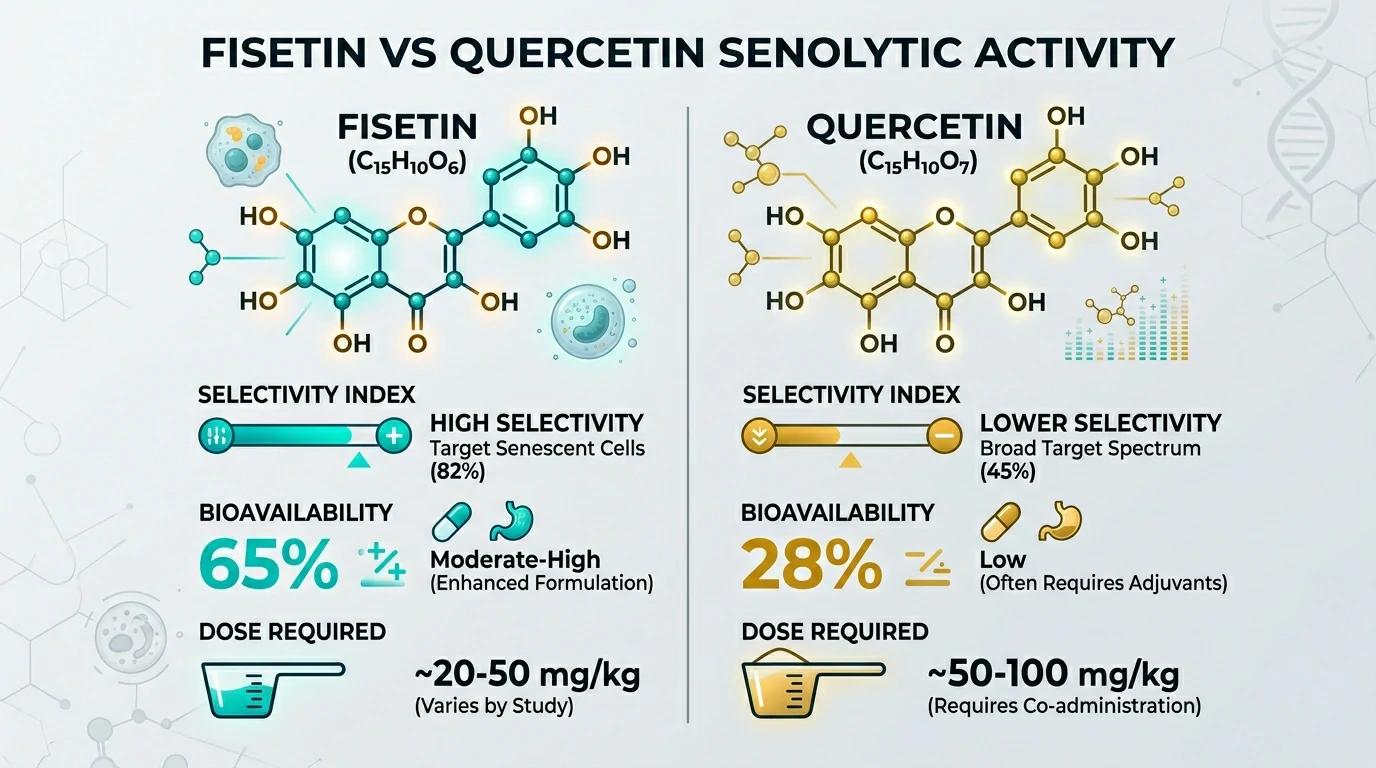
The flavonoid family contains two primary natural senolytics: quercetin and fisetin. They share structural homology but differ in potency and tissue specificity.
| Property | Quercetin | Fisetin |
|---|---|---|
| Chemical class | Flavonol | Flavonol (3'-4'-dihydroxy substitution) |
| Senolytic potency (endothelial cells) | Moderate (28–35% clearance) | High (40–55% clearance) |
| Senolytic potency (adipose) | Low–moderate | Moderate–high |
| PI3K/AKT inhibition | Strong (−8.2 kcal/mol docking) | Moderate |
| Additional mechanisms | NF-κB inhibition, zinc ionophore, Nrf2 activation | mTOR inhibition, SIRT1 activation |
| Bioavailability | Low (~2% as aglycone; improved by phytosome) | Low (~1.5% as aglycone; no widely available enhanced form) |
| Clinical evidence | Robust (D+Q trials, multiple independent studies) | Early-stage (Mayo Clinic trials underway) |
| Safety data | Extensive (FDA GRAS, decades of supplement use) | Moderate (GRAS affirmed but less historical use) |
| Cost per gram (bulk extract) | $0.50–$1.50 | $8–$15 |
From a formulation perspective, quercetin offers a superior practical profile: stronger clinical backing, established safety, dramatically lower cost, and availability of enhanced-bioavailability forms (phytosome, EMIQ, liposomal). Fisetin may be more potent on a per-molecule basis in certain cell types, but its cost and limited bioavailability engineering make it less accessible for supplement development.
Clinical Translation: From Bench to Supplement Formulation
Senolytic Dosing Protocol for Supplement Design
Clinical and preclinical data converge on an intermittent high-dose strategy for acute senolytic effect:
| Parameter | Recommendation | Rationale |
|---|---|---|
| Dose per administration | 1,000–1,600 mg quercetin | Achieves plasma concentrations sufficient for PI3K/AKT inhibition |
| Dosing window | 2–3 consecutive days | Provides sustained apoptotic pressure on senescent cells |
| Rest period | 2–4 weeks off | Allows healthy cell turnover and immune clearance of apoptotic debris |
| Annual cycles | 4–6 cycles per year (every 2–3 months) | Prevents senescent cell re-accumulation |
| Maintenance dose (between cycles) | 250–500 mg daily | Provides SASP suppression and Nrf2 antioxidant support |
Enhanced Bioavailability Is Non-Negotiable
Standard quercetin aglycone has ~2% oral bioavailability. For a senolytic protocol requiring high tissue concentrations, this is inadequate. Formulators should consider:
- Quercetin phytosome (e.g., Quercefit): Bioavailability enhanced to ~20× standard form. Achieves 50–80× higher tissue concentrations.
- EMIQ (enzymatically modified isoquercitrin): Water-soluble glucoside form, superior absorption, ~17× higher AUC than aglycone.
- Liposomal quercetin: Encapsulated delivery bypassing first-pass metabolism, suitable for softgel or liquid formats.
A senolytic supplement positioned in the longevity market must use an enhanced-bioavailability form to deliver meaningful results. Standard quercetin powder in a capsule is unlikely to achieve the plasma levels required for senescent cell clearance.
Target Consumer Segments and Formulation Opportunities
The longevity supplement market is not monolithic. Three distinct segments benefit from quercetin-based senolytic formulations:
| Consumer Segment | Product Positioning | Key Claims | Formulation Strategy |
|---|---|---|---|
| Biohacker / early adopter (35–55) | "Optimize cellular age" | Senolytic clearance + SASP suppression | High-dose intermittent protocol (1,000+ mg phytosome), standalone product |
| Active aging (55–75) | "Age well, stay functional" | Joint comfort, mobility, energy | 500 mg phytosome daily + adjunct ingredients (collagen II, curcumin) |
| Post-illness recovery | "Cellular renewal support" | Immune reset, tissue repair | 500 mg EMIQ + NAD+ precursors (NMN/NR), 30-day protocol |
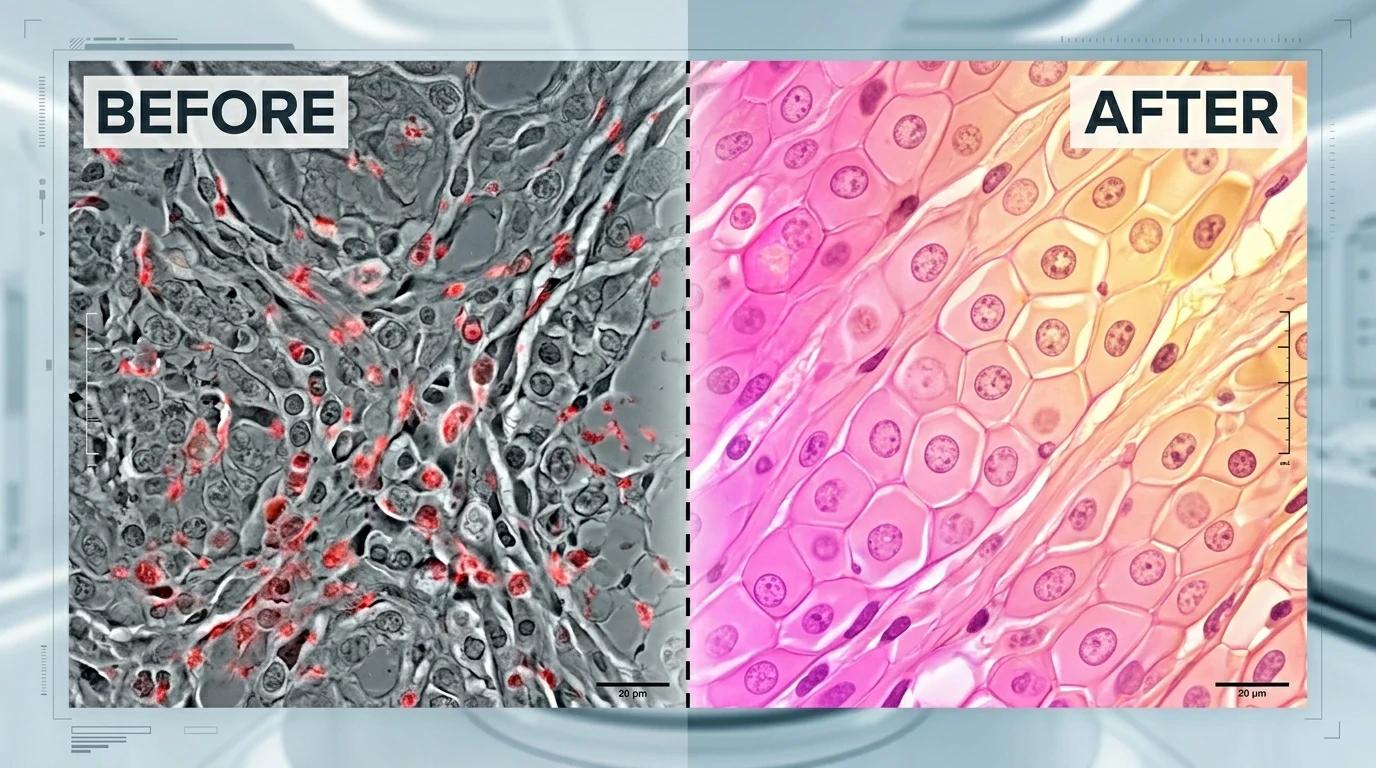 Market sizing: The global longevity and anti-aging supplement market was valued at $33.3 billion in 2024 and is projected to reach $58.4 billion by 2030 (CAGR 9.8%, Grand View Research). Senolytic ingredients represent one of the fastest-growing sub-segments, with quercetin positioned as the most clinically validated natural option.
Quality Specifications for Senolytic-Grade Quercetin
Not all quercetin is suitable for senolytic formulations. The supplier's quality standards directly affect product efficacy:
| Quality Parameter | Requirement | Why It Matters |
|---|---|---|
| Purity | ≥95% quercetin (HPLC) | Impurities may interfere with PI3K binding or introduce pro-oxidative contaminants |
| Heavy metals | Pb ≤ 0.5 ppm, As ≤ 0.3 ppm, Cd ≤ 0.1 ppm, Hg ≤ 0.1 ppm | Longevity consumers use products chronically; heavy metal accumulation risk |
| Solvent residues | USP Class 3 limits or tighter | Senolytic formulations often use high doses; residual solvent exposure multiplies |
| Microbial limits | TAMC ≤ 1,000 CFU/g, TYMC ≤ 100 CFU/g, pathogens absent | End-product safety for extended shelf life |
| Source authentication | Sophora japonica extract, HPLC fingerprint verified | Ensures consistent flavonoid profile; some sources (onion skin) have different impurity profiles |
| Particle size (if powder) | D90 ≤ 75 μm | Ensures uniform mixing in capsule and tablet formulations |
| Bioavailability form | Phytosome, EMIQ, or liposomal | Standard aglycone will not achieve senolytic plasma concentrations |
Sourcing from a qualified quercetin extract supplier with full documentation is essential for longevity-positioned products. The longevity consumer expects transparency — batch-specific CoAs, third-party testing, and source traceability are table stakes in this segment.
Conclusion: Quercetin's Place in the Longevity Stack
Quercetin's senolytic activity represents a scientific inflection point: a natural, clinically studied compound that addresses cellular aging at its root cause — senescent cell accumulation. The evidence spans from mechanistic validation (PI3K/AKT inhibition, BCL-2 family antagonism, SASP suppression) through animal efficacy (reversed frailty, extended healthspan) to early human trials (improved physical function).
For the supplement industry, quercetin bridges three powerful commercial narratives:
- Scientific credibility: D+Q protocol recognized by geroscience leaders, Mayo Clinic validation
- Natural positioning: Plant-derived flavonol, decades of safety data, FDA GRAS status
- Market momentum: Longevity supplements growing at 9.8% CAGR, senolytics as the differentiation wedge
The practical formulation takeaway: senolytic quercetin products require enhanced bioavailability, intermittent dosing protocols, and pharmaceutical-grade quality. Standard quercetin powder in a commodity capsule will not deliver the biology the science promises.
Learn more about high-purity quercetin from Sophora japonica for senolytic supplement development.
Research References
- Zhu Y, Tchkonia T, Pirtskhalava T, et al. The Achilles' heel of senescent cells: from transcriptome to senolytic drugs. Aging Cell. 2015;14(4):644-658.
- Xu M, Pirtskhalava T, Farr JN, et al. Senolytics improve physical function and increase lifespan in old age. Nature Medicine. 2018;24(8):1246-1256.
- Justice JN, Nambiar AM, Tchkonia T, et al. Senolytics in idiopathic pulmonary fibrosis: Results from a first-in-human, open-label, pilot study. EBioMedicine. 2019;40:554-563.
- Hickson LJ, Langhi Prata LGP, Bobart SA, et al. Senolytics decrease senescent cells in humans: Preliminary report from a clinical trial of Dasatinib plus Quercetin in individuals with diabetic kidney disease. EBioMedicine. 2019;47:446-456.
- Kirkland JL, Tchkonia T. Senolytic drugs: from discovery to translation. Journal of Internal Medicine. 2020;288(5):518-536.
- Li Y, Li J, Fang W, et al. Quercetin suppresses the senescence-associated secretory phenotype of mesenchymal stem cells. Frontiers in Pharmacology. 2019;10:1405.
- Weng MS, Ho YS, Lin JK. Chrysin and quercetin induce G2/M phase cell cycle arrest and apoptosis via PI3K/AKT/mTOR pathway in human bladder cancer cells. Oncotarget. 2017;8(50):87234-87245.
Related Articles
- Quercetin + Dasatinib vs. Natural Senolytics: What Longevity Science Recommends — The senolytic landscape compared
- Quercetin and NAD+: Stacking Flavonoids with Nicotinamide for Cellular Rejuvenation — Pairing senolytics with NAD+ precursors
- PQQ: The Market's Most Underrated Mitochondrial Molecule — Complementary mitochondrial anti-aging strategy