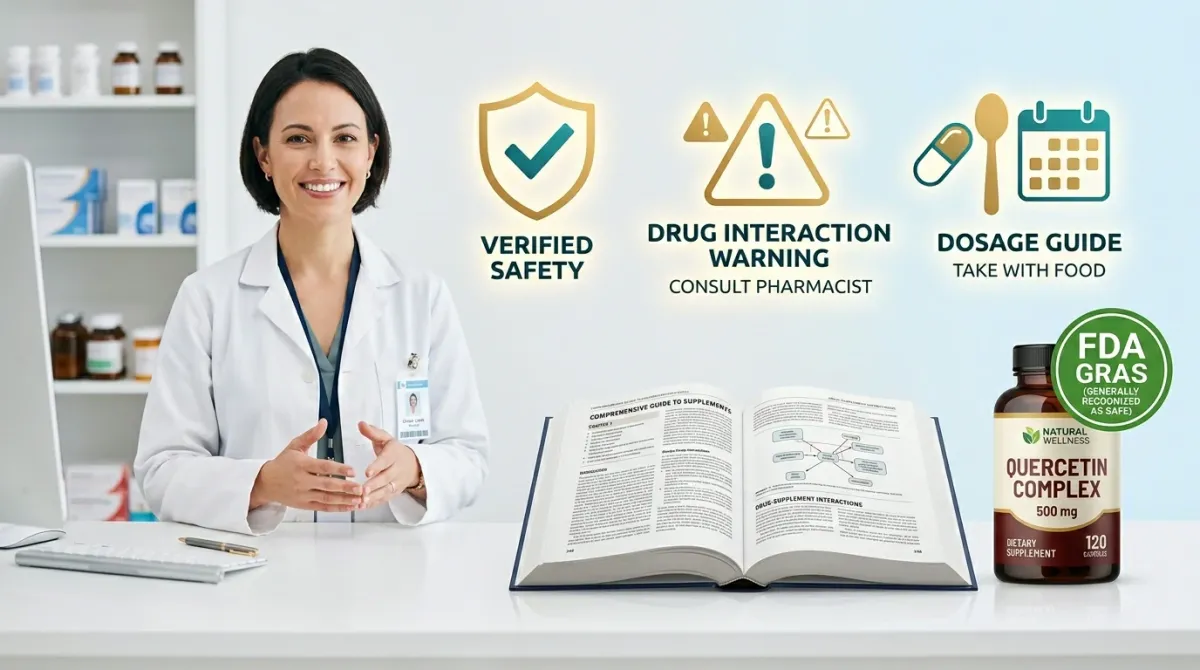
TL;DR — Quercetin has a well-established safety record: FDA GRAS status, clinical use at 500–1,000 mg/day for up to 12 weeks with minimal adverse events, and a wide safety margin (NOAEL ~5,600 mg/day equivalent in rats). The real safety concern is not toxicity but drug interactions — quercetin inhibits CYP3A4, CYP2C9, and P-glycoprotein, meaning it can alter the metabolism of common medications. Blood thinners (warfarin), certain antibiotics (quinolones), immunosuppressants (cyclosporine), and chemotherapy drugs are the most clinically significant interactions. Pregnant/breastfeeding women and those with severe kidney disease should avoid supplementation until more safety data exists. For 95% of healthy adults, quercetin at supplement-relevant doses is a low-risk, well-tolerated ingredient.
Regulatory Status: FDA GRAS and Global Approvals
Quercetin's regulatory standing is unusually strong for a botanical extract:
| Jurisdiction | Status | Details |
|---|---|---|
| United States (FDA) | GRAS (Generally Recognized as Safe) | GRAS Notice No. 641 (2015): quercetin at up to 500 mg/serving in foods. Dietary supplement use predates DSHEA (1994), so NDI notification is not required. |
| European Union (EFSA) | Novel Food authorizations exist; also traditional food ingredient | Quercetin is not on the Novel Food catalogue (it's traditionally consumed). However, concentrated extracts may require novel food authorization in some member states. Quercetin dihydrate is listed in the EU food additive register (E161e/not currently approved for use). |
| Japan | Approved as food additive and supplement ingredient | Listed in Japan's Standards for Foods and Food Additives. Rutin and quercetin are approved antioxidants. |
| Canada (Health Canada) | Licensed Natural Health Product (NHP) ingredient | Monograph available; requires NPN (Natural Product Number). |
| Australia (TGA) | Listed medicine ingredient | Permitted in complementary medicines with labeling and quality requirements. |
| Codex Alimentarius | Quercetin is included in the Codex General Standard for Food Additives (GSFA) | Establishes internationally recognized safety for food use. |
For formulators: Quercetin's GRAS status is the most important regulatory fact. It means that under US law, quercetin is "generally recognized as safe" by qualified experts based on a history of common use in food or on the results of scientific research. This provides a strong regulatory foundation for supplement products, though finished product labeling must still comply with DSHEA structure-function claim rules.
Clinical Dosing Evidence: What Has Actually Been Tested in Humans
Established Effective Dose Ranges by Application
| Health Application | Typical Clinical Dose | Duration Studied | Key Studies |
|---|---|---|---|
| Seasonal allergy relief | 500–1,000 mg/day | 4–8 weeks (during allergy season) | Mlcek et al., 2016; Jafarinia et al., 2020 |
| Immune support / URTI prevention | 500–1,000 mg/day | 8–12 weeks | Nieman et al., 2007 (1,000 mg/day, n=1,002) |
| Blood pressure support | 500–730 mg/day | 4–12 weeks | Serban et al., 2016 (meta-analysis, n=7 RCTs) |
| Anti-inflammatory / arthritis | 500 mg/day | 8–12 weeks | Javadi et al., 2017 |
| Senolytic (D+Q protocol) | 1,000–1,600 mg/day | 2–3 days (intermittent) | Justice et al., 2019; Hickson et al., 2019 |
| Exercise recovery | 500–1,000 mg/day | 1–2 weeks pre/post-exercise | Askari et al., 2012; Nieman et al., 2007 |
Dose ceiling data: The highest oral doses tested in controlled human settings reach 2,000 mg/day (single-dose pharmacokinetic studies). At these doses, mild gastrointestinal side effects (nausea, loose stools) become more common but are transient and resolve upon discontinuation.
Bioavailability Context
Standard quercetin aglycone has approximately 2% oral bioavailability. A 500 mg capsule delivers ~10 mg of absorbed quercetin. Enhanced forms multiply this:
- Quercetin phytosome: ~40 mg absorbed from 500 mg (20×)
- EMIQ: ~34 mg absorbed from 500 mg (17×)
When evaluating "safe dosage," the relevant number is absorbed quercetin, not ingested quercetin. Safety data is based on ingested dose — but the body is only exposed to a fraction of that. This provides an inherent safety buffer.
Documented Drug Interactions
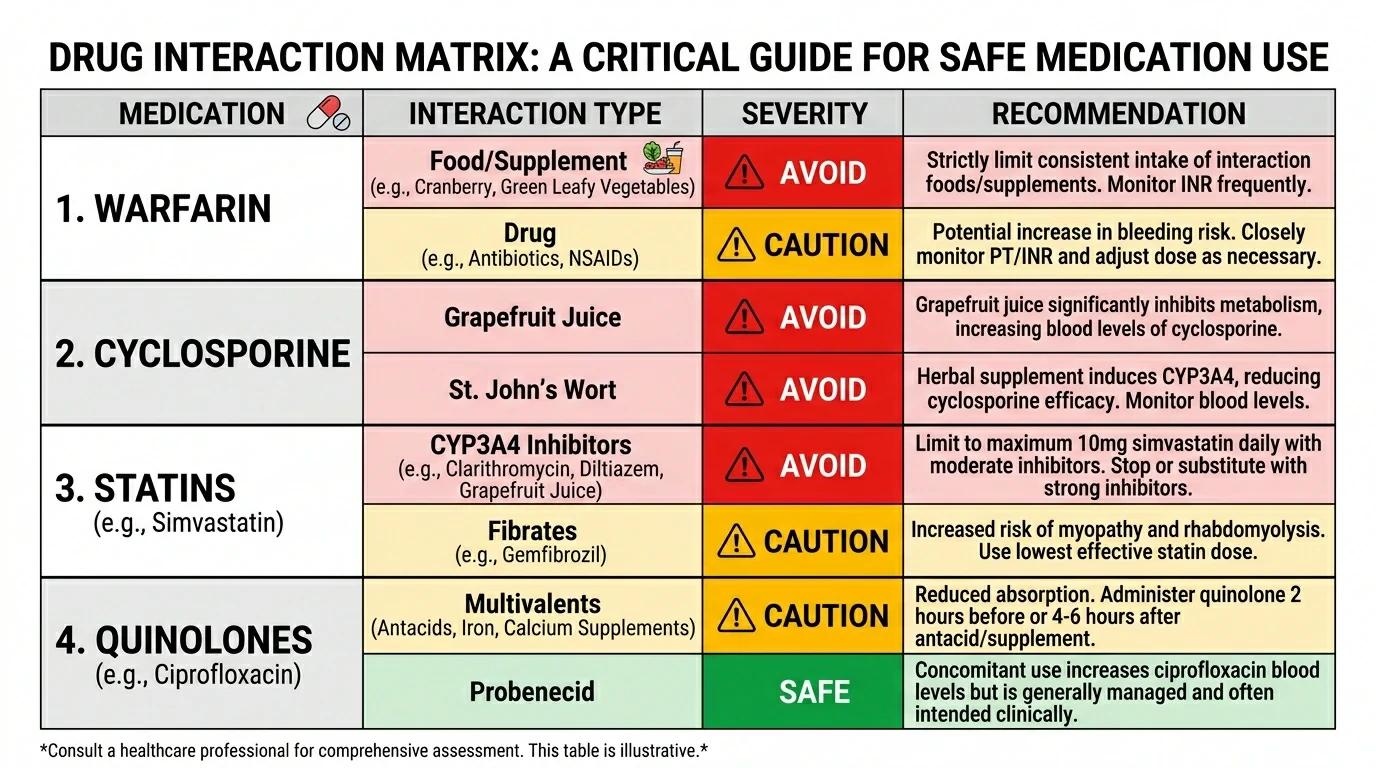
Quercetin's drug interaction profile is the most clinically significant aspect of its safety profile. It affects drug metabolism through two primary mechanisms: CYP enzyme inhibition and P-glycoprotein (P-gp) inhibition.
CYP Enzyme Interactions
| CYP Enzyme | Quercetin Effect | Clinical Significance | Affected Drug Classes |
|---|---|---|---|
| CYP3A4 | Moderate inhibitor (IC₅₀ ~5–10 μM) | ★★★ High | Cyclosporine, tacrolimus, statins (atorvastatin, simvastatin), calcium channel blockers (nifedipine, verapamil), midazolam, sildenafil |
| CYP2C9 | Mild-moderate inhibitor | ★★ Moderate | Warfarin (S-warfarin), NSAIDs (ibuprofen, naproxen), losartan, phenytoin |
| CYP1A2 | Weak inhibitor | ★ Low | Caffeine, theophylline, clozapine |
| CYP2D6 | Weak inhibitor | ★ Low | Beta blockers (metoprolol), SSRIs (fluoxetine), codeine/tramadol |
| CYP2C19 | Negligible | Not significant | Omeprazole, clopidogrel |
The mechanism: Quercetin undergoes glucuronidation and sulfation in the intestine and liver. The conjugated quercetin metabolites inhibit CYP enzymes competitively. Importantly, CYP inhibition occurs primarily in the intestine (first-pass metabolism), not systemically — meaning oral quercetin primarily affects the metabolism of orally co-administered drugs, not intravenously administered ones.
P-Glycoprotein (P-gp) Interaction
P-glycoprotein is an efflux transporter that pumps drugs and xenobiotics out of cells — in the intestine, it limits drug absorption; in the blood-brain barrier, it protects the brain; in the kidney and liver, it promotes drug excretion.
Quercetin inhibits P-gp. This means:
- Increased absorption of P-gp substrate drugs (digoxin, loperamide, fexofenadine)
- Reduced brain protection from P-gp-substrate neurotoxins (theoretical concern, limited human data)
- Reduced renal clearance of P-gp-substrate drugs
Specific Drug Interaction Table
| Drug / Drug Class | Interaction Mechanism | Potential Effect | Clinical Guidance |
|---|---|---|---|
| Warfarin (Coumadin) | CYP2C9 inhibition → reduced warfarin clearance | Elevated INR, increased bleeding risk | Monitor INR closely when starting/stopping quercetin; case reports of INR elevation exist |
| Cyclosporine | CYP3A4 + P-gp inhibition → increased cyclosporine levels | Increased immunosuppression, nephrotoxicity risk | Monitor cyclosporine blood levels; may require dose adjustment |
| Tacrolimus | CYP3A4 + P-gp inhibition | Increased tacrolimus levels | Monitor blood levels |
| Quinolone antibiotics (ciprofloxacin, levofloxacin) | Quercetin-metal chelation in gut reduces antibiotic absorption | Reduced antibiotic efficacy | Separate doses by 2–4 hours |
| Atorvastatin / Simvastatin | CYP3A4 inhibition | Increased statin levels; elevated myopathy risk | Monitor for muscle pain; consider dose reduction |
| Calcium channel blockers (nifedipine, verapamil) | CYP3A4 inhibition | Increased antihypertensive effect; risk of hypotension | Monitor blood pressure |
| Losartan | CYP2C9 inhibition → reduced conversion to active metabolite | Reduced antihypertensive efficacy | Monitor blood pressure; may need alternative ARB |
| Fexofenadine (Allegra) | P-gp inhibition → increased absorption | Increased antihistamine levels (not typically dangerous) | Mild interaction; generally safe |
| Digoxin | P-gp inhibition → increased digoxin absorption | Increased digoxin levels; narrow therapeutic index | Monitor digoxin levels |
| Chemotherapy agents (doxorubicin, paclitaxel, irinotecan) | Variable (CYP, P-gp, antioxidant interference) | Altered chemotherapy pharmacokinetics | Avoid quercetin during active chemotherapy unless directed by oncologist |
| Thyroid hormones (levothyroxine) | Possible TPO inhibition (in vitro); mechanism unclear in vivo | Theoretically reduced thyroid hormone synthesis | Monitor TSH if combining; clinical significance appears low |
The practical rule: If a drug has a narrow therapeutic index (warfarin, digoxin, cyclosporine, tacrolimus, certain antiepileptics), quercetin co-administration warrants monitoring. For most other drugs, the interaction is theoretical or mild, and separating doses by 2–4 hours reduces interaction risk significantly.
Contraindicated Populations
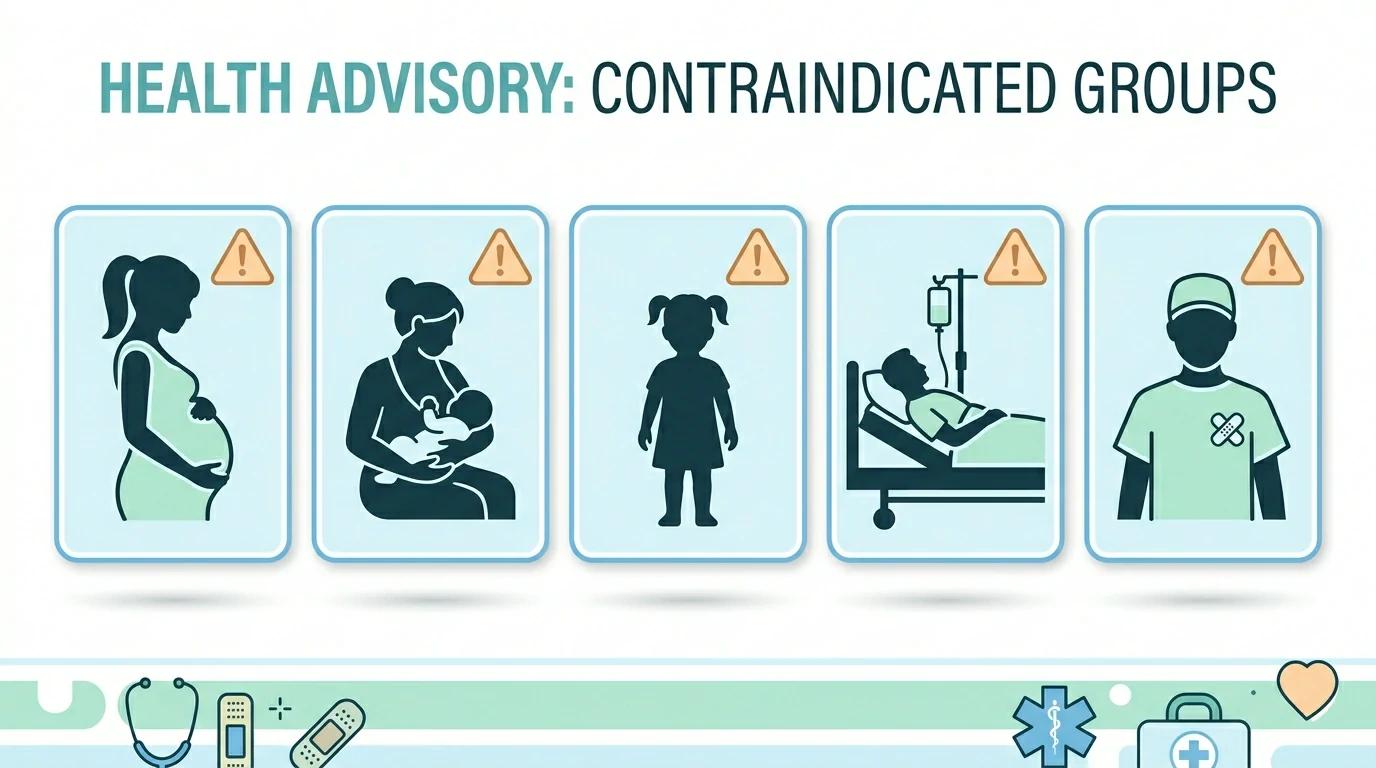
| Population | Recommendation | Rationale |
|---|---|---|
| Pregnant women | Avoid supplemental doses (>100 mg/day); dietary sources OK | No controlled human pregnancy safety data. High-dose animal studies show some evidence of developmental effects. Standard precautionary approach. |
| Breastfeeding women | Avoid supplemental doses | No human lactation safety data. Quercetin and its metabolites are expected to transfer into breast milk. |
| Children (under 12) | Avoid supplemental doses unless pediatrician-directed | No pediatric safety studies at supplemental doses. |
| Severe kidney disease (CKD stage 4–5) | Avoid | Limited safety data; case reports of nephrotoxicity at very high doses (though causality is uncertain). |
| Active chemotherapy patients | Avoid | CYP/P-gp interaction risk; lack of oncologic safety data for antioxidant supplementation during chemotherapy. |
| Scheduled surgery | Discontinue 2 weeks before surgery | Theoretical bleeding risk from antiplatelet effects (weak but worth noting). |
| Tamoxifen users | Avoid high-dose quercetin | CYP2D6 inhibition may reduce tamoxifen activation to endoxifen (active metabolite). Some in vitro evidence; clinical significance debated. |
Safety Pharmacology: Toxicology Data Summary
Acute Toxicity
- Oral LD₅₀ (rat): >5,000 mg/kg — practically non-toxic by oral route
- For a 70 kg human, this is equivalent to >350,000 mg (>350 g) — far beyond any realistic exposure
Subchronic / Chronic Toxicity
- No observed adverse effect level (NOAEL) at 500 mg/kg/day in 28-day and 90-day rat studies
- Allometrically scaled to human equivalent: ~5,600 mg/day (using standard body surface area conversion)
- No organ toxicity, carcinogenicity signals, or reproductive toxicity at any supplement-relevant dose
Genotoxicity
- Ames test (bacterial reverse mutation): Negative (non-mutagenic)
- Chromosomal aberration test: Negative at supplement-relevant concentrations
- Micronucleus test (in vivo): Negative
Note: At very high concentrations (>100 μM), quercetin can exhibit pro-oxidant activity in vitro — generating reactive oxygen species rather than scavenging them. This "quercetin paradox" is well-documented in the literature but has no demonstrated clinical relevance at oral supplement doses, where plasma concentrations rarely exceed 5–10 μM (aglycone equivalent) even with enhanced-bioavailability forms.
Recognized Adverse Effects and Their Frequency
Adverse events from quercetin supplementation are uncommon, mild, and dose-dependent:
| Adverse Effect | Estimated Frequency | Dose Dependence | Notes |
|---|---|---|---|
| Mild gastrointestinal discomfort (nausea, bloating) | 2–5% | Increases above 1,000 mg/day | More common on empty stomach; resolves within 2–3 days or with food |
| Headache | 1–3% | Weak | May be related to vasodilation effects |
| Tingling sensation (hands/feet) | <1% | Not established | Rare; isolated case reports; mechanism unclear |
| Elevated liver enzymes (transient) | <1% at 500 mg; ~3% at 1,000 mg | Moderate | Typically asymptomatic; resolves without intervention |
| Kidney function changes | Not observed at standard doses | — | High-dose IV studies show different profile from oral supplementation |
| Allergic reaction | Extremely rare | Not dose-dependent | Cross-reactivity possible in individuals with known flavonoid hypersensitivity |
In the 1,002-participant Nieman et al. (2007) study using 1,000 mg/day quercetin for 12 weeks, adverse event rates did not significantly differ between the quercetin and placebo groups. This is the largest safety-relevant human dataset available.
Quality Considerations That Affect Safety
The safety of quercetin as an ingredient depends as much on the extract quality as on the molecule itself:
| Quality Issue | Safety Implication | Prevention |
|---|---|---|
| Heavy metal contamination (Pb, As, Cd, Hg) | Chronic toxicity with long-term use | Require ICP-MS data on every CoA; Pb ≤0.5 ppm, As ≤0.3 ppm |
| Residual solvents (ethanol, methanol) | Acute toxicity from methanol; chronic from cumulative ethanol | Require GC headspace data; methanol ≤3,000 ppm |
| Pesticide residues | Endocrine disruption, neurotoxicity (organophosphates) | Organic certification or pesticide residue panel |
| Microbial contamination (E. coli, Salmonella, mold) | Acute gastroenteritis; aflatoxin risk from mold | TAMC ≤1,000 CFU/g; TYMC ≤100 CFU/g; pathogens absent |
| Adulteration with pharmaceutical agents (e.g., undeclared antihistamines in "allergy formulas") | Unpredictable drug interactions; legal liability | Source only from audited, transparent suppliers |
| Adulteration with cheaper flavonoids (rutin, isoquercitrin sold as quercetin) | Under-dosing; reduced efficacy leading to consumer distrust | HPLC with PDA detection for identity confirmation |
The supplier relationship is a safety relationship. A quercetin extract that fails heavy metal testing is not a quality problem — it's a safety problem. Every safety claim a brand makes about its finished product depends on the extract's actual purity and contaminant profile.
Labeling Guidance for Supplement Products
Based on the safety data, recommended label statements for quercetin-containing supplements:
Standard adult product (500 mg quercetin/serving):
Suggested Use: Take 1 serving daily with food, or as directed by your healthcare professional.
Warning: Consult your healthcare provider before use if you are taking prescription medications (particularly blood thinners, immunosuppressants, or blood pressure medications), are pregnant or breastfeeding, have a kidney condition, or are scheduled for surgery. Keep out of reach of children.
High-dose intermittent product (1,000 mg+ quercetin, senolytic protocol):
Suggested Use: Take 2 capsules daily with food for 2 consecutive days, followed by 2 weeks off. Do not exceed recommended cycling schedule.
Warning: This product is intended for intermittent use only. Do not take continuously for more than 3 consecutive days. Consult your healthcare provider before use if you are taking any prescription medications, are pregnant or breastfeeding, have a medical condition, or are scheduled for surgery. Discontinue use and consult a healthcare professional if you experience persistent gastrointestinal discomfort.
Conclusion
Quercetin is one of the safest dietary supplement ingredients in widespread commercial use. Its safety is supported by:
- Regulatory: FDA GRAS status, international food additive approvals
- Clinical: 12-week human trials at 1,000 mg/day with adverse event profiles indistinguishable from placebo
- Toxicological: Negative genotoxicity, NOAEL providing >5× safety margin over clinical doses
- Epidemiological: Centuries of dietary consumption without identified harm signals
The safety story is nuanced only in one dimension: drug interactions. Quercetin's CYP3A4, CYP2C9, and P-gp inhibition creates meaningful pharmacokinetic interactions with a defined set of medications — particularly those with narrow therapeutic indices. Supplement brands that provide clear, specific interaction warnings build trust and reduce liability.
For the vast majority of healthy adults, quercetin at 250–1,000 mg/day is a well-tolerated supplement with a safety profile that compares favorably to common over-the-counter products.
Source pharmaceutical-grade quercetin extract with full safety documentation — heavy metal testing, residual solvent analysis, pesticide screening, and batch-specific CoA available.
Research References
- Harwood M, Danielewska-Nikiel B, Borzelleca JF, Flamm GW, Williams GM, Lines TC. A critical review of the data related to the safety of quercetin and lack of evidence of in vivo toxicity. Food and Chemical Toxicology. 2007;45(11):2179-2205.
- Andres S, Pevny S, Ziegenhagen R, et al. Safety aspects of the use of quercetin as a dietary supplement. Molecular Nutrition & Food Research. 2018;62(1):1700447.
- Nieman DC, Henson DA, Gross SJ, et al. Quercetin reduces illness but not immune perturbations after intensive exercise. Medicine & Science in Sports & Exercise. 2007;39(9):1561-1569.
- US FDA. GRAS Notice No. 641 — Quercetin. GRAS Notification Inventory. 2015.
- Mlcek J, Jurikova T, Skrovankova S, Sochor J. Quercetin and its anti-allergic immune response. Molecules. 2016;21(5):623.
- Russo M, Spagnuolo C, Tedesco I, Bilotto S, Russo GL. The flavonoid quercetin in disease prevention and therapy: facts and fancies. Biochemical Pharmacology. 2012;83(1):6-15.
- Chen C, Zhou J, Ji C. Quercetin: a potential drug to reverse multidrug resistance. Life Sciences. 2010;87(11-12):333-338.
- Williamson G, Manach C. Bioavailability and bioefficacy of polyphenols in humans. II. Review of 93 intervention studies. American Journal of Clinical Nutrition. 2005;81(1 Suppl):243S-255S.
Related Articles
- Quercetin and Zinc: The Ionophore Mechanism That Enhances Antiviral Defense — Synergistic benefits of quercetin with zinc
- Quercetin and Inflammation: How This Flavonoid Inhibits NF-κB — How quercetin's safety profile ties to its anti-inflammatory mechanism
- How to Formulate a Quercetin Supplement — Practical dosage and combination guidance