TL;DR
I'm an R&D formulator, and here's what you actually need to know about formulating a glabridin cream or glabridin serum: It's practically insoluble in water (~0.05 g/L) but dissolves well in ethanol (≈20 mg/mL) and oil phases. The effective concentration range is 0.05–0.5% depending on product type — and no, more is not better. Never add raw glabridin powder directly to the water phase. Pre-dissolve in ethanol or a compatible glycol, or incorporate it into the oil phase before emulsification. pH must stay between 4.0 and 5.5; anything above 6.0 accelerates degradation dramatically. Light and transition metals are your enemies — use opaque packaging, EDTA (0.05%) as a chelating agent, and tocopherol (0.1%) as an antioxidant synergist. For maximum efficacy, skip the simple dispersion approach and use a delivery system: NLC encapsulation boosts tyrosinase inhibition to 60.31% (vs. 52.61% for kojic acid alone), and nano-lipid carriers deliver 2.9× greater melanin reduction than unencapsulated glabridin. This guide covers everything from solvent selection to a complete O/W cream protocol — built from published research, not marketing claims.
The Glabridin Formulation Challenge
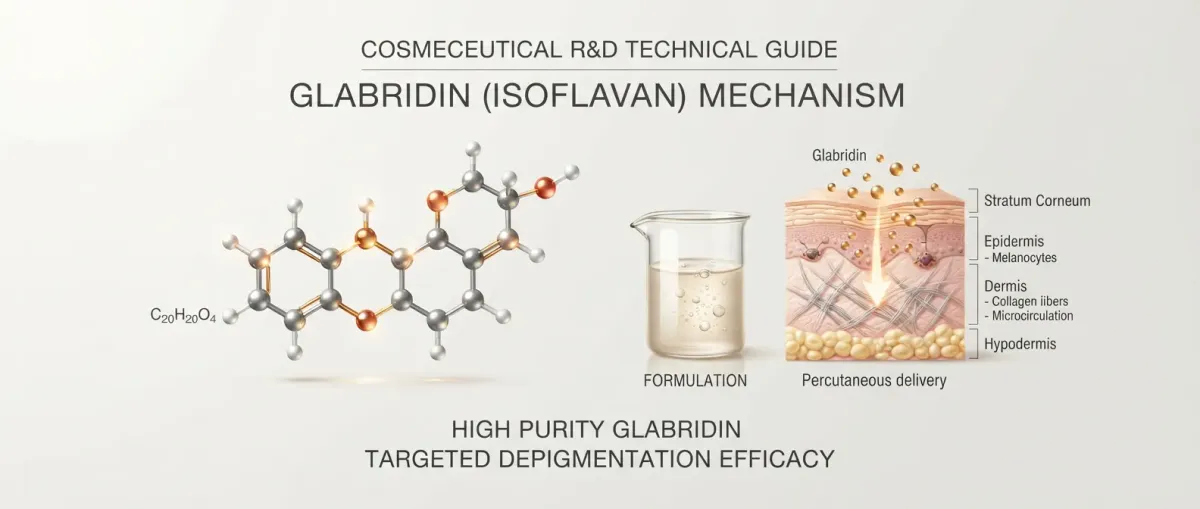
Glabridin (CAS 59870-68-7) is arguably the most potent natural tyrosinase inhibitor available to cosmetic formulators — 16× stronger than kojic acid in enzyme assays. But its exceptional bioactivity comes with an equally exceptional formulation challenge: it is a lipophilic polyphenolic flavonoid with near-zero water solubility, poor physicochemical stability, and inefficient percutaneous penetration when used as-is.
These three problems — solubility, stability, and skin delivery — are not independent. They cascade:
- Poor solubility → aggregation and precipitation in aqueous formulations → uneven distribution on skin → inconsistent efficacy
- Poor stability → oxidative degradation from light, heat, metal ions, and alkaline pH → brown discoloration of the finished product
- Inefficient penetration → most of the applied glabridin sits on the stratum corneum surface rather than reaching melanocytes in the basal layer
A 2022 study published in Current Cosmetic Science confirmed this triad: "poor solubility, low physicochemical stability and inefficient percutaneous penetration create hurdles in the best use of this agent in dermocosmetic application" (Chauhan et al., DOI: 10.2174/2666779701666220509221341).
The good news? All three problems have solutions — and this guide walks through each one systematically.
Solubility: The First Hurdle
Solubility Profile at a Glance
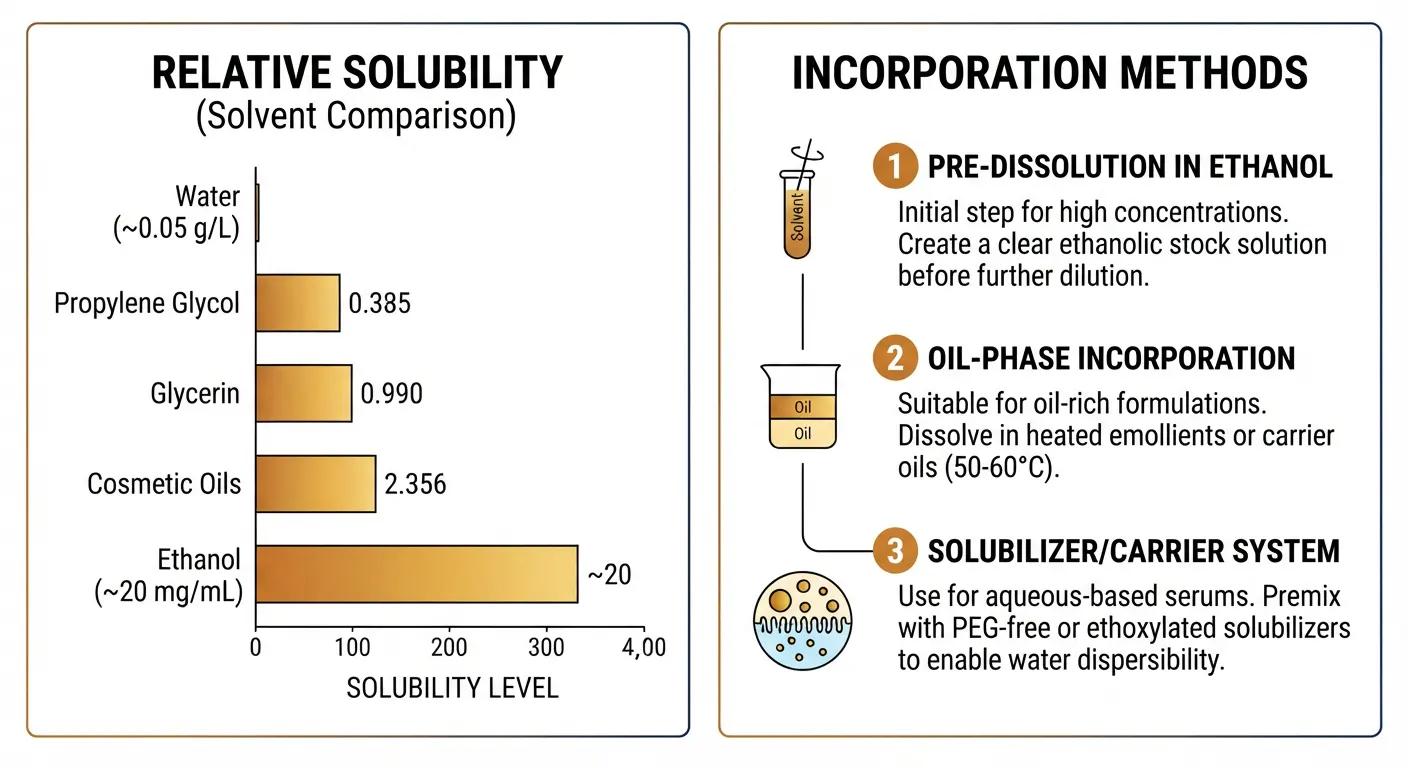
| Solvent | Solubility | Notes |
|---|---|---|
| Water | ~0.05 g/L (insoluble) | Do not add directly to water phase |
| Ethanol | ≈20 mg/mL | Best pre-dissolution solvent for most formulas |
| DMSO | ≈30 mg/mL | Lab use only; not cosmetic-grade |
| Propylene glycol | Soluble | Compatible with aqueous systems |
| Cosmetic oils (caprylic/capric triglyceride, squalane, mineral oil) | Soluble in oil phase | Incorporate during oil-phase preparation |
| Glycerin | Poor | Not recommended as primary solvent |
Solubility data sourced from Cayman Chemical Certificate of Analysis and Kingsci technical documentation.
What This Means for Your Formula
The core rule of glabridin formulation is: never dump raw powder into the water phase. It will not dissolve. It will form aggregates. Your product will have speckles, uneven distribution, and practically zero efficacy.
Instead, use one of these three approaches:
Approach 1: Pre-dissolution (simplest, for ethanol-tolerant formulas)
- Dissolve glabridin in anhydrous ethanol at 50–60°C with gentle stirring
- Cool to room temperature
- Add the ethanol-glabridin solution during the cool-down phase (<40°C)
- Works best for: toners, essences, gel serums with ethanol content
Approach 2: Oil-phase incorporation (for O/W emulsions)
- Dissolve glabridin in your oil phase (caprylic/capric triglyceride, squalane, etc.) at 60–70°C
- Proceed with normal emulsification
- Glabridin is heat-stable enough for brief exposure at these temperatures
- Works best for: creams, lotions, cleansing balms
Approach 3: Solubilizer/carrier system (for transparent aqueous products)
- Use PEG-40 hydrogenated castor oil, polysorbate 20, or similar solubilizers
- Pre-mix glabridin + solubilizer + small amount of ethanol
- Slowly dilute into water phase under high-shear mixing
- Works best for: transparent serums, micellar waters, ampoules
Critical solubility tip: If your formula contains ethanol at ≥10%, Approach 1 is usually sufficient. For alcohol-free formulas, Approach 2 (oil-phase) or a delivery system (see below) is necessary.
Concentration Guidelines by Product Type
Glabridin is effective at remarkably low concentrations — this is one of its key advantages as a cosmetic active. The typical usage range across all product types is 0.01% to 0.5%, depending on purity grade and formulation format.
| Product Type | Recommended Concentration | Rationale |
|---|---|---|
| Leave-on cream (O/W) | 0.1–0.3% | Good stratum corneum reservoir; contact time 8+ hours |
| Face serum (anhydrous or low-water) | 0.1–0.5% | Higher penetration expectation; can use upper range |
| Water-based serum/essence | 0.05–0.2% | Requires solubilizer; lower loading for clarity |
| Lotion (body) | 0.05–0.1% | Larger application area; cost considerations |
| Toner/mist | 0.01–0.05% | Short contact time; keep low |
| Sheet mask essence | 0.05–0.1% | Occlusive environment enhances penetration |
| Sunscreen (SPF day cream) | 0.05–0.2% | Add during oil phase; compatible with UV filters |
| Eye cream | 0.05–0.1% | Delicate periorbital skin; start conservative |
| Spot treatment / ampoule | 0.2–0.5% | Targeted application; higher concentration justified |
| Cleanser / wash-off | Not recommended | Contact time too short for meaningful efficacy |
Purity Grade Matters
The concentration recommendations assume standardized glabridin with ≥90% purity (HPLC-verified). If using glabridin 40% (G40 grade, common in some Asian markets), multiply the above values by approximately 2–2.5× — but note that lower-purity grades introduce more impurities that may affect color and stability.
For R&D teams, sourcing from a pharmaceutical-grade Glabridin supplier with HPLC purity certification (≥90% or ≥98%) eliminates guesswork and ensures batch-to-batch consistency.
Why More Is Not Better
A common mistake among junior formulators: "if 0.1% works, 1% must work better." This is wrong for glabridin. At higher concentrations:
- Solubility ceiling: Above ~0.5% in most oil phases, recrystallization risk increases significantly
- Diminishing returns: Tyrosinase inhibition plateaus around 0.3–0.5% in most published studies
- Color issues: Higher concentrations dramatically increase browning/discoloration risk
- Cost without benefit: Glabridin is expensive — every percentage point above efficacy threshold is wasted budget
Delivery Systems for Enhanced Bioavailability
The difference between 0.1% glabridin dispersed in a cream and 0.1% glabridin encapsulated in a lipid nanocarrier is not subtle — it's the difference between "contains glabridin on the label" and "actually delivers glabridin to melanocytes."
Comparison of Delivery Systems
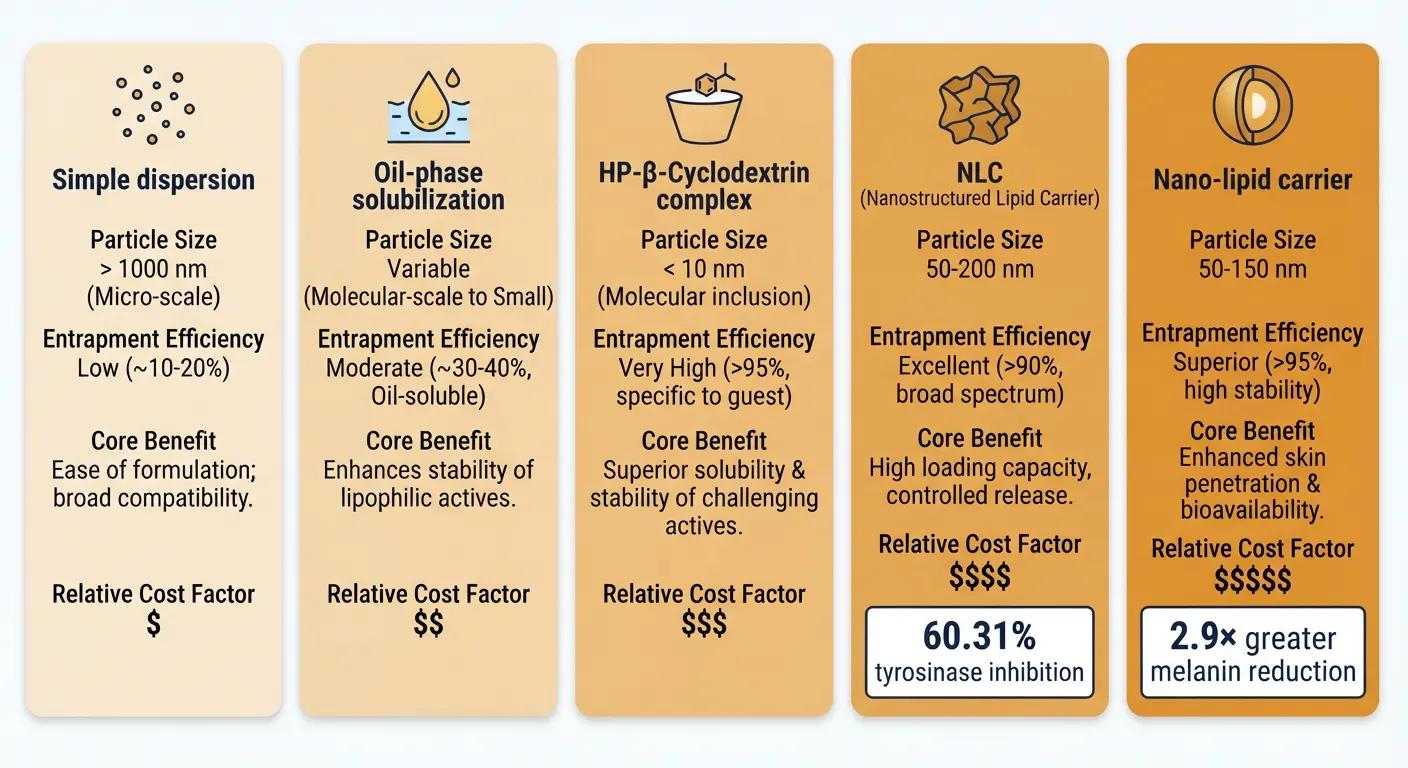
| System | Particle Size | Key Benefit | Complexity | Cost Factor |
|---|---|---|---|---|
| Simple dispersion (ethanol) | N/A (molecular) | Easiest to implement | Low | 1× |
| Oil-phase solubilization | N/A (molecular) | Good for O/W creams | Low | 1× |
| HP-β-Cyclodextrin complex | N/A (molecular inclusion) | Water-soluble glabridin | Medium | 2–3× |
| Nanostructured Lipid Carrier (NLC) | 189 nm | 94.56% EE, 60.31% tyrosinase inhibition | High | 3–5× |
| Nano-lipid (NL) carrier | <200 nm | 2.9× melanin reduction vs free glabridin | High | 3–5× |
Cyclodextrin Encapsulation (Best for Transparent Serums)
Hydroxypropyl-β-cyclodextrin (HP-β-CD) forms an inclusion complex with glabridin, effectively "hiding" the hydrophobic molecule inside a water-soluble shell. A 2024 study in the Journal of Molecular Liquids confirmed that HP-β-CD-glabridin complexes significantly enhance both solubility and bioactivity (DOI: 10.1016/j.molliq.2024.126190).
Protocol:
- Dissolve HP-β-CD in water (typically 5–10% w/w)
- Dissolve glabridin in minimal ethanol
- Add glabridin solution dropwise to HP-β-CD solution under stirring at 40°C
- Stir for 2–4 hours; filter through 0.45 μm membrane
- The resulting solution is water-clear and stable
Optimal molar ratio: HP-β-CD : glabridin = 2:1 to 5:1, depending on desired loading.
NLC (Best for Creams with Maximum Efficacy)
Nanostructured Lipid Carriers represent the best-studied delivery system for glabridin. For an antioxidant cream with meaningful whitening claims, NLC encapsulation is the gold standard. The 2022 Chauhan et al. study used glycerol monostearate (solid lipid) + olive oil (liquid lipid) to create NLC particles with these specifications:
- Particle size: 189 nm (optimal for stratum corneum interaction)
- PDI: 0.259 (narrow distribution)
- Zeta potential: −14.5 mV (moderate physical stability)
- Entrapment efficiency: 94.56%
- Drug release: 98.86 ± 0.80% (sustained release profile)
- Tyrosinase inhibition: 60.31% (vs. 52.61% for kojic acid, vs. unencapsulated glabridin baseline)
This means NLC-encapsulated glabridin at the same nominal concentration is approximately 15% more effective than free glabridin at inhibiting tyrosinase — because more of it actually reaches the target site.
Nano-Lipid (NL) Carriers (Highest Skin Delivery)
A 2026 study in the Journal of Drug Delivery Science and Technology demonstrated that glabridin-loaded nano-lipid carriers (Gla-NL) achieved 2.9× higher melanin reduction compared to unencapsulated glabridin in human efficacy evaluation (DOI: 10.1016/j.jddst.2026.106247). The authors concluded: "Gla-NL have promising applications for the encapsulation, topical delivery, and enhanced whitening efficacy of glabridin."
For R&D teams developing high-performance whitening products, NL or NLC encapsulation represents the current state of the art and a genuine competitive differentiator.
pH, Temperature & Light Stability
pH: The Non-Negotiable Parameter
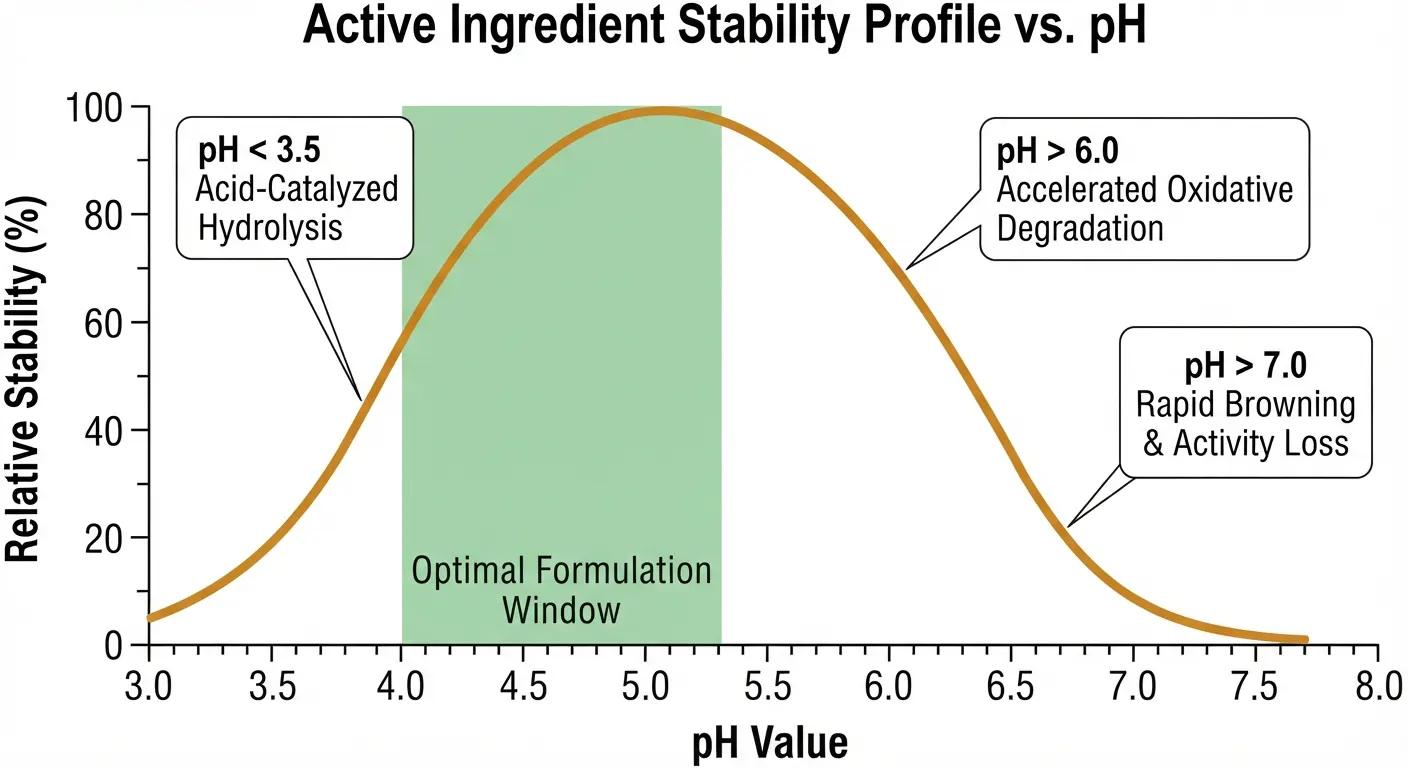 Glabridin requires a mildly acidic environment — pH 4.0 to 5.5 — for optimal stability. This is consistent across multiple sources including Huatai Bio-Fine Chemical's technical documentation and the peer-reviewed stability study in Natural Product Communications (Ao et al., 2010, DOI: 10.1177/1934578X1000501214).
What happens outside this range:
- pH < 3.5: Acid-catalyzed hydrolysis of the pyran ring; structural degradation
- pH 4.0–5.5: ✅ Optimal stability window
- pH > 6.0: Accelerated oxidative degradation; discoloration begins within days
- pH > 7.0: Rapid browning; complete loss of activity within 1–2 weeks at room temperature
Practical recommendations:
- Buffer your formula with citric acid/sodium citrate (pH 4.5–5.0) or lactic acid/sodium lactate
- If your formula contains ingredients that require higher pH (e.g., certain preservatives, niacinamide at pH 6–7), you have two options:
- Encapsulate the glabridin (NLC or cyclodextrin) to shield it from the alkaline environment
- Adjust the overall formula pH downward and verify niacinamide compatibility at the lower pH — niacinamide is stable at pH 4.5–6.0
Temperature
Glabridin powder is stable under dry, cool storage conditions (≤25°C). In formulation:
- Processing temperature: Brief exposure to 60–70°C during oil-phase dissolution is acceptable (minutes, not hours)
- Long-term storage: Finished product should be stored at ≤40°C; accelerated stability testing at 40°C/75% RH for 3 months is standard
- Avoid: Prolonged heating above 80°C; direct steam sterilization
Light Sensitivity
Like most phenolic flavonoids, glabridin is photolabile. UV and visible light catalyze oxidative degradation through free radical generation.
Mitigation strategy:
- Opaque/amber packaging — single most effective intervention
- Antioxidant synergists — add 0.05–0.1% tocopherol (vitamin E) or 0.01–0.05% BHT to the oil phase
- UV absorbers — formulations containing glabridin benefit from inclusion of UV filters (even in night creams, as ambient light exposure occurs)
Metal Ion Sensitivity
Transition metal ions (Fe²⁺, Fe³⁺, Cu²⁺) catalyze glabridin oxidation, leading to brown discoloration of emulsions — a well-documented phenomenon in cosmetic formulation literature.
Solution: Add 0.05% EDTA (disodium EDTA or tetrasodium EDTA) as a chelating agent. This is a minimal-cost addition that prevents the single most common cosmetic defect with glabridin formulations: the dreaded brown cream.
Three-Layer Stabilization Protocol
The most robust approach (adapted from Huatai Bio-Fine Chemical's technical guidance) combines three protective layers:
- Chelation layer: EDTA 0.05% — sequesters metal ions
- Antioxidant layer: Tocopherol 0.1% or ascorbyl palmitate 0.05% — radical scavenger
- Physical barrier layer: Opaque packaging + nitrogen blanket during filling (optional, for premium products)
When all three layers are in place, glabridin stability in O/W emulsions at 25°C routinely exceeds 24 months.
Synergy: Combining Glabridin with Other Actives
Glabridin rarely works alone in commercial formulations. Understanding how it interacts with other actives — synergistically or antagonistically — is critical for both efficacy and stability.
Proven Synergies
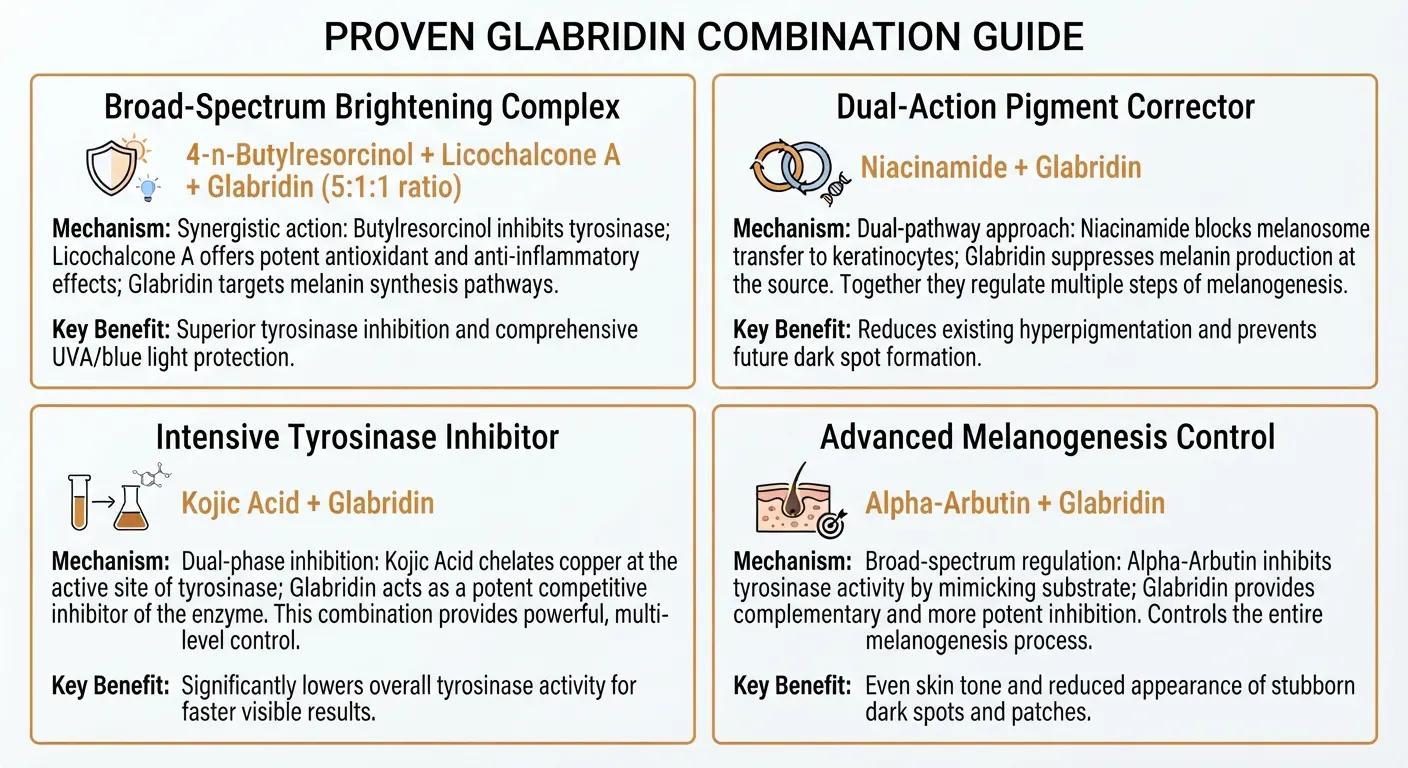
1. 4-n-Butylresorcinol + Licochalcone A + Glabridin (5:1:1 molar ratio)
A 2026 study published in Skin Research and Technology established the optimal synergistic ratio for these three licorice-derived actives: 50 μM butylresorcinol, 10 μM licochalcone A, and 10 μM glabridin (molar ratio 5:1:1). The combination inhibited tyrosinase activity more effectively than any individual component and also demonstrated protection against UVA- and blue light-induced pigmentation. In a 56-day human clinical trial (31 subjects), the combination significantly improved melanin index, ITA°, and L-value (PMCID: PMC13098250, PMID: 41853874).
2. Niacinamide + Glabridin
Niacinamide (vitamin B3) inhibits melanosome transfer from melanocytes to keratinocytes — a different mechanism from glabridin's tyrosinase inhibition. Together, they attack pigmentation at two distinct points in the pathway. Both are stable in the pH 4.5–5.5 range.
Design tip for formulators: Use glabridin (0.1–0.3%) + niacinamide (2–4%) as your base whitening pair in serums. This combination is well-tolerated, patent-free, and supported by mechanistic logic even in the absence of a dedicated combination clinical trial.
3. Kojic Acid + Glabridin
Both are tyrosinase inhibitors, but glabridin is 16× more potent. If you're already using kojic acid at 1–2%, adding 0.1% glabridin can significantly boost efficacy without reformulating the entire product. Kojic acid's water solubility complements glabridin's oil solubility — they partition to different phases in an O/W emulsion, providing "dual-phase" enzyme inhibition.
4. Alpha-Arbutin + Glabridin
Alpha-arbutin is a water-soluble tyrosinase inhibitor and melanosome maturation disruptor. At typical usage levels (1–2% alpha-arbutin + 0.1–0.2% glabridin), this combination provides broad-spectrum melanogenesis inhibition with excellent safety profile — suitable for sensitive skin formulations.
Ingredients to Approach with Caution
| Ingredient | Concern | Mitigation |
|---|---|---|
| Retinol / Retinaldehyde | Low pH (retinol prefers pH 5.5–6.5; glabridin needs ≤5.5) | Use encapsulated retinol; test pH compatibility |
| L-Ascorbic Acid (pure vitamin C) | Requires pH < 3.5 for stability — outside glabridin's range | Use ascorbyl glucoside or ethyl ascorbic acid instead |
| AHAs (glycolic, lactic acid) | Low pH from free acid form may degrade glabridin | Buffer AHA to pH 4.0–4.5; or separate into a two-phase system |
| Benzoyl Peroxide | Strong oxidizer; will rapidly degrade glabridin | Do not combine |
| Strong alkaline ingredients | pH > 7 causes rapid degradation | Avoid; or encapsulate glabridin |
Step-by-Step O/W Cream Formulation Protocol
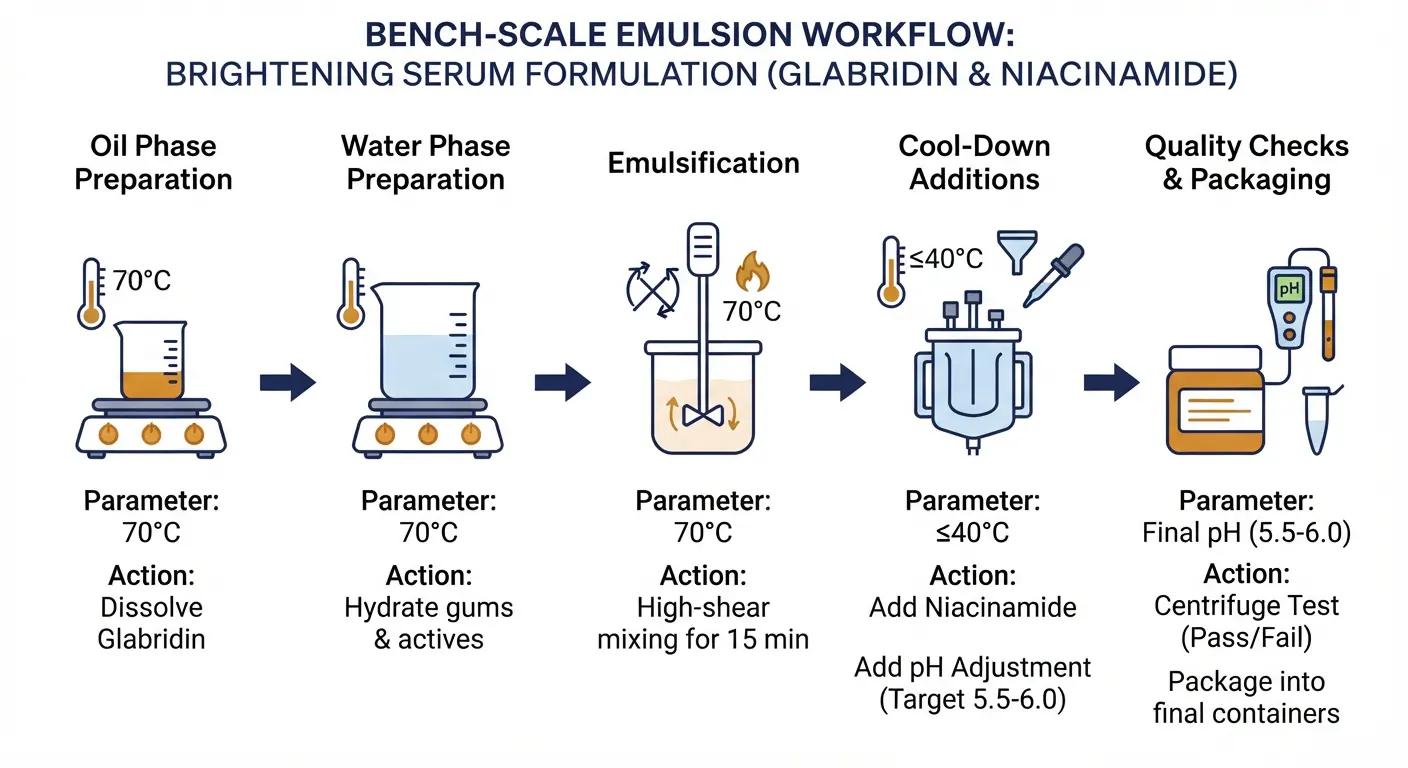
Here is a complete protocol for a 500 g batch of Glabridin Brightening Day Cream (0.2% glabridin, pH 4.8) — tested at bench scale and designed to be stable for 24 months.
Phase A (Oil Phase) — Heat to 70°C
| Ingredient | % w/w | Grams | Function |
|---|---|---|---|
| Caprylic/Capric Triglyceride | 6.0% | 30.0 g | Emollient + glabridin solvent |
| Cetearyl Alcohol (and) Ceteareth-20 | 3.0% | 15.0 g | Emulsifier (HLB ~12) |
| Glyceryl Stearate | 2.0% | 10.0 g | Co-emulsifier |
| Squalane | 2.0% | 10.0 g | Emollient |
| Tocopherol (Vitamin E) | 0.1% | 0.5 g | Antioxidant for glabridin |
| Glabridin (≥90% purity) | 0.2% | 1.0 g | Active ingredient |
| Cetearyl Alcohol | 1.0% | 5.0 g | Consistency factor |
Phase B (Water Phase) — Heat to 70°C
| Ingredient | % w/w | Grams | Function |
|---|---|---|---|
| Deionized Water | q.s. to 100% | ~354.9 g | Solvent |
| Glycerin | 4.0% | 20.0 g | Humectant |
| Disodium EDTA | 0.05% | 0.25 g | Chelating agent |
| Xanthan Gum | 0.15% | 0.75 g | Stabilizer |
Phase C (Cool-Down Phase) — Add at ≤40°C
| Ingredient | % w/w | Grams | Function |
|---|---|---|---|
| Niacinamide (Vitamin B3) | 3.0% | 15.0 g | Synergistic brightening |
| Citric Acid (50% solution) | q.s. | ~0.5–1.0 g | pH adjustment to 4.8 |
| Preservative (e.g., Phenoxyethanol & Ethylhexylglycerin) | 1.0% | 5.0 g | Preservation |
| Fragrance (optional) | 0.1% | 0.5 g | Sensory |
Procedure
Phase A preparation:
- Weigh all Phase A ingredients except glabridin into a beaker
- Heat to 70°C in a water bath with gentle stirring
- Once the oil phase is clear and homogeneous, add glabridin powder
- Stir for 5 minutes at 70°C until fully dissolved — the solution should be transparent amber
- Do not exceed 75°C or hold at 70°C for more than 15 minutes
Phase B preparation:
- Disperse xanthan gum in glycerin first (prevents clumping)
- Add to water with EDTA
- Heat to 70°C with stirring
- Hold at 70°C for 5 minutes
Emulsification:
- With both phases at 70°C (±2°C), add Phase B to Phase A slowly under high-shear mixing (homogenizer at 5,000–8,000 RPM, or Silverson-type mixer)
- Mix for 3–5 minutes until a uniform, glossy emulsion forms
- Begin cooling with continued moderate stirring (anchor stirrer at 100–200 RPM)
Cool-down additions:
- At 40°C, add niacinamide — stir until fully dissolved
- Check pH; adjust to 4.8 ± 0.2 with citric acid solution
- Add preservative and fragrance
- Continue cooling to 30°C
Quality checks:
- pH: 4.8 ± 0.2 ✅
- Appearance: off-white to pale cream, homogeneous, no graininess ✅
- Microscopy: uniform droplet size, no crystals ✅
- Centrifuge test (3,000 RPM × 30 min): no phase separation ✅
Packaging:
- Fill into opaque/amber airless pump bottles or tubes
- Nitrogen blanket during filling if available (optional for premium lines)
- Store at ≤25°C; protect from light
Troubleshooting Common Issues
| Problem | Likely Cause | Fix |
|---|---|---|
| Brown discoloration after 2–4 weeks | Metal contamination or pH > 6.0 | Add EDTA 0.05%; verify pH is ≤5.5 |
| Gritty texture / crystals | Glabridin recrystallized — concentration too high or cooling too fast | Reduce to 0.1%; ensure slow cooling; add to oil phase >65°C |
| Inefficient whitening in consumer test | Glabridin not penetrating skin | Switch to NLC or cyclodextrin delivery; or add penetration enhancer (propylene glycol 3–5%) |
| Phase separation | Emulsifier system insufficient for added oil-phase load | Increase emulsifier by 0.5–1%; verify HLB is 10–14 |
For R&D teams seeking the highest-purity starting material, source HPLC-verified Glabridin powder (≥90% or ≥98%) with Certificate of Analysis per batch. Consistent purity eliminates one of the largest variables in formulation development — raw material batch-to-batch variation.
Related Articles
- Glabridin: The Complete Guide to Licorice Root's Most Powerful Bioactive for Skin — Scientific deep-dive into glabridin's mechanism of action, clinical evidence, and the full landscape of its biological activities
- Before and After Glabridin: What 16× Stronger Than Kojic Acid Actually Looks Like — Visual evidence and data-driven comparison of glabridin vs. kojic acid across multiple endpoints
- Licorice Extract vs. Purified Glabridin: The Real Difference — Why whole licorice extract and isolated glabridin are not interchangeable — and what this means for your formula design