Phloretin — Bulk Raw Material
Malus domestica
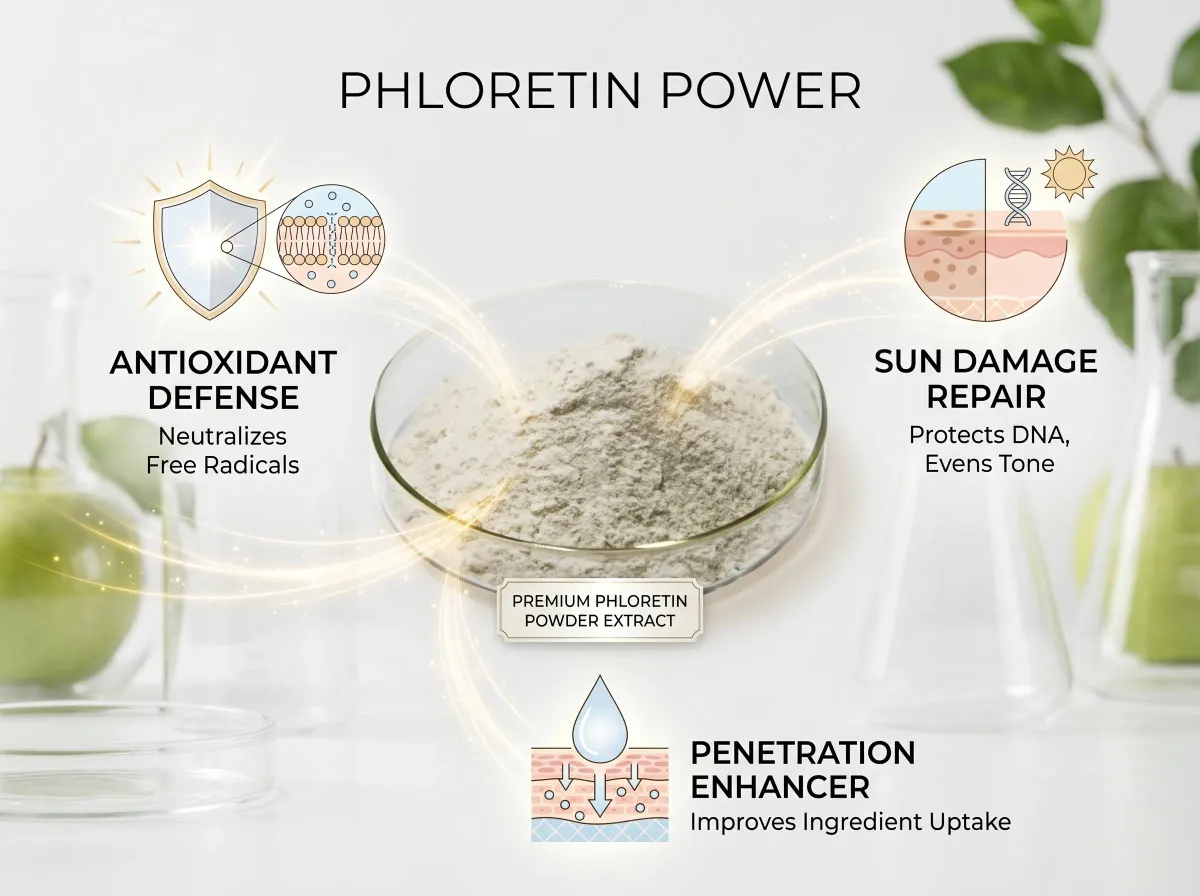
Phloretin: an apple-derived dihydrochalcone that inhibits GLUT1 to block glycation, neutralizes free radicals & suppresses MMP collagen degradation — protecting the ECM across multiple anti-aging pathways. Bulk powder, ≥98.0% HPLC.
What Is Phloretin
Phloretin is a naturally occurring dihydrochalcone flavonoid found in the peel and leaves of apples (Malus domestica) and, to a lesser extent, in the bark of apple trees. It is the aglycone of phlorizin — meaning it is the active, sugar-free form produced when phlorizin is enzymatically deglycosylated. This structural distinction matters: phloretin, unlike its glycoside precursor, has a lower molecular weight and higher lipophilicity, allowing it to penetrate lipid-rich biological membranes more efficiently.
| Chemical Identity | |
|---|---|
| INCI Name | Phloretin |
| IUPAC Name | 3-(4-Hydroxyphenyl)-1-(2,4,6-trihydroxyphenyl)propan-1-one |
| CAS Number | 60-82-2 |
| Molecular Formula | C₁₅H₁₄O₅ |
| Molecular Weight | 274.27 g/mol |
| Flavonoid Class | Dihydrochalcone |
| Natural Source | Malus domestica (apple) peel, leaves, and bark |
| PubChem CID | 4788 |
Phloretin vs. Phlorizin
Phlorizin (phloretin-2′-β-D-glucoside) was historically the first-discovered member of this flavonoid family, isolated from apple tree bark in 1835. However, phlorizin is poorly absorbed transdermally due to its glucose moiety. Phloretin — the deglycosylated, glucose-free form — is the version most relevant to cosmetic formulation because it is more lipophilic, membrane-permeable, and biologically active. When you encounter "phloretin" in skincare and research contexts, it is almost always the aglycone form.
Phloretin in SkinCeuticals Phloretin CF
Phloretin gained widespread recognition in cosmetic science through its use in SkinCeuticals Phloretin CF, where it is formulated at 2% alongside 10% L-ascorbic acid (vitamin C) and 0.5% ferulic acid. This triple-antioxidant system is designed as an alternative to the brand’s classic CE Ferulic (which uses 15% L-ascorbic acid + 1% alpha-tocopherol + 0.5% ferulic acid). Phloretin CF was formulated specifically for normal-to-oily and combination skin types, leveraging phloretin’s oil-controlling properties alongside its broad-spectrum antioxidant capacity. Understanding phloretin at the ingredient level allows formulators, brand developers, and informed consumers to make precise decisions beyond brand-name association.
ECM Protection: How Phloretin Shields the Extracellular Matrix
The extracellular matrix (ECM) — a structural network of collagen, elastin, hyaluronic acid, fibronectin, and laminins — is the scaffolding that maintains skin firmness, elasticity, and hydration. ECM degradation is the fundamental biological event underlying visible skin aging: wrinkles, sagging, and loss of density. Phloretin protects the ECM through three interconnected mechanisms that distinguish it from nearly all other cosmetic antioxidants.
Mechanism 1: GLUT1 Inhibition — The Anti-Glycation Pathway
Phloretin is a well-characterized inhibitor of GLUT1 (glucose transporter 1), the primary membrane protein responsible for basal glucose uptake in human cells — including dermal fibroblasts and keratinocytes. By competitively binding to GLUT1, phloretin reduces the intracellular glucose concentration available for non-enzymatic glycation reactions.
This mechanism is directly relevant to ECM aging because:
- Glycation is the spontaneous, non-enzymatic cross-linking of glucose with ECM proteins (primarily collagen and elastin), forming advanced glycation end-products (AGEs).
- AGEs permanently cross-link collagen fibrils, making them stiff, brittle, and resistant to normal turnover. Glycated collagen accumulates over a lifetime and cannot be repaired by MMP-mediated remodeling.
- GLUT1 inhibition by phloretin reduces the glucose flux that drives glycation, thereby slowing AGE formation at its source.
This glycation-blocking mechanism is unique among cosmetic antioxidants. Vitamin C, vitamin E, ferulic acid, and resveratrol — all important antioxidants — do not inhibit GLUT1. Phloretin’s anti-glycation activity, confirmed in peer-reviewed research (MDPI Biomedicines, 2023; ScienceDirect, 2024), positions it as one of the few cosmetic ingredients with direct, receptor-level glycation intervention.
Mechanism 2: MMP Inhibition — Collagen Preservation
Matrix metalloproteinases (MMPs) are zinc-dependent enzymes that degrade ECM proteins. MMP-1 (collagenase-1) cleaves collagen types I, II, and III; MMP-3 (stromelysin-1) degrades proteoglycans, laminin, and fibronectin; MMP-9 (gelatinase B) further breaks down denatured collagen fragments.
Phloretin suppresses MMP-1, MMP-3, and MMP-9 expression at the transcriptional level by:
- Scavenging reactive oxygen species (ROS) that activate MMP gene transcription through MAP kinase and NF-κB pathways
- Directly downregulating MMP mRNA expression in UV-exposed dermal fibroblasts
By inhibiting both the ROS-triggered signaling cascade and the enzymatic degradation machinery itself, phloretin preserves existing collagen and elastin networks — providing a complementary "protect what you have" function alongside collagen-stimulating ingredients like retinoids and peptides.
Mechanism 3: Broad-Spectrum Free Radical Scavenging
Phloretin neutralizes free radicals through multiple modes:
- Direct radical quenching: Phloretin’s multiple phenolic hydroxyl groups (-OH) donate hydrogen atoms to stabilize superoxide (O₂⁻·), hydroxyl (·OH), and peroxyl (ROO·) radicals
- Metal chelation: Phloretin binds transition metal ions (Fe²⁺, Cu²⁺) that would otherwise catalyze Fenton reactions producing hydroxyl radicals
- Vitamin C regeneration: Phloretin, particularly when combined with L-ascorbic acid and ferulic acid, helps regenerate oxidized vitamin C back to its active form, extending the antioxidant capacity of the formulation
This triple mechanism — direct scavenging + metal chelation + antioxidant regeneration — provides broader protection than single-mode antioxidants.
The ECM Narrative: A Unified Protective System
Taken together, phloretin’s three mechanisms form a comprehensive ECM protection system:
| ECM Threat | Phloretin’s Action |
|---|---|
| Glycation (AGE cross-linking) | GLUT1 inhibition → reduced intracellular glucose → slowed AGE formation |
| Collagen degradation (MMP activity) | ROS scavenging + transcriptional MMP downregulation |
| Oxidative damage (free radicals) | Multi-site radical quenching + metal chelation + vitamin C regeneration |
This integrated mechanism profile is the scientific foundation for positioning phloretin as an ECM-protective polyphenol — a designation that goes beyond "antioxidant" and communicates the ingredient’s structural role in preserving the skin’s extracellular scaffolding.
Product Specifications & Formulation Parameters
Bulk Raw Material Profile
| Parameter | Specification |
|---|---|
| Appearance | Off-white to pale yellow crystalline powder |
| Purity (HPLC) | ≥98.0% |
| CAS Number | 60-82-2 |
| Molecular Formula | C₁₅H₁₄O₅ |
| Molecular Weight | 274.27 g/mol |
| Solubility | Poorly soluble in water; soluble in ethanol, DMSO, propylene glycol, and other organic solvents |
| pH Stability | Stable in pH 3–7 range; optimal antioxidant activity at acidic pH (3.5–5.5), compatible with vitamin C formulations |
| Shelf Life | 24 months (sealed, cool, dry, protected from light) |
| Storage | 2–8°C recommended; avoid light, heat, and moisture |
| Mesh Size | 80–100 mesh (fine powder) |
| Testing Method | HPLC (high-performance liquid chromatography) |
| Botanical Source | Malus domestica (apple) peel via extraction |
Recommended Usage Levels
| Product Type | Recommended Concentration |
|---|---|
| Anti-aging serum | 0.5–2.0% |
| Vitamin C serum (triplet formulation) | 2.0% (with 10% L-ascorbic acid + 0.5% ferulic acid) |
| Anti-pigmentation serum | 1.0–2.0% |
| Eye cream | 0.3–1.0% |
| Day cream / moisturizer | 0.5–1.5% |
| DIY formulations | Start at 0.5%, titrate up to 2.0% |
Solubility & Formulation Guidance
Phloretin’s poor water solubility is a key formulation consideration:
- Pre-dissolve in ethanol, propanediol, or ethoxydiglycol before incorporating into water-phase systems
- DMSO is effective for laboratory use but generally not preferred in finished cosmetic products
- Propylene glycol and butylene glycol are common cosmetic co-solvents for phloretin
- Liposomal encapsulation or microemulsion systems can improve aqueous dispersibility without ethanol
- Monitor pH: phloretin is most stable in acidic conditions; buffering to pH 3.5–5.5 maintains both phloretin stability and L-ascorbic acid efficacy in combination formulations
The Triplet Synergy: Phloretin + L-Ascorbic Acid + Ferulic Acid
The combination of phloretin (2%), L-ascorbic acid (10%), and ferulic acid (0.5%) — as seen in commercial reference formulations — is not arbitrary:
- Ferulic acid stabilizes both phloretin and L-ascorbic acid, extending the shelf life of the formulation
- L-ascorbic acid provides high-concentration antioxidant potency and direct collagen synthesis stimulation
- Phloretin adds GLUT1-mediated anti-glycation and MMP inhibition that neither vitamin C nor ferulic acid provide
- Each component regenerates the others: the three molecules form an electron-donating cascade that extends the active antioxidant life of the entire system
For DIY formulators and brand developers, this triplet can be replicated using bulk raw materials, allowing customization of the base formulation (gel, serum, cream) and additional active inclusion.
Galactoarabinan Polyglucuronic Acid Crosspolymer & Other Complexes
Some advanced formulations combine phloretin with polysaccharide matrices (e.g., galactoarabinan-based delivery systems) to improve solubility and controlled release. Phloretin has also been investigated in combination with peptides and growth factors for enhanced ECM-targeting formulations. Commercial suppliers may offer phloretin in pre-complexed or encapsulated forms to simplify formulation.
Safety & Usage Considerations
General Safety Profile
Phloretin has a well-established safety profile when used topically at cosmetic concentrations (≤2%):
- CIR (Cosmetic Ingredient Review): Assessed as safe for use in cosmetics at reported concentrations
- EWG (Environmental Working Group): Rated 1 (low hazard)
- Paula’s Choice: Rated "Best" for its antioxidant, anti-aging, and skin-brightening properties
- No known phototoxicity: Phloretin does not increase UV sensitivity; when combined with vitamin C, it enhances — rather than compromises — UV protection when used under sunscreen
Pregnancy & Breastfeeding
This is one of the highest-frequency safety concerns among users searching for phloretin (evidenced by 8+ pregnancy-related search variations in keyword data). Here is the current evidence:
- Topical phloretin at ≤2%: No evidence of systemic absorption sufficient to raise concerns for pregnancy or breastfeeding
- Comparative context: Phloretin CF is classified similarly to other topical vitamin C serums in pregnancy skincare guidelines — generally considered acceptable for topical use during pregnancy
- Precautionary principle: Pregnant or breastfeeding individuals should consult their healthcare provider before introducing any new active ingredient
- Oral phloretin supplements: A separate risk category; not recommended during pregnancy without medical supervision due to phloretin’s GLUT-inhibitory systemic effects
Important: This information is provided for general educational purposes and does not constitute medical advice.
Known Side Effects & Sensitivities
Phloretin is generally well-tolerated, but users and formulators should be aware of:
| Reaction Type | Likelihood | Notes |
|---|---|---|
| Skin irritation | Low | Mild tingling on initial use possible, especially in formulations with low pH (3.5–4.0 from vitamin C) |
| Allergic reaction | Very low | Isolated case reports; patch test recommended before first use |
| Acne/purging | Unlikely | Phloretin is actually recommended for acne-prone skin due to its oil-controlling properties |
| Oxidation discoloration | Formulation-dependent | Phloretin solutions may darken from pale yellow to brown upon oxidation; this indicates reduced potency — not skin danger, but the product should be replaced |
Oxidation & Storage: Managing the "Brown Bottle" Concern
A frequently searched topic is phloretin formulation discoloration — when the product turns from pale yellow/straw to dark brown. This occurs because:
- Phloretin’s phenolic groups oxidize upon prolonged exposure to air and light
- Vitamin C (when co-formulated) accelerates color change as it oxidizes to dehydroascorbic acid
- The brown color indicates antioxidant depletion, not toxicity
Storage best practices to prevent oxidation:
- Store in opaque, airtight, airless pump containers
- Keep at 2–8°C (refrigerated) when possible
- Minimize headspace in packaging
- Include ferulic acid as a stabilizer (0.5%)
- Formulate with a chelating agent (e.g., EDTA) to bind metal ions that catalyze oxidation
- Use nitrogen blanketing during manufacturing
Contraindications & Interactions
- Avoid simultaneous use with strong exfoliating acids (AHA ≥10%, BHA) in the same routine — the combined low pH may cause irritation
- Can be layered with retinol/retinoids, but alternate application times are recommended (vitamin C in the morning; retinol at night)
- Compatible with peptides, niacinamide, hyaluronic acid, and most moisturizing ingredients
- Not recommended for open wounds, severely compromised skin barriers, or known hypersensitivity to apple-derived compounds
Applications: Benefits & Use Cases
Skin Anti-Aging & ECM Repair
Phloretin’s core value as a cosmetic ingredient lies in its multi-target mechanism for skin anti-aging:
Collagen & Elastin Preservation By inhibiting MMP-1 (collagenase) and MMP-3 (stromelysin), phloretin reduces the enzymatic breakdown of collagen types I, II, and III, as well as elastin. This "preservative" action complements collagen-stimulating ingredients — retinoids and peptides stimulate new synthesis, while phloretin protects what already exists.
Anti-Glycation: Protecting Collagen from Sugar Cross-Linking The GLUT1 inhibition mechanism directly addresses glycation — a form of ECM aging that no amount of collagen stimulation can reverse once AGEs have formed. Glycated collagen is permanently stiffened and resistant to enzymatic turnover. By reducing the glucose available for glycation reactions, phloretin operates upstream of AGE formation, providing protection that other antioxidants cannot replicate.
Antioxidant Synergy Phloretin’s ability to quench multiple radical species (superoxide, hydroxyl, peroxyl), chelate transition metals, and regenerate vitamin C creates a broad-spectrum antioxidant network. In formulations containing L-ascorbic acid, this synergy extends the protective window well beyond what either molecule achieves alone.
Clinical Context: Research published on phloretin-based formulations (e.g., the SkinCeuticals Phloretin CF clinical study) demonstrates measurable improvements in:
- Fine lines and wrinkle depth reduction
- Skin firmness and elasticity
- Overall photodamage appearance
While individual results vary, the mechanism basis is robust: MMP inhibition + anti-glycation + broad antioxidant protection = ECM-level anti-aging at three separate intervention points.
Pigmentation & Melasma Correction
Phloretin is increasingly recognized as a multi-pathway pigmentation inhibitor, making it valuable for hyperpigmentation, melasma, and post-inflammatory discoloration:
- Tyrosinase inhibition: Phloretin directly inhibits tyrosinase, the rate-limiting enzyme in melanin synthesis, reducing baseline melanin production
- GLUT1-mediated effect: By reducing glucose availability in melanocytes, phloretin may indirectly limit the metabolic energy available for melanogenesis
- Antioxidant protection: By preventing UV-induced oxidative stress (a primary trigger for melanocyte activation), phloretin reduces the stimulus for new pigmentation
- Vitamin C synergy: When co-formulated with L-ascorbic acid, the combined tyrosinase inhibition is stronger than either molecule alone
Melasma relevance: Melasma is notoriously treatment-resistant because it involves both melanocyte overactivity and dermal vascular components. Phloretin addresses the melanocyte component while its anti-inflammatory properties may help regulate the vascular-inflammatory cycle that sustains melasma. Clinical evidence and dermatologist commentary support phloretin-containing formulations as part of a comprehensive melasma management protocol.
For darker skin tones: Phloretin’s anti-pigmentation activity is generally safe across Fitzpatrick skin types, though all individuals using tyrosinase-inhibiting actives should use high-SPF sunscreen daily. There are no known depigmentation risks specific to darker skin tones.
vs. CE Ferulic: Comprehensive Comparison
The "Phloretin CF vs CE Ferulic" comparison is the single largest user-intent cluster in the phloretin keyword dataset, with over 1,950 monthly searches across 51 keyword variants. Formulators, brand developers, and consumers consistently seek to understand the difference.
Ingredient Architecture
| Phloretin CF | CE Ferulic | |
|---|---|---|
| L-Ascorbic Acid | 10% | 15% |
| Primary co-antioxidant | 2% Phloretin (dihydrochalcone flavonoid) | 1% Alpha-Tocopherol (vitamin E) |
| Stabilizer | 0.5% Ferulic Acid | 0.5% Ferulic Acid |
| Antioxidant modes | GLUT1 inhibition + MMP suppression + radical scavenging + vitamin C regeneration | Radical scavenging (vitamin C + vitamin E cascade) + ferulic acid stabilization |
| Glycation protection | Yes (GLUT1 inhibition) | No |
| MMP inhibition | Yes (MMP-1, MMP-3, MMP-9) | Indirect (via antioxidant pathway) |
Skin Type & Sensorial Profile
| Phloretin CF | CE Ferulic | |
|---|---|---|
| Target skin type | Normal, combination, oily | Normal, dry |
| Texture | Lightweight, fluid, fast-absorbing | Richer, more viscous, slightly oily feel |
| Finish | Matte to satin | Dewy to radiant |
| Oil control | Yes (phloretin moderates sebum) | No |
| Acne-prone suitability | Excellent | May feel heavy; some users report congestion |
| Under makeup | Excellent (thin, non-greasy base) | May require blotting for oily skin |
| Humid climate | More comfortable | May feel heavy |
Efficacy Focus
| Phloretin CF | CE Ferulic | |
|---|---|---|
| Primary strength | Pigmentation + anti-glycation + oil control | Deep hydration + environmental defense + lipid barrier support |
| Pigmentation | Strong (tyrosinase + GLUT1 dual pathway) | Moderate (antioxidant only) |
| Melasma | Frequently recommended by dermatologists | Less targeted for melasma |
| Anti-aging breadth | MMP + glycation + oxidation (3 pathways) | Oxidation + lipid protection (2 pathways) |
| Skin firmness | Protection-focused (preserving existing collagen) | Hydration-focused (plumping effect) |
Which to Choose?
Choose Phloretin CF when:
- Skin is oily, combination, or acne-prone
- Primary concerns include hyperpigmentation, melasma, or uneven tone
- A lightweight, fast-absorbing formulation is preferred
- Anti-glycation protection is a priority
- Living in a humid climate
Choose CE Ferulic when:
- Skin is dry, mature, or dehydrated
- Deep moisturization alongside antioxidant protection is wanted
- The richer texture is comfortable
- Lipid barrier support from vitamin E is beneficial
Can they be used together? Yes, but with a strategy: apply the lighter Phloretin CF first, allow it to absorb completely, then layer CE Ferulic. Alternatively, alternate between days (Phloretin CF in the morning for daytime antioxidant and oil control; CE Ferulic on alternate days for deeper hydration).
Vitamin C Synergy & the Triplet Formulation
The combination of phloretin + L-ascorbic acid + ferulic acid is one of the most studied antioxidant triplets in cosmetic science:
| Component | Role | Concentration Range |
|---|---|---|
| Phloretin | GLUT1 inhibitor, MMP suppressor, radical scavenger | 0.5–2.0% |
| L-Ascorbic Acid | Primary antioxidant, collagen synthesis stimulator | 10–15% |
| Ferulic Acid | Stabilizer, antioxidant booster, UV protector | 0.5–1.0% |
How the synergy works: Ferulic acid stabilizes both L-ascorbic acid and phloretin in solution, extending the formulation’s active lifespan. L-ascorbic acid donates electrons to neutralize free radicals, and when it oxidizes to dehydroascorbic acid, ferulic acid and phloretin help regenerate it. Phloretin adds two dimensions — GLUT1-mediated anti-glycation and MMP inhibition — that the other two components do not provide.
For B2B customers and DIY formulators, this triplet can be built from bulk raw materials, allowing customization of concentration ratios and base formulations (gel, serum, lotion, cream).
Acne & Oily Skin Application
Phloretin’s suitability for acne-prone and oily skin is one of its strongest market differentiators:
- Sebum modulation: Phloretin helps regulate excess oil production without over-drying, making it suitable for combination skin that experiences both oiliness and dehydration
- Anti-inflammatory action: Acne is fundamentally an inflammatory condition. Phloretin’s anti-inflammatory properties (via NF-κB pathway modulation) may help reduce the inflammatory component of active breakouts
- Biofilm inhibition: Research has identified phloretin’s ability to inhibit biofilm formation in bacterial communities — a property relevant to Cutibacterium acnes biofilm, which contributes to persistent acne. This is an emerging area of research that positions phloretin as a non-antibiotic, non-drying anti-acne adjunct
- Non-comedogenic: Phloretin does not clog pores and is suitable for the light, gel-based, or water-based formulations preferred by oily/acne-prone users
- Post-inflammatory hyperpigmentation (PIH): Phloretin’s tyrosinase-inhibiting activity helps fade the dark marks left after acne heals
For rosacea-prone skin: Phloretin’s anti-inflammatory properties may benefit rosacea, but the low pH of typical vitamin C + phloretin formulations (pH 3.5–4.0) can be a trigger for rosacea flares. Users with rosacea should patch-test and consider buffered, higher-pH formulations.
Usage Guide: How to Incorporate Phloretin
| Parameter | Recommendation |
|---|---|
| When to apply | Morning (primary) or evening. Morning is preferred for antioxidant protection under sunscreen. Can be used at night, but avoid simultaneous application with strong retinoids or exfoliating acids in the same routine. |
| Application order | Cleanse → Tone (optional) → Phloretin serum (4–5 drops) → Moisturizer → Sunscreen (AM) |
| Wait time | Allow 30–60 seconds for absorption before applying the next product |
| Frequency | Daily for most skin types. Sensitive skin: start every other day, increase to daily as tolerated. |
| Shelf life after opening | 3–6 months (formulation-dependent). Discard if color turns dark brown. |
| Storage | Refrigerated (2–8°C), away from light. Do not store in bathroom (heat + humidity). |
| Amount | 4–5 drops for face and neck; gently press (do not rub) into skin |
Formulator & B2B Application Guide
For brands, contract manufacturers, and DIY formulators sourcing bulk phloretin powder:
Formulation Starting Points:
- Serum base: Pre-dissolve phloretin in propanediol or ethoxydiglycol at 5–10× the target concentration, then add to the water phase
- Gel base: Compatible with carbomer, xanthan gum, and cellulose-based thickeners. Maintain pH ≥4.0 for gel clarity
- Emulsion: Add phloretin to the oil phase pre-dissolved in a compatible solvent
- Anhydrous: Phloretin dissolves directly in oils and esters; ideal for oil-based serums
Compatibility Matrix:
| Co-active | Compatibility | Notes |
|---|---|---|
| L-Ascorbic Acid | Excellent | The classic pairing; ferulic acid as stabilizer |
| Niacinamide | Good (separate pH) | Potential for niacinamide-vitamin C complexation at low pH; use in separate steps or buffer formulation |
| Retinol / Retinoids | Compatible (alternate AM/PM) | Avoid same-routine application; retinoid at night |
| Peptides | Compatible | No known antagonism |
| AHA / BHA | Compatible (separate routine) | Combined low pH may irritate; alternate days |
| Hyaluronic Acid | Excellent | Complementary hydration + antioxidant protection |
| Sunscreen | Excellent | Phloretin + vitamin C enhances UV protection when used under broad-spectrum SPF |
B2B Supply Specifications:
- Form: Off-white to pale yellow crystalline powder
- Minimum Order: Contact for current MOQ (varies by grade and packaging)
- Packaging: Available in 25g, 100g, 500g, 1kg, and bulk quantities; sealed aluminum foil bags or HDPE containers
- Certifications: COA (Certificate of Analysis), MSDS/SDS available upon request
- Lead Time: Contact for current availability
Related Articles
- EGCG 98% Purity vs Green Tea Extract — The purity-comparison framework for polyphenol ingredients
- Palmitoyl Tripeptide-38 (Matrixyl Synthe'6) — Another ECM-targeting ingredient with a distinct mechanism
- Glabridin Complete Guide: Benefits & Mechanism — A parallel analysis of a multi-pathway botanical active for skin
Disclaimer: This product page describes phloretin as a bulk cosmetic raw material ingredient. The information provided is for educational and formulation reference purposes. References to commercial products (e.g., SkinCeuticals) are for ingredient comparison only and do not imply affiliation, endorsement, or equivalence. This ingredient is not intended to diagnose, treat, cure, or prevent any disease. Always conduct independent formulation stability and safety testing.
Frequently Asked Questions
Request a Quote for Phloretin — Bulk Raw Material
Complete the form below to receive pricing, specifications, and a free sample. Our sales team will contact you within 12 hours.