
Preface
When I first started tracking the oral dissolving film space in my role at GINKVORA, I kept hearing the same question from partners across Europe, North America, and Asia: "Is this a real market, or just another delivery gimmick?"
Three years later, nobody asks me that question anymore.
What I want to share in this piece is not a surface-level trend report. It is the market intelligence I have gathered through direct engagement with formulators, brand owners, and channel partners across multiple continents — filtered through the lens of someone whose job is to convert scientific capability into commercial reality.
Here is what I see happening.
The Technology Has Spent Twenty Years Warming Up. The Market Is Just Beginning to Move.
Let me be direct: oral dissolving films are not new. The technology has been in development for over two decades. What is new is that the converging forces of formulation science, manufacturing scalability, and consumer behavior have pushed this category past its tipping point.
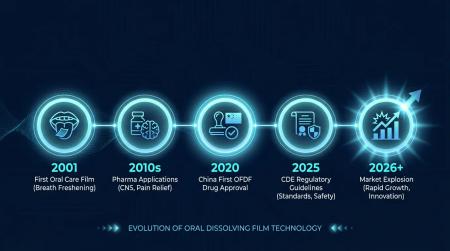
The early 2000s gave us proof-of-concept — Pfizer's Listerine Oral Care Film in 2001, then a slow trickle of pharmaceutical applications. The problem was clear from day one: low drug loading (rarely above 100 mg per film), poor mouthfeel, and shelf-stability issues that made commercial scaling a non-starter.
The 2010–2020 window saw incremental progress — mostly in pharma. China approved its first domestic oral dissolving film drug in 2020 (Jiangsu Hansoh Pharmaceutical's olanzapine OFDF), filling a domestic gap that had long been served only by imports. But the real shift, the one I have been watching most closely, happened after 2020.
What changed was not just one thing. It was the simultaneous maturation of three enablers:
- Nano-encapsulation and advanced film-forming polymers made high-loading films commercially viable. We are now seeing single-film capacities in the 2,000 mg range — a 20× leap from the 1.0 era.
- Consumer behavior shifted irreversibly. The post-pandemic world made "convenience without compromise" a baseline expectation, not a premium feature. People want their supplements to work faster, taste better, and fit into a carry-on bag.
- Regulatory frameworks caught up. China's CDE issued formal pharmaceutical guidelines for OFDF in 2025, and the Chinese Pharmacopoeia 2025 Edition codified dissolution, mechanical performance, and mouthfeel standards. In parallel, markets from the EU to Southeast Asia are clarifying their own pathways.
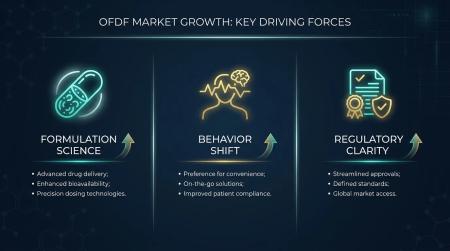
When I look at this convergence from GINKVORA's vantage point, I do not see a "new dosage form." I see an emerging delivery standard — and the window to define the category is open right now.
The Global Market Is Not One Market. Here Is How I Map It.
One of the most common mistakes I see in market analyses is treating OFDF as a single, homogeneous global opportunity. It is not. The dynamics in Tokyo are different from those in Berlin, and both differ from what is happening in Los Angeles or Shanghai.
Here is how I break it down:
North America: The Early Mover with an R&D Problem
The U.S. market leads in product launches and brand experimentation. You can walk into a Whole Foods or a CVS and find melatonin films, caffeine films, and a growing range of functional strips. The consumer awareness baseline is higher here than anywhere else.
What holds it back: The supply chain. Most North American brands rely on a fragmented contract manufacturing base that struggles with consistency at scale. Batch-to-batch variability in dissolution time and loading accuracy is still the number-one complaint I hear from U.S. brand owners. If a CDMO can solve that at a price point within 20% of traditional tablets, they capture the market.
Signal I am watching: The emergence of pet oral dissolving films in the U.S. market. Pets cannot swallow pills on command. A film that dissolves on the tongue solves a fundamental compliance problem. This is a severely underestimated blue ocean — and the export data is already pointing in that direction.

Europe: Regulatory Maturity Meets Conservative Formulation
Europe's regulatory environment is, as always, both a barrier and a moat. The Novel Food regulation creates friction for new delivery formats, but once a product clears that hurdle, the competitive field thins dramatically.
European formulators I speak with are particularly interested in two areas: high-dose botanical extracts (ginsenosides, polyphenols) and NAD+ precursors. The European consumer is willing to pay a premium for scientific credibility — but only if the bioavailability data is there. This is where OFDF's core advantage becomes a commercial argument: bypassing first-pass metabolism is not a marketing claim. It is a pharmacokinetic fact.
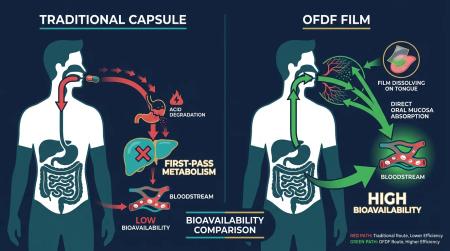
What I tell European partners: Do not position OFDF as a convenience play. Position it as a bioavailability play. The data supports the latter. The former is just a nice bonus.
Asia-Pacific: The Scale Play No One Is Talking About Loudly Enough
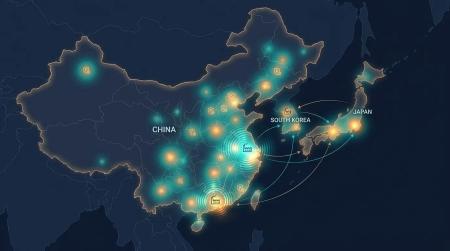
China, Japan, and South Korea are where the production infrastructure is being built. I see this firsthand through GINKVORA's supply chain intelligence — the film-forming equipment, the polymer supply, and the contract manufacturing capacity are all concentrated here.
China alone has seen a surge in OFDF-related patent filings since 2022. The CDE guideline release in 2025 was not a coincidence — it was the regulator catching up to the pace of industrial investment.
The overlooked dimension: Traditional Chinese medicine (TCM) and medicinal food homology ingredients. Ginseng, Acanthopanax senticosus, Ganoderma lucidum — these are high-dose, often bitter-tasting botanicals with well-documented efficacy and poor oral absorption. If a brand successfully oral-film-formats even one of these ingredients into a palatable, fast-acting product, the playbook will be replicated across the entire TCM pharmacopeia. The raw material supply chain is already in place. The manufacturing capability is maturing. The missing piece is the consumer-facing product — and that is a marketing problem, not a technology problem.
The Numbers I Track (and Why They Matter More Than Market Size Projections)
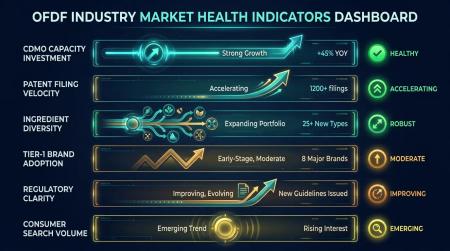 I am not going to quote a market size forecast here. Those numbers are easy to find and hard to verify. What I track instead are the structural indicators that tell me whether the category is gaining — or losing — commercial momentum:
| Indicator | Current Signal | What It Means |
|---|---|---|
| CDMO capacity investment | ▲ Strong | New production lines being commissioned in China, South Korea, and India. Capacity precedes volume. |
| Patent filing velocity | ▲ Accelerating | Global OFDF-related patent filings up significantly since 2022. Intellectual property fences are going up. |
| Ingredient diversity | ▲ Expanding | Moving beyond melatonin. NAD+, collagen peptides, ergothioneine, ginsenosides — all entering the film format. |
| Brand adoption by tier-1 players | ▲ Early | By-Health and other major brands have launched film products. When the largest players move, the mid-market follows within 12–18 months. |
| Regulatory clarity | ▲ Improving | CDE guideline (2025), Pharmacopoeia standards (2025), and parallel developments in other jurisdictions. Reduces compliance risk for brand owners. |
| Consumer keyword search volume | ◀ Emerging | Still low relative to gummies and capsules, but growing at 30-50% YoY in key markets. This is a leading indicator, not a lagging one. |
The pattern is clear: the infrastructure and regulatory foundation are being laid. The consumer demand signal is building. The brands that enter now — not in three years — will define the category lexicon.
Where the Real Technology Battles Are Being Fought
From my conversations with R&D teams across GINKVORA's partner network, three technical thresholds separate the winners from the also-rans:
1. Loading Capacity vs. Disintegration Speed
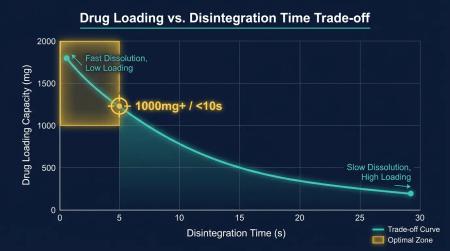
This is the central tension. Higher loading tends to slow dissolution. Faster dissolution tends to limit loading. The companies that can push both levers simultaneously — 1,000+ mg loading with sub-10-second disintegration — own the premium tier of the CDMO market. Nano-encapsulation and optimized polymer blends are the tools. There is no shortcut.
2. Taste Masking at Scale
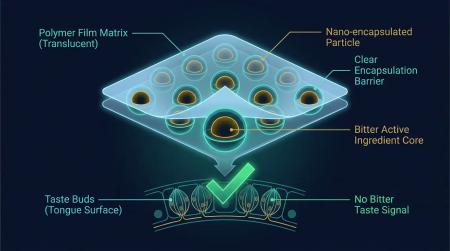
A film that dissolves in 10 seconds leaves no time for the taste to fade. This is a harder problem than tablet coating — the entire dose hits the tongue at once. For bitter actives (caffeine, most botanicals, many peptides), this is a make-or-break commercial variable. The best formulations I have tested make bitterness disappear without adding sweetness — they use physical encapsulation rather than flavor cover-up.
3. Shelf Stability Under Real-World Conditions
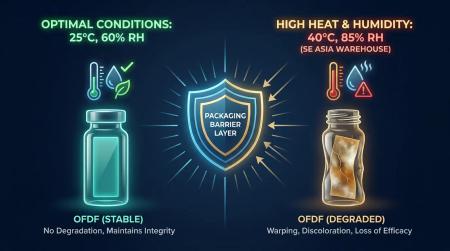
A film that performs perfectly at 25°C and 60% RH but degrades in a hot warehouse in Southeast Asia is not a commercial product. I have seen too many promising formulations fail this test. The moisture barrier properties of the packaging are just as important as the film formulation itself — and the two must be designed as an integrated system.
The Five-Year Thesis: Three Predictions
I spend a lot of time thinking about where markets will be in five years — because the decisions we make today at GINKVORA determine whether we are leading or chasing in 2031.
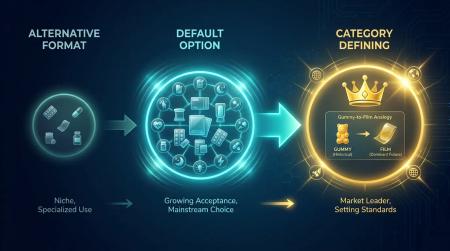
Prediction 1: OFDF Will Shift from "Alternative Format" to "Default Option"
When softgel costs came down, they did not remain a premium format. They became the standard for oil-based actives. The same transition is underway for films. As manufacturing scales and per-unit costs approach parity with tablets, the film format will not be reserved for "innovative" products. It will be the rational default for any active that benefits from rapid onset, bypass of first-pass metabolism, or on-the-go convenience.
The analog I keep returning to is the gummy. Ten years ago, gummy supplements were a novelty. Today, they dominate entire supplement categories. Films will follow a compressed timeline — five years instead of ten, because the market is already primed.
Prediction 2: The CDMO That Solves High-Loading Stability Will Capture Disproportionate Market Share
This is not a prediction about brand owners. It is a prediction about the supply side. The contract manufacturers that can reliably deliver high-loading films (1,000 mg+) with verified batch consistency and 18+ month shelf stability will become the go-to partners for every major brand entering the space.
At GINKVORA, we track this capability as a core variable in our partner evaluation framework. A CDMO that can demonstrate three consecutive production batches within ±5% loading tolerance is worth more than one with a flashier facility but inconsistent output.
Prediction 3: The First Blockbuster OFDF Consumer Product Will Come from an Unexpected Category
It will not be melatonin. Melatonin is the obvious entry point, and it is already commoditized. It will not be caffeine — too many competing formats.
My bet: it will be a medicinal food homology ingredient — something like ginsenoside or cordycepin — formulated into a film that delivers a genuinely perceptible effect in under 15 minutes. When a consumer tries it and feels the difference in onset time compared to a capsule, they will not go back. And that product will not just sell itself — it will sell the entire category.

The TCM-meets-advanced-delivery intersection is, in my assessment, the single largest untapped opportunity in the global nutraceutical market.
What This Means for GINKVORA — and for Our Partners
I did not write this piece just to analyze the market. I wrote it because GINKVORA is actively building in this space, and I believe transparency about our market thinking benefits everyone — our partners, our suppliers, and the end consumers who will ultimately decide whether this category succeeds.
Our focus at GINKVORA is on the intersection of biotechnology and market strategy — identifying where the science is mature enough to deliver real product differentiation, and where the market is ready enough to reward that differentiation with adoption.
Oral dissolving films sit squarely at that intersection.
If you are a brand owner evaluating whether to enter this category, my advice is simple: do not wait for the search volume to tell you it is safe. By the time the keyword data catches up, the shelf space will already be taken. The time to move is when the technology is ready, the regulatory path is clear, and the consumer has not yet formed a fixed expectation of what an OFDF product should be.
All three conditions are true right now.
If you would like to discuss OFDF market strategy, GINKVORA's capabilities in this space, or partnership opportunities, feel free to reach out. I am always open to a substantive conversation.
— Zhang Zhilin, Marketing Manager, GINKVORA