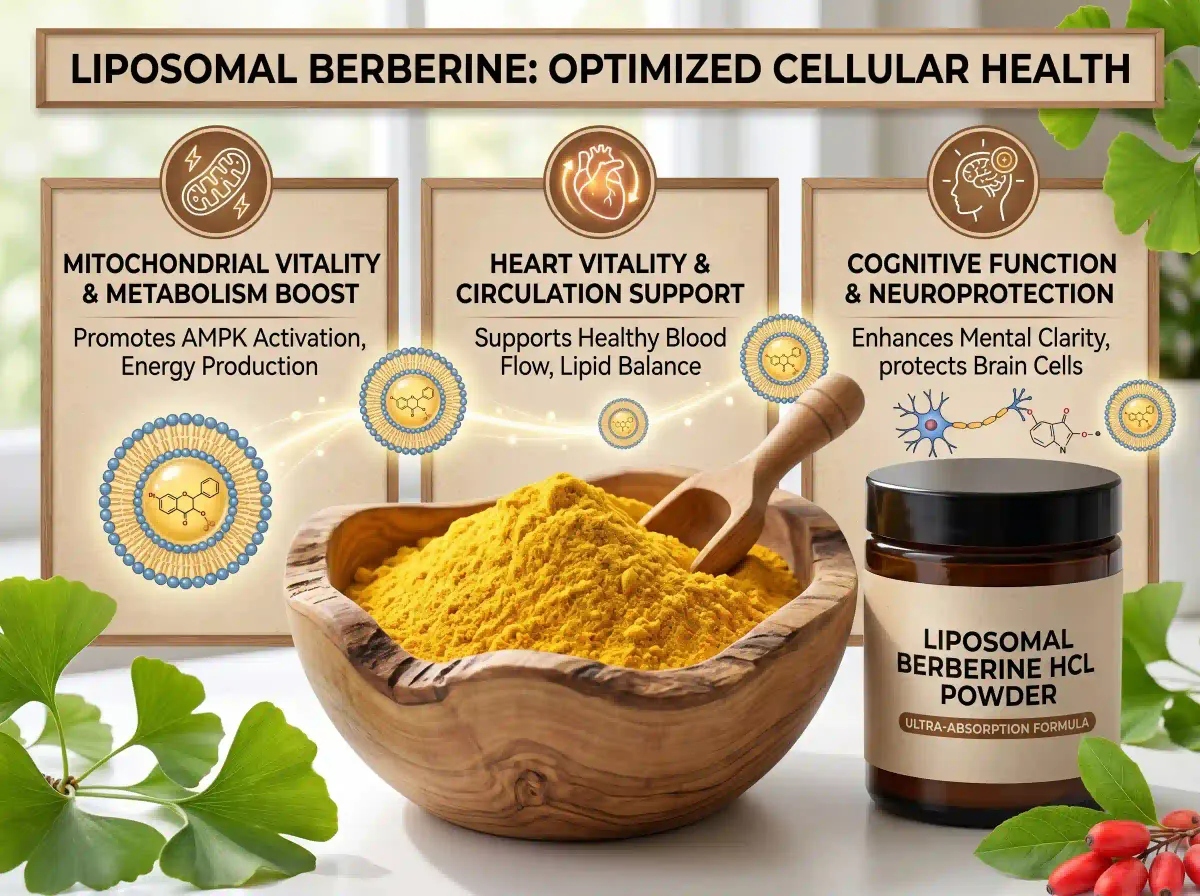
Liposomal Berberine HCL 50% 70%
Extracted from Coptis chinensis (Chinese goldthread); also found in Oregon grape (Berberis aquifolium) and barberry (Berberis vulgaris)
Liposomal Berberine HCL at 50% and 70% — a traditional Chinese medicine alkaloid that traps reactive dicarbonyls, prevents AGE cross-linking, activates AMPK glucose metabolism, and preserves collagen structure for anti-glycation skin defense and nutricosmetic supplements.
Berberine Hydrochloride — Liposomal Bulk Raw Material for Anti-Aging & Beauty
Liposomal Berberine HCL delivers the isoquinoline alkaloid berberine at 50% and 70% liposomal concentrations, positioning it as a primary anti-glycation ingredient for skin defense. Berberine traps reactive dicarbonyl intermediates—methylglyoxal and glyoxal—before they can form advanced glycation end-products (AGEs) that cross-link, stiffen, and yellow collagen fibers in the dermal matrix. Extracted from Coptis chinensis with 5000 years of use in traditional Chinese medicine, berberine brings clinically validated glucose-regulating properties that address the root cause of glycation-driven skin aging.
Available Purity Grades
- Berberine Hydrochloride 50% 70% (HPLC) — Liposomal powder with phosphatidylcholine encapsulation for enhanced bioavailability.
Why Choose Our Liposomal Berberine Hydrochloride?
- Dicarbonyl Trapping: Reacts with methylglyoxal (MGO) and glyoxal (GO) to form stable, harmless imidazole adducts, preventing these reactive species from modifying lysine and arginine residues on collagen fibers.
- AGE Formation Prevention: Blocks the formation of fluorescent cross-links including pentosidine and pyridine that stiffen the dermal collagen network and cause the yellowish discoloration of chronologically aged skin.
- Glucose Metabolism Regulation: Activates AMPK (AMP-activated protein kinase) to improve cellular glucose uptake, reducing blood glucose spikes that drive non-enzymatic glycation reactions in skin tissues.
- Collagen Structure Preservation: By preventing AGE-mediated cross-linking, berberine maintains the native triple-helix conformation of collagen, preserving skin softness, flexibility, and natural translucency.
- Anti-Inflammatory Anti-Glycation: Suppresses RAGE (receptor for AGEs) signaling and downstream NF-κB activation, breaking the vicious cycle where AGEs trigger inflammation that further accelerates glycation.
- Liposomal Absorption Enhancement: Overcomes berberine's notoriously poor intestinal absorption (less than 1% bioavailability) through liposomal encapsulation, making effective oral dosing achievable in nutricosmetic formulations.
Target Applications
- Glyco-Defense Skincare Brands: Companies developing anti-glycation serums and creams that target sugar-damaged, stiffened collagen in mature skin, positioning berberine as the hero ingredient.
- Blood Sugar Beauty Brands: Nutricosmetic companies creating beauty supplements that connect metabolic health with skin health, leveraging berberine's AMPK-activating glucose-regulating mechanism.
Quality & Compliance
- GMP-certified production facilities
- Liposomal encapsulation verified by DLS particle size analysis
- COA provided with every shipment
- Heavy metals compliant (Pb ≤ 2 ppm, As ≤ 1 ppm)
- Custom packaging and private labeling available
- Stable shelf life: 24 months (cool, dry storage, protected from light)
Bulk Supply & OEM Service
We supply liposomal Berberine Hydrochloride in bulk quantities (sample to 25 kg drums) for B2B buyers, contract manufacturers, and private-label brands. Contact our technical team for quotes, sample requests, or formulation consultation.
Preguntas frecuentes
Solicitar cotización o muestra
Envíe su consulta y nuestro representante comercial se pondrá en contacto con usted en un plazo de 24 horas.
Ir al formulario de consulta →